Decoding the 2014 F-150 Rear Axle Architecture
The 2014 Ford F-150 remains one of the most capable and widely modified half-ton trucks on the road. Whether you are pushing a lifted build with oversized tires, towing a heavy travel trailer, or simply performing preventative maintenance on a daily driver, understanding the rear axle is paramount. Before we can definitively answer the question of which 2014 Ford F150 rear differential fluid type is best for your rig, we must first identify the specific axle hiding beneath the truck.
Ford equipped the 2014 F-150 with two primary rear axle options, depending on the trim, tow package, and engine configuration:
- The Ford 8.8-Inch Axle: The standard workhorse featuring a 10-bolt differential cover. It is robust for daily driving and light towing but can become a thermal bottleneck under severe loads.
- The Ford 9.75-Inch Axle: Found in trucks equipped with the Heavy-Duty Payload Package, Max Trailer Tow Package, or the 6.2L V8. It features a larger 12-bolt cover, thicker ring gears, and significantly higher fluid capacity for sustained thermal management.
Identifying your axle is as simple as counting the cover bolts and checking the ring gear diameter. This distinction directly dictates your fluid capacity, viscosity requirements, and upgrade path.
Factory vs. Performance: Which 2014 Ford F150 Rear Differential Fluid Type Wins?
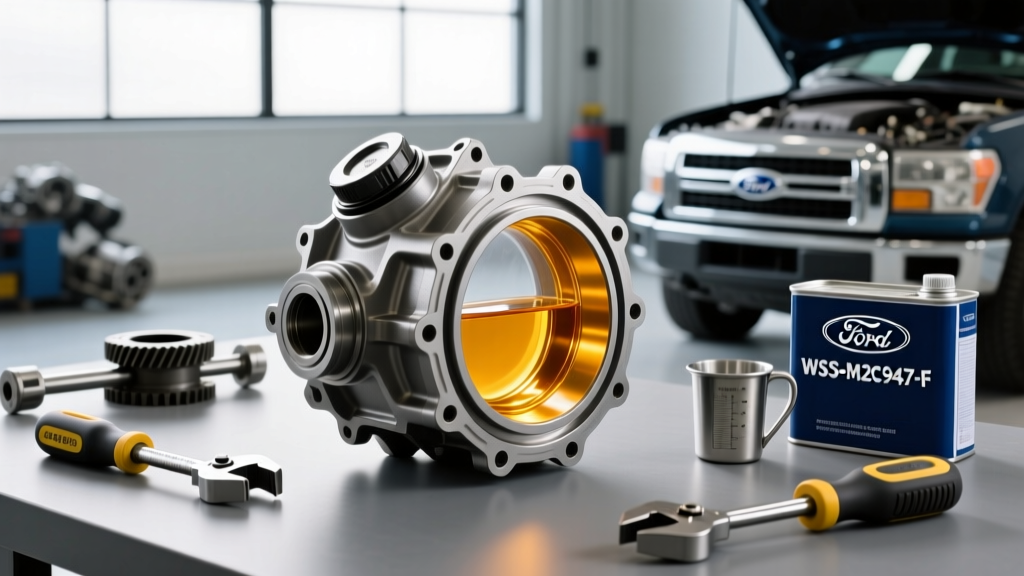
From the factory, Ford's engineering specifications for the 2014 model year lean heavily toward synthetic lubricants to handle the heat generated by modern towing demands. According to Ford Owner Resources, the baseline requirement for severe-duty applications and the 9.75-inch axle is a full synthetic 75W-140 gear oil meeting Ford specification WSS-M2C192-A.
However, as we evaluate performance upgrades in 2026, relying on standard petroleum-based or entry-level synthetic blends is no longer sufficient for modified trucks. Upgrading to a premium, full-synthetic 75W-140 fluid provides a massive advantage in shear stability and film strength.
Fluid Capacity & Viscosity Matrix
| Axle Type | Ring Gear Size | Cover Bolts | Fluid Capacity | Recommended Viscosity |
|---|---|---|---|---|
| Ford 8.8-Inch | 8.8 inches | 10 | 5.5 Pints (2.6L) | 75W-140 Synthetic |
| Ford 9.75-Inch | 9.75 inches | 12 | 6.9 Pints (3.2L) | 75W-140 Synthetic |
While some older manuals suggest 80W-90 for standard duty, the automotive industry consensus for any 2014 F-150 subjected to towing, off-roading, or larger-than-stock tires is to standardize on 75W-140. Premium options like AMSOIL Severe Gear 75W-140 or Royal Purple Max Gear offer advanced friction modifiers and extreme pressure (EP) additives that drastically reduce gear whine and operating temperatures.
The Traction-Lok Factor: Friction Modifiers Explained
If your 2014 F-150 is equipped with a Traction-Lok limited-slip differential (LSD), the fluid type is only half the equation. The clutch packs inside the Ford Traction-Lok unit require a specific friction modifier to prevent chattering, binding, and premature wear during tight turns.
Expert Note: Never skip the friction modifier in a Traction-Lok axle. Doing so will result in aggressive clutch chatter that feels like the rear end is skipping or hopping during low-speed parking maneuvers.
The OEM requirement is the Motorcraft XL-3 Friction Modifier Additive (Part# C8AZ-19B546-A). You will need exactly 4 ounces of this modifier per axle. Many high-end aftermarket synthetic fluids claim to be 'LS Compatible' and include modifiers in their blend. While these are often adequate, experienced drivetrain builders recommend adding a half-bottle of dedicated XL-3 modifier to any new fluid change to guarantee smooth clutch engagement, regardless of the gear oil brand.
Performance Service Procedure: The 'No Drain Plug' Reality
One of the most frustrating design quirks of the 2014 F-150 rear differential is the lack of a factory drain plug on the stock differential cover. To perform a standard fluid change, you are forced to either use a fluid extractor pump through the fill hole or unbolt the entire cover, scrape off the old RTV silicone, and reseal it. For performance enthusiasts, this service interval is the perfect excuse to upgrade the hardware.
Step-by-Step Upgrade & Service Guide
- Preparation & Extraction: If retaining the stock cover, use a fluid extractor pump via the top fill plug (typically a 3/8-inch or 1/2-inch drive Allen socket). Extract as much old fluid as possible.
- Upgrading to an Aftermarket Cover (Highly Recommended): Unbolt the 10 or 12 cover bolts (10mm or 13mm heads). Clean the mating surface on the axle housing using a brass wire brush and brake cleaner. Install a performance cover (such as those from ARB or Mag-Hytec) which adds cooling fins, increases fluid capacity, and crucially, includes a magnetic drain plug for future 15-minute services.
- Resealing the Stock Cover: If reusing the factory cover, apply a continuous 1/4-inch bead of Permatex Ultra Black RTV (Part# 81180) or 'The Right Stuff'. Do not use cheap cork gaskets; they are notorious for weeping under heavy load.
- Torque Specifications: Whether installing an aftermarket cover or resealing the factory unit, the cover bolts must be torqued to 24 lb-ft (33 Nm) in a crisscross star pattern to ensure even sealing pressure without warping the stamped steel cover.
- Filling the Axle: Remove the top fill plug. Using a fluid transfer pump, fill the axle with your chosen 75W-140 synthetic gear oil (and 4oz of XL-3 modifier if equipped with Traction-Lok) until the fluid reaches the exact bottom edge of the fill hole. Reinstall the fill plug and torque to 22 lb-ft.
Hardware Upgrades: Differential Covers and Cooling
Fluid degradation is directly tied to thermal breakdown. When towing a 7,000 lb trailer up a 6% grade, rear differential temperatures in a stock 8.8-inch axle can easily exceed 220°F (104°C), causing standard gear oils to thin out and lose their protective film strength.
Investing in an upgraded differential cover is one of the highest ROI modifications for a truck owner. Premium covers from manufacturers like Motorcraft (Ford's performance division covers) or Mag-Hytec feature aircraft-grade aluminum construction with deep cooling fins that increase surface area by up to 300%. Furthermore, the addition of a magnetic drain plug captures metallic wear particles from the ring and pinion gears before they can circulate and score the bearings. Expect to spend between $150 and $280 on a quality aftermarket cover, a price easily justified by the extended lifespan of your axle components and the sheer convenience of future drain-and-fill services.
2026 Cost Breakdown: DIY Performance Service vs. Dealership
Understanding the financial landscape of differential maintenance helps justify the DIY approach, especially when incorporating performance upgrades.
- Dealership Standard Service: $250 - $350 (Usually utilizes bulk, non-synthetic or entry-level synthetic 75W-140 and standard RTV reseal).
- DIY Premium Service (Stock Cover): $85 - $120 (Includes 3-4 quarts of premium synthetic like Amsoil or Royal Purple, XL-3 Modifier, and high-grade RTV).
- DIY Performance Upgrade (New Cover + Fluid): $250 - $380 (Includes aftermarket finned cover, premium synthetic fluid, modifier, and hardware).
By taking the DIY route, you not only save money but ensure that high-tier synthetic lubricants and proper friction modifiers are utilized, safeguarding your drivetrain against the rigorous demands of modern truck ownership.
Final Thoughts on Axle Longevity
Selecting the correct 2014 Ford F150 rear differential fluid type is about more than just checking a maintenance box; it is a critical defense mechanism for your truck's drivetrain. By verifying your axle type, utilizing full-synthetic 75W-140 gear oil, respecting the Traction-Lok modifier requirements, and considering thermal hardware upgrades, you effectively bulletproof the rear end against the most punishing environments. Whether navigating a rocky trail or pulling a heavy payload across state lines, a properly serviced and upgraded Ford 8.8 or 9.75 axle will deliver quiet, reliable performance for hundreds of thousands of miles.