The Truth Behind the 2014 Toyota Camry Torque Converter Recall
If you own a 2.5L 4-cylinder or 3.5L V6 mid-2010s Toyota, you have likely searched for the 2014 Toyota Camry torque converter recall after experiencing a violent shudder at highway speeds. As an automotive transmission specialist, I need to clarify a crucial piece of terminology right away: the National Highway Traffic Safety Administration (NHTSA) never issued a formal safety "recall" for this specific issue. Instead, Toyota addressed the widespread torque converter shudder via Technical Service Bulletins (TSBs) and Warranty Enhancement Programs (WEPs). You can verify your vehicle's specific service history and TSB applicability through the Toyota Owners Portal or by checking the NHTSA vehicle database.
To understand why your Camry shakes between 25 and 50 mph, you first need to understand the brilliant, yet complex, hydraulic machinery sitting between your engine and transmission. Let's break down how torque converters work, why the U760E and U660E transmissions are prone to shudder, and exactly what it takes to fix it in 2026.
How a Torque Converter Actually Works: A Beginner's Guide
Think of a torque converter as a fluid coupler that allows your engine to keep spinning while your car is stopped at a red light. Unlike a manual transmission's solid friction clutch, an automatic transmission uses hydraulic fluid (ATF) to transfer power.
The "Two Fans" Analogy
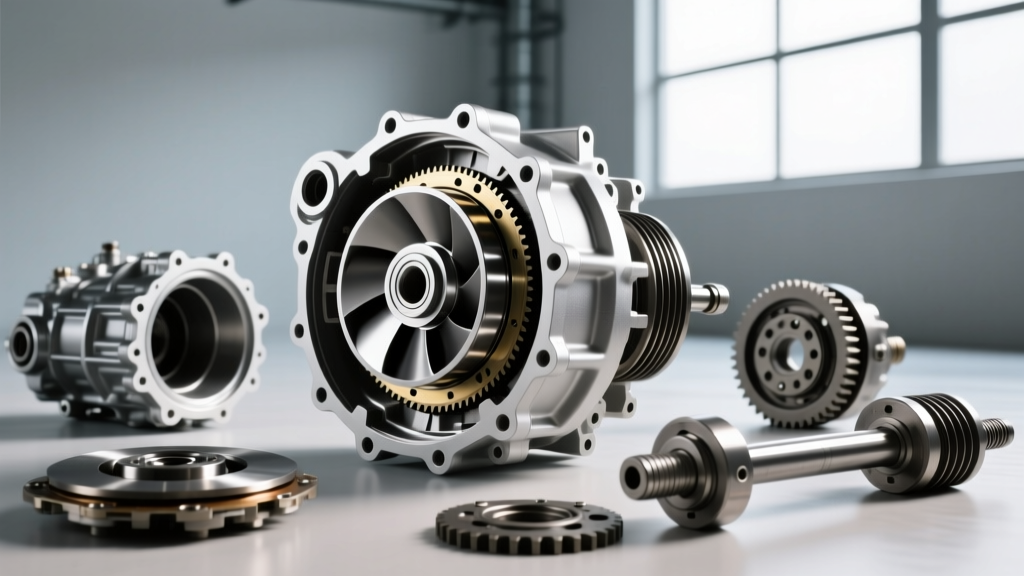
Imagine placing two desk fans facing each other. If you turn one on (the engine), the wind it blows will eventually cause the blades of the second, unplugged fan (the transmission) to spin. In a torque converter, transmission fluid replaces the air. The assembly consists of three main internal components:
- The Impeller (Pump): Bolted directly to the engine's flexplate. As the engine spins, the impeller flings ATF outward using centrifugal force.
- The Turbine: Connected to the transmission's input shaft. The fluid thrown by the impeller strikes the turbine's blades, forcing it to spin and ultimately moving your car.
- The Stator: The unsung hero of the torque converter. Sitting in the center between the impeller and turbine, the stator redirects returning fluid back into the impeller. This redirection creates torque multiplication, giving your Camry the extra twisting force needed to accelerate from a dead stop.
The Torque Converter Clutch (TCC) and the Camry Shudder
While fluid coupling is great for stop-and-go traffic, it is inherently inefficient. The fluid slipping between the impeller and turbine generates immense heat and robs the engine of fuel economy. To solve this, modern torque converters feature a Torque Converter Clutch (TCC), also known as a lock-up clutch.
Once you reach cruising speed (usually between 30 and 45 mph in a 2014 Camry), the transmission's computer commands a solenoid to apply the TCC. This friction disc physically locks the turbine to the impeller, creating a direct 1:1 mechanical connection.
Why the Shudder Happens: In the 2014 Camry's U760E (4-cylinder) and U660E (V6) transmissions, the TCC is designed to "slip" slightly even when locked to smooth out engine vibrations. Over time, the specialized friction material on the TCC piston glazes, or the Toyota ATF WS (World Standard) fluid loses its vital friction-modifying additives. When the computer tries to apply the lock-up clutch, it grabs, slips, grabs, and slips rapidly. This rapid cycling translates into a violent, rhythmic shaking felt through the steering wheel and floorboards.
U760E vs. U660E: Transmission Specs and Failure Points
Understanding your specific transmission is critical for diagnosis. The 4-cylinder Camry uses the lighter U760E, while the V6 uses the heavy-duty U660E. Below is a comparison of their torque converter characteristics and common failure metrics.
| Specification | Toyota U760E (2.5L 4-Cyl) | Toyota U660E (3.5L V6) | GM 6T40 (Competitor Benchmark) |
|---|---|---|---|
| Fluid Type | Toyota ATF WS | Toyota ATF WS | Dexron VI / ULV |
| Dry Fill Capacity | 6.5 Quarts (6.2 Liters) | 7.1 Quarts (6.7 Liters) | 8.0 Quarts (7.5 Liters) |
| Typical TCC Lock-up RPM | 1,200 - 1,400 RPM | 1,100 - 1,300 RPM | 1,000 - 1,200 RPM |
| Common TC Failure Mode | TCC Friction Glazing / Shudder | Stator Clutch Failure / Shudder | TCC Solenoid Valve Wear |
| OEM TC Part Reference | 32000-0607X Series | 32000-0608X Series | 24258466 (Varies) |
Diagnosing the Shudder: TSBs, Fluid, and Replacement
If your 2014 Camry is shuddering, do not immediately assume the torque converter is dead. Following Toyota's official TSB diagnostic trees (such as the widely referenced T-SB-0046-14 and subsequent updates), the first step is almost always a fluid exchange.
Step 1: The ATF WS Flush
Because the U760E and U660E do not have traditional dipsticks or easily accessible drain pans, a proper flush requires a dealership or a shop with a Toyota-specific scan tool to monitor fluid temperature. The fluid must be exchanged at exactly 95°F to 113°F (35°C to 45°C) to ensure the correct fluid level via the overflow check plug. Replacing degraded ATF WS with fresh, genuine Toyota fluid restores the friction modifiers required for smooth TCC apply. In roughly 40% of early-stage shudder cases, a 3-quart drain-and-fill (or a full machine flush) cures the symptom.
Step 2: Torque Converter Replacement
If the shudder persists after a fluid service and software reflash, the TCC friction material has physically worn through to the steel backing, or the internal damper springs have collapsed. At this point, the transmission must be removed, and the torque converter replaced. For deep technical insights on internal valve body and converter wear, transmission rebuilders frequently consult Sonnax technical resources.
Real-World Replacement Costs and Torque Specs (2026 Pricing)
If you are facing a full torque converter replacement on a 2014 Camry, here is what you should expect to pay and the exact specs your mechanic should follow:
- Parts Cost: A new OEM Toyota torque converter for the U760E typically ranges from $450 to $650. Aftermarket remanufactured units from suppliers like Stallion or Precision International can drop this to $250–$350, but OEM is highly recommended for TCC longevity.
- Labor Cost: Book time for dropping the subframe and removing the U760E transmission is roughly 6.5 to 8.0 hours. At an average independent shop rate of $130/hour, expect labor to cost between $850 and $1,040.
- Flexplate-to-TC Nuts: Must be torqued to 36 lb-ft (49 Nm). Always replace these stretch nuts; reusing them risks the converter separating from the flexplate at highway speeds.
- Transmission-to-Engine Bellhousing Bolts: Torque specification is 47 lb-ft (64 Nm).
- Fluid Refill: Requires roughly 3 to 4 quarts of Toyota ATF WS for the initial refill, followed by the temperature-dependent overflow check procedure.
While the "2014 Toyota Camry torque converter recall" may be a misnomer in the eyes of the NHTSA, the shudder is a very real mechanical symptom of TCC degradation. By understanding how your torque converter multiplies force and locks up for efficiency, you can confidently diagnose the issue, demand the correct ATF WS fluid service, and get your Camry back to its famously smooth driving dynamics.