The Real Cost of Servicing Your 03 Dodge Ram 1500 Rear Differential
The 2003 model year marked a massive turning point for Dodge, introducing the third-generation Ram 1500 and the legendary 5.7L HEMI V8. With this surge in torque, the rear axle was subjected to unprecedented stress. If you are still running or restoring an 03 Dodge Ram 1500, the rear differential is a critical component that requires meticulous preventive maintenance. Ignoring it leads to catastrophic ring and pinion failure, turning a simple fluid swap into a $2,500 axle rebuild.
As we navigate the automotive service landscape in 2026, parts inflation and rising shop labor rates have drastically altered the cost of drivetrain maintenance. This comprehensive guide breaks down the exact pricing, fluid specifications, and step-by-step service procedures for the 03 Ram 1500 rear differential, ensuring you get maximum life out of your axle without overpaying at the dealership.
2026 Cost Breakdown: DIY vs. Professional Service
When evaluating the 03 Dodge Ram 1500 rear differential fluid cost, you have two primary routes. Most independent shops and dealerships now charge a premium for "severe duty" fluid extraction and RTV application. Below is a realistic cost comparison based on current 2026 market rates.
| Service Component | DIY Cost (2026) | Professional Shop Cost | Notes & Specifications |
|---|---|---|---|
| 75W-140 Synthetic Gear Oil (3 Qts) | $45.00 - $65.00 | $75.00 - $110.00 | API GL-5 rated. Required for HEMI towing. |
| Friction Modifier (4 oz) | $9.00 - $14.00 | $15.00 - $25.00 | Only if equipped with Trac-Lok LSD. |
| RTV Silicone Sealant | $8.00 - $12.00 | Included in Labor | Permatex Ultra Black or Mopar equivalent. |
| Labor (1.5 - 2.0 Hours) | $0.00 | $180.00 - $320.00 | Based on $120-$160/hr average shop rate. |
| Total Estimated Cost | $62.00 - $91.00 | $270.00 - $470.00 | DIY saves up to $379 per service interval. |
As the data illustrates, performing this service in your driveway yields massive dividends. The AAM 9.25-inch axle found in most V8 Ram 1500s is incredibly service-friendly, provided you use the correct sealants and follow proper torque sequences.
Axle Identification and Fluid Science
Before purchasing parts, you must identify your specific axle. The vast majority of 2003 Ram 1500s (especially those with the 4.7L V8 and 5.7L HEMI) are equipped with the American Axle Manufacturing (AAM) 9.25-inch rear end. Some heavy-duty packages or specific 4x4 configurations might feature a Dana 44 or Chrysler 10.5-inch, but the 9.25 is the standard.
Why 75W-140 Over 80W-90?
While the factory manual for lighter-duty configurations may suggest 80W-90, the automotive consensus for the 5.7L HEMI's torque output is to use 75W-140 Full Synthetic GL-5. The HEMI generates peak torque low in the RPM band, creating immense shearing forces on the hypoid gear teeth. A 75W-140 fluid maintains a thicker hydrodynamic film under high-temperature towing conditions, preventing metal-on-metal contact. Sourcing high-quality fluids from trusted suppliers like RockAuto ensures you receive fresh, unexpired batches of synthetic lubricants.
The Trac-Lok Factor: Friction Modifiers
If your Ram is equipped with the Trac-Lok limited-slip differential, you must add a friction modifier (Mopar Part # 4318060AD or equivalent). The Trac-Lok uses clutch packs that require specific slip agents to engage smoothly. Without this $10 additive, the clutch packs will bind during low-speed turns, resulting in a violent, tire-chattering hop that permanently damages the friction discs.
Step-by-Step Preventive Maintenance Procedure
The AAM 9.25 differential does not use a pre-cut cork or rubber gasket from the factory; it relies on a bead of RTV silicone. This is where most amateur mechanics fail, leading to chronic leaks. Follow this exact procedure for a factory-quality seal.
Phase 1: Preparation and Draining
- Safe Lifting: Jack up the rear axle and support the truck on jack stands placed under the leaf spring perches. Never support the truck by the axle tubes alone if you are unloading the suspension, as it can alter the pinion angle and cause fluid to misread.
- Clean the Exterior: Use a wire brush and degreaser to clean the differential cover. Preventing external grime from falling into the gear set is critical.
- Break the Seal: There is no drain plug on the 9.25 cover. Place a large catch pan (capable of holding at least 3 quarts) underneath. Use a flathead screwdriver and a rubber mallet to gently tap between the cover and the housing at the lowest point to break the RTV seal.
- Drain and Inspect: Remove all ten cover bolts (typically 10mm or 3/8-inch). Lower the cover slowly. Inspect the drained fluid: a slight metallic glitter is normal for a 20-year-old axle, but chunky metal shards or a burnt smell indicate severe ring and pinion wear.
Phase 2: Mating Surface Preparation
This is the most crucial step. The mating surface on the axle housing must be surgically clean. Use a plastic gasket scraper—never metal, as gouging the aluminum or cast-iron housing creates permanent leak paths. Follow up with lint-free shop towels and non-chlorinated brake cleaner. The surface must be completely free of oil and old RTV. For advanced technical data on differential housing tolerances, refer to engineering resources provided by Mopar Official Parts.
Phase 3: RTV Application and Reassembly
Use Permatex Ultra Black (Part #81182) or Mopar Corn Sealant. These are specifically formulated to resist synthetic gear oil breakdown.
- Apply a continuous 3/16-inch bead of RTV around the cover, ensuring you encircle every bolt hole.
- Allow the RTV to "skin over" for 10 to 15 minutes before mating it to the housing. This prevents the silicone from squishing entirely into the gear cavity, which can clog the oil pickup or cooling galleries.
- Hand-start all ten bolts to prevent cross-threading.
- Tighten the bolts in a crisscross, star-pattern sequence.
- Torque Specification: Torque the cover bolts to 30-35 ft-lbs (41-47 Nm). Do not overtighten, or you will warp the stamped steel cover.
Phase 4: Curing and Filling
Critical Warning: You must wait a minimum of 12 hours before filling the differential with fluid. If you fill it immediately, the liquid gear oil will degrade the uncured RTV, guaranteeing a leak within 500 miles.
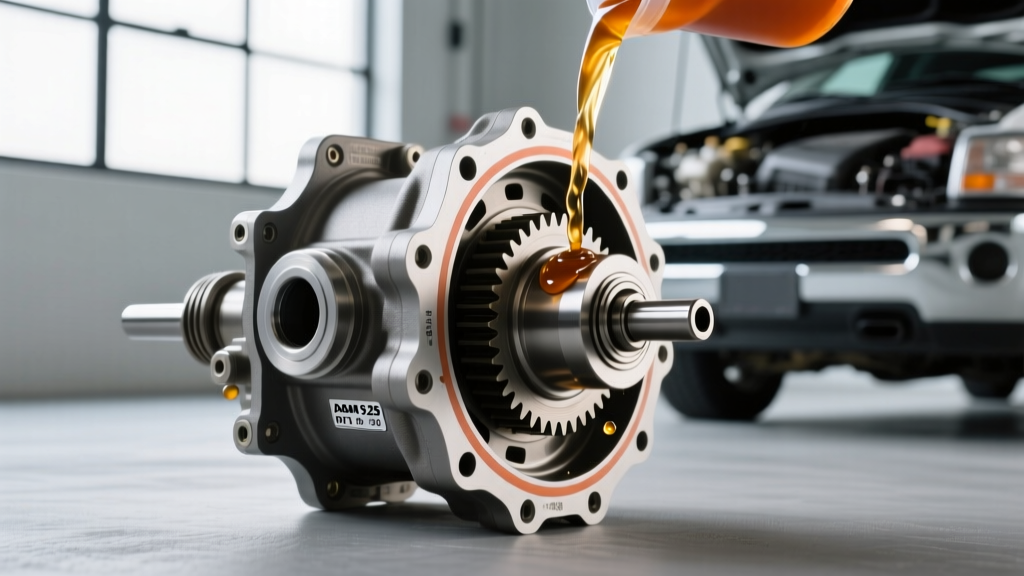
Once cured, remove the rubber fill plug located on the front or upper side of the axle housing. Pump in your 75W-140 synthetic fluid (and friction modifier, if applicable) until the fluid level reaches the exact bottom lip of the fill hole. This equates to roughly 2.38 quarts. Reinstall the fill plug and torque to 25 ft-lbs.
Post-Service Break-In and Diagnostics
If you added friction modifier to a Trac-Lok axle, you must perform the break-in procedure immediately. Drive the truck to an empty, paved lot and perform ten to twelve tight figure-8 maneuvers at idle speed. This forces the clutch packs to slip and engage, distributing the friction modifier evenly across the clutch surfaces. Failure to do this will result in cornering chatter.
Reading the Noises: When Fluid Isn't Enough
A fluid change is preventive, not curative. If your 03 Ram 1500 rear differential exhibits specific acoustic signatures, fluid alone will not save it:
- Coast-Down Whine: A howling noise when you let off the throttle at highway speeds indicates worn pinion bearings or improper gear backlash. This requires a teardown and shim adjustment.
- Acceleration Howl: Noise exclusively under load usually points to pitting on the drive side of the ring gear teeth, often caused by previous towing with degraded 80W-90 fluid.
- Clunk on Shift: Excessive backlash between the ring and pinion, or worn spider gears in an open differential carrier.
Final Verdict on Ram 1500 Axle Maintenance
Maintaining the 03 Dodge Ram 1500 rear differential is a highly cost-effective DIY endeavor. By spending roughly $75 on premium 75W-140 synthetic fluid, the correct RTV sealant, and taking the time to properly prep the mating surfaces, you protect an axle assembly that would cost upwards of $1,800 to replace with a remanufactured unit. In an era of rising repair costs, mastering this fundamental drivetrain service ensures your third-generation Ram continues to handle heavy payloads and daily driving with absolute reliability. Always consult your specific VIN's build sheet via Allpar to confirm your exact axle ratio and limited-slip status before ordering parts.