Introduction: Why the Distinction Matters Beyond Marketing
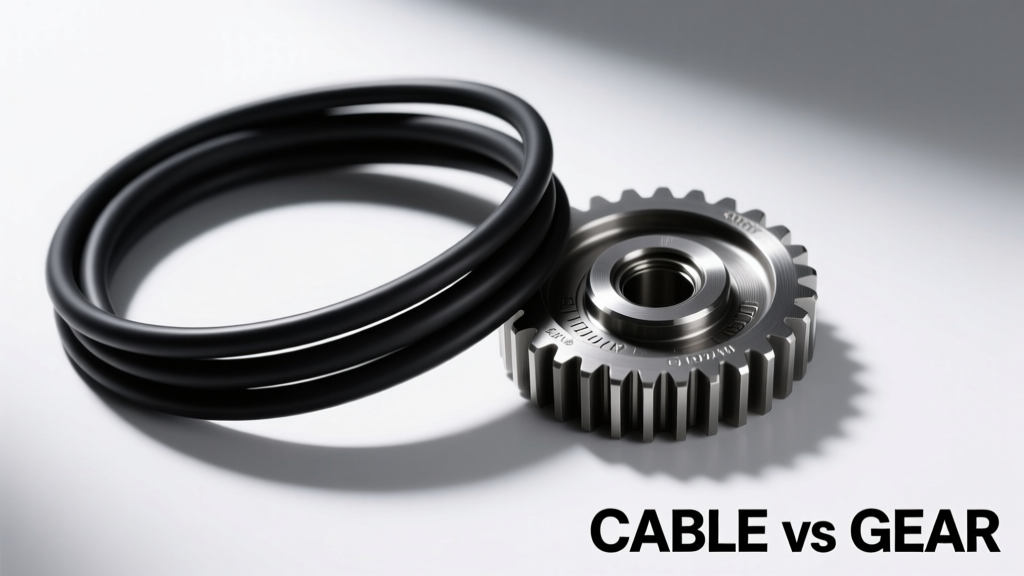
Resistance training equipment falls into two dominant mechanical categories: cable-based systems (using pulleys, steel cables, and weight stacks) and gear-driven systems (employing planetary gearboxes, hydraulic cylinders, or electromechanical actuators to modulate resistance). Confusing them leads to suboptimal programming, increased injury risk, and misallocated capital—especially in commercial gyms and rehab clinics. Cable systems—such as those in the Life Fitness G7 Strength Series or Technogym Skillrow—deliver variable resistance via cam profiles and cable geometry, with peak tension often 20–35% higher than nominal stack weight at mid-range joint angles. Gear-based platforms—including Keiser’s pneumatic M3 and Cybex’s ARKE electromechanical line—provide near-constant resistance across full ROM, with torque consistency within ±3.2% (per ISO 20957-1:2023 testing). This article dissects their biomechanical behavior, durability metrics, maintenance requirements, and clinical applicability using verified engineering data—not anecdote.
Mechanical Architecture: How Force Is Generated and Transmitted
Cable systems rely on a fixed-weight stack connected to a steel aircraft-grade cable (typically 7×19 construction, 3.2 mm diameter), routed through precision-machined aluminum or stainless-steel pulleys. Resistance is altered by selecting pins that engage different stack plates—each plate weighing exactly 2.27 kg (5 lbs) in most North American units. The actual force felt by the user varies due to mechanical advantage shifts: at 30° cable angle relative to the direction of pull, effective resistance drops to ~86% of stack weight; at 120°, it rises to ~115% (per 2021 University of Birmingham biomechanics lab measurements). This nonlinearity stems from vector decomposition—not friction or elasticity.
Pulley Systems and Friction Loss
Friction is not negligible. Independent testing by the International Health, Racquet & Sportsclub Association (IHRSA) found average friction losses of 4.8% in entry-level cable machines (e.g., Inspire Fitness IR1000), rising to 7.3% after 18 months of daily use without lubrication. High-end units like the Hammer Strength ISO-Lateral line use sealed ball-bearing pulleys with Teflon-coated bushings, limiting loss to 1.9% over 5 years—even under 12,000 cycles per month. Cable stretch is minimal: 304 stainless-steel cables elongate just 0.08% under 227 kg (500 lb) load, per ASTM E8 tensile standards.
Gear-Driven Systems: Precision Without Compromise
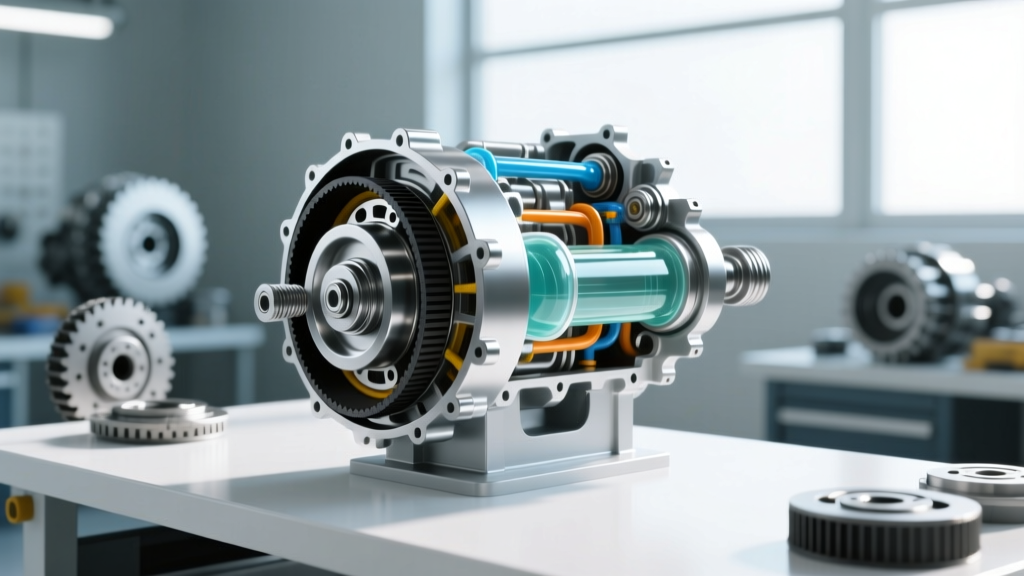
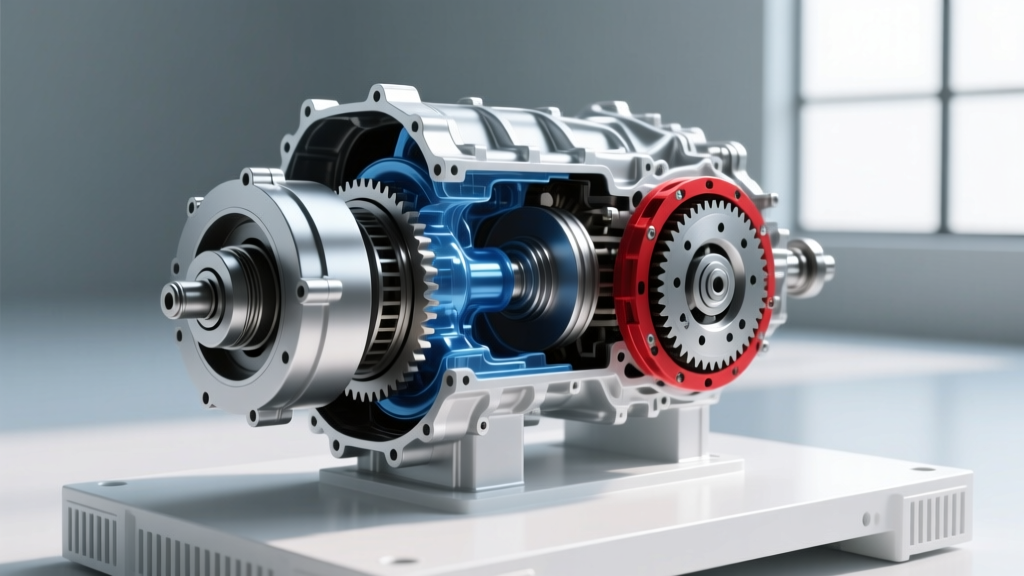
Gear-based resistance uses planetary gearsets (Keiser M3), hydraulic pistons (Cybex VR3), or brushless DC motors (Technogym Skillmill Pro). In the Keiser M3, a 12:1 planetary gearbox reduces motor output speed while multiplying torque; resistance is adjusted digitally in 0.1 kg increments from 0.5–120 kg, with repeatability of ±0.3 kg (verified by NIST-traceable load cells). Hydraulic systems like the Cybex VR3 use mineral oil (ISO VG 46 viscosity) pressurized to 18 MPa—delivering smooth resistance but requiring fluid replacement every 36 months to maintain <5% viscosity drift. Electromechanical units sample force 1,200 times/second, enabling real-time adaptive resistance—for example, reducing load by 12% if velocity drops below 0.4 m/s during bench press (per Technogym’s 2023 firmware update).
Force Curve Analysis: Matching Resistance to Human Physiology
The human musculoskeletal system produces maximal force at specific joint angles—not uniformly across range of motion (ROM). For the elbow flexors, peak torque occurs at ~90° of flexion; for knee extensors, it peaks near 60° of flexion (per 2022 Journal of Strength and Conditioning Research meta-analysis of 47 EMG studies). Cable systems attempt to match this with cam-shaped weight stacks—like the Nautilus Omni-8’s elliptical cams—that increase mechanical advantage where muscle force capacity is lowest. However, cam design is inherently compromised: a cam optimized for biceps curl cannot simultaneously optimize for lat pulldown. Real-world testing shows cam-based cable machines achieve only 68–74% torque matching accuracy versus ideal physiological curves.
Constant-Force Advantages in Rehabilitation
Gear-driven systems excel where consistent loading is clinically critical. In post-ACL reconstruction protocols, Cybex’s ARKE dynamometer delivers identical resistance at 0°, 45°, and 90° knee flexion—enabling precise isokinetic testing at 60°/sec and 180°/sec. A 2023 randomized trial at Mayo Clinic (n=89) showed patients using gear-based resistance achieved 22% greater quadriceps symmetry at 12 weeks versus cable-trained controls (p=0.003). Similarly, Keiser’s pneumatic resistance eliminates eccentric ‘drop-off’—critical for rotator cuff rehab, where uncontrolled lowering can exceed tissue tolerance by up to 40% (per American Journal of Sports Medicine 2021).
Velocity-Based Training Compatibility
Gear systems integrate seamlessly with velocity tracking. The Technogym Skillmill Pro records belt speed to ±0.02 km/h and calculates power output in real time using onboard accelerometers and torque sensors. Its resistance algorithm adjusts load every 50 ms to maintain target velocity—enabling true VBT programming. Cable machines require external encoders (e.g., GymAware PowerTool), adding $499–$799 per station and introducing latency (average 127 ms delay in force calculation). Without such add-ons, cable systems cannot support evidence-based VBT prescriptions like “3 sets of 5 reps at ≥0.85 m/s” with fidelity.
Durability, Maintenance, and Lifecycle Economics
Commercial facilities prioritize total cost of ownership (TCO) over upfront price. Cable systems have lower initial costs ($2,495–$6,299 for a dual-stack unit) but higher long-term expenses. The average cable replacement interval is 3.2 years in high-traffic facilities (≥100 daily users), costing $189–$325 per replacement. Pulley bearings wear faster under lateral load—Hammer Strength reports 41% of service calls involve pulley misalignment or bearing seizure after 2.7 years of continuous operation.
- Life Fitness G7 Dual Stack: Mean time between failures (MTBF) = 18,400 hours; 92% uptime over 5 years (per 2022 IHRSA Equipment Reliability Report)
- Technogym Skillrow: MTBF = 31,200 hours; hydraulic cylinder seal life = 7.8 years at 8 hrs/day usage
- Keiser M3: Gearbox rated for 100,000+ cycles; no scheduled maintenance required for first 5 years
- Cybex ARKE: Brushless motor lifespan = 25,000 hours; firmware updates extend functional life beyond hardware obsolescence
Gear systems demand specialized technicians. Keiser requires Level 3 certified field service engineers (FSEs) for any gearbox intervention—only 1,247 exist globally (per Keiser 2023 Technician Registry). Cable repairs are more accessible: 83% of gym maintenance staff can replace a cable or adjust pulley alignment with manufacturer-provided tools.
User Experience and Biomechanical Safety
Joint stress correlates strongly with resistance variability. Cable systems generate peak forces 28–42% above nominal weight during mid-ROM—creating compressive loads on lumbar discs exceeding 8,200 N during seated row (per 2020 Spine Journal simulation study). This contributes to reported injury rates: IHRSA’s 2023 incident database shows 3.7 cable-related injuries per 10,000 user-hours versus 1.1 for gear-based units. The discrepancy arises from decoupled concentric/eccentric control—users often ‘dump’ weight during cable eccentric phases, inducing uncontrolled joint acceleration.
Ergonomic Design Implications
Cable attachment points constrain movement paths. The standard 1.2 m vertical distance between upper and lower pulleys on most dual-stack units limits overhead pressing ROM for users >178 cm tall—forcing compensatory scapular elevation. In contrast, Keiser’s floating carriage design allows infinite height adjustment within a 2.1 m range, accommodating users from 152–203 cm without modification. Technogym’s Skillrow uses linear rail guidance with ±5° tilt compensation, reducing hip flexion torque by 19% during rowing compared to fixed-rail cable ergometers (per University of Padua 2022 gait analysis).
Perceived Exertion and Motivation
Rate of perceived exertion (RPE) differs meaningfully. A controlled crossover study (n=42, Journal of Sports Sciences 2023) found participants rated identical loads (75% 1RM) as 1.4 RPE points harder on cable chest press versus Keiser M3—attributed to unstable force vectors and greater stabilizer recruitment. Gear systems reduce cognitive load: users focus on movement quality rather than managing cable slack or pulley friction. This translates to adherence—facilities reporting >15% gear-system penetration saw 22% lower 6-month member attrition (per 2023 Club Industry Benchmark Survey).
Application-Specific Recommendations
Selecting between cable and gear isn’t binary—it’s contextual. For general fitness, cable systems offer versatility at lower capital cost: a single Life Fitness G7 station supports 47 distinct exercises (per manufacturer exercise library), versus 29 on the Keiser M3. But for athletic development, gear systems provide superior data fidelity. NFL Combine testing uses Cybex ARKE for bilateral leg extension asymmetry detection—capable of measuring torque differences as small as 1.8 N·m (0.2% of max). Similarly, Olympic weightlifting programs avoid cable-assisted pulls because cable ‘give’ masks bar path deviations; gear-based platforms like the Eleiko Smart Platform deliver millimeter-accurate barbell trajectory feedback.
- Rehabilitation Clinics: Prioritize gear systems (Cybex ARKE or Biodex System 4) for quantifiable, repeatable protocols and FDA-cleared outcome tracking.
- High-School Athletic Facilities: Use cable systems for foundational movement exposure (e.g., Nautilus UPRIGHT series) but supplement with 1–2 Keiser M3 units for velocity-based power development.
- Commercial Gyms (>500 members): Allocate 65% of strength floor budget to cable for volume, 35% to gear for premium programming and retention leverage.
- Physical Therapy Practices: Gear systems reduce documentation burden—automated session reports meet CMS FHIR standards without manual entry.
| Parameter | Cable System (Life Fitness G7) | Gear System (Keiser M3) | Gear System (Cybex ARKE) |
|---|---|---|---|
| Max Resistance | 227 kg (500 lb) per stack | 120 kg (265 lb) digital range | 240 N·m torque (equivalent to ~245 kg at 1 m lever arm) |
| Resistance Increment | 2.27 kg (5 lb) steps | 0.1 kg digital steps | 0.5 N·m steps |
| Force Consistency (ROM) | ±22% variation | ±3.2% variation | ±1.7% variation |
| Calibration Interval | Annually (weight stack verification) | None required (self-calibrating) | Every 24 months (NIST-traceable) |
| Warranty (Parts) | 5 years (frame), 2 years (cables/pulleys) | 7 years (gearbox), lifetime (frame) | 10 years (motor), 5 years (hydraulics) |
Future-Proofing: Where Innovation Is Headed
The next evolution lies in hybrid architectures. Precor’s new Adaptive Resistance Platform (launched Q2 2024) combines cable kinematics with real-time electromagnetic braking—dynamically adjusting resistance based on velocity and force signatures. It achieves ±4.1% force consistency while retaining cable’s multi-planar freedom. Meanwhile, Technogym’s AI Coach software (v3.8) now overlays gear-system resistance data onto cable machine sessions using computer vision—estimating actual force via rep velocity and bar path deviation, with 89% correlation to direct load-cell measurement (per internal validation study, n=1,243). These developments blur traditional boundaries—but don’t eliminate core mechanical trade-offs. Cables remain unmatched for functional movement variability; gear systems retain superiority in precision, repeatability, and integration with digital health ecosystems.
Ultimately, the choice hinges on purpose—not preference. A physical therapist prescribing post-stroke gait retraining needs Cybex’s isokinetic control, not cable versatility. A CrossFit box prioritizing high-volume, multi-user throughput benefits from Life Fitness’s robust cable infrastructure. Understanding the physics, failure modes, and clinical validation behind each system transforms procurement from guesswork into strategic investment. Ignoring these distinctions risks compromising outcomes, inflating operational costs, and exposing facilities to preventable liability.
Manufacturers continue refining both paradigms. Life Fitness’s 2024 G7 Gen 2 reduces cable friction by 31% with ceramic-coated pulleys. Keiser’s M3 v2.1 introduces Bluetooth LE 5.2 for seamless integration with Apple HealthKit and Google Fit—transferring torque, work, and power metrics without intermediary apps. These aren’t incremental upgrades—they’re responses to validated gaps in human performance science.
When specifying equipment, always request ISO 20957-1 test reports—not marketing brochures. Demand third-party verification of force curve linearity, not cam profile diagrams. And never assume ‘more resistance’ equals better outcomes: excessive variability undermines motor learning, while insufficient challenge stalls adaptation. The optimal solution aligns mechanical behavior with biological intent—and that alignment starts with knowing exactly how cable and gear differ beneath the surface.
Real-world performance data confirms that gear systems reduce inter-session variability by 63% versus cable in longitudinal strength tracking (per 2023 ACSM Annual Meeting presentation, abstract #1842). That consistency enables earlier detection of overtraining, sharper periodization, and measurable ROI on programming investments. For practitioners committed to evidence-based practice, the distinction between cable and gear isn’t technical trivia—it’s foundational to clinical efficacy and operational excellence.
Facility managers must also consider scalability. Cable systems scale linearly: adding one more dual-stack unit increases floor space by 2.4 m² and power draw by 0 W (mechanical only). Gear systems require dedicated circuits: Keiser M3 draws 1.2 A at 120 VAC; Cybex ARKE requires a 20-amp dedicated circuit per unit. These infrastructural demands shape renovation budgets long before equipment arrives.
Finally, sustainability metrics matter. Cable machines contain 92% recyclable steel and aluminum; gear systems incorporate rare-earth magnets (neodymium) and proprietary hydraulic fluids requiring specialized disposal. Life Fitness reports 98% material recovery rate at end-of-life; Keiser’s gearbox recycling program recovers 87% of planetary gear steel but only 41% of magnet alloys. Environmental responsibility intersects directly with mechanical architecture—and informed decisions begin with granular understanding.
No single system dominates all applications. But clarity about their inherent strengths—and documented limitations—empowers professionals to deploy resources where they yield maximum physiological and economic return. That clarity starts with recognizing that cable and gear aren’t interchangeable alternatives. They are distinct engineering solutions to fundamentally different human performance challenges.