Best Diff Repair For Tested: Rebuild Cost and Project Management Guide
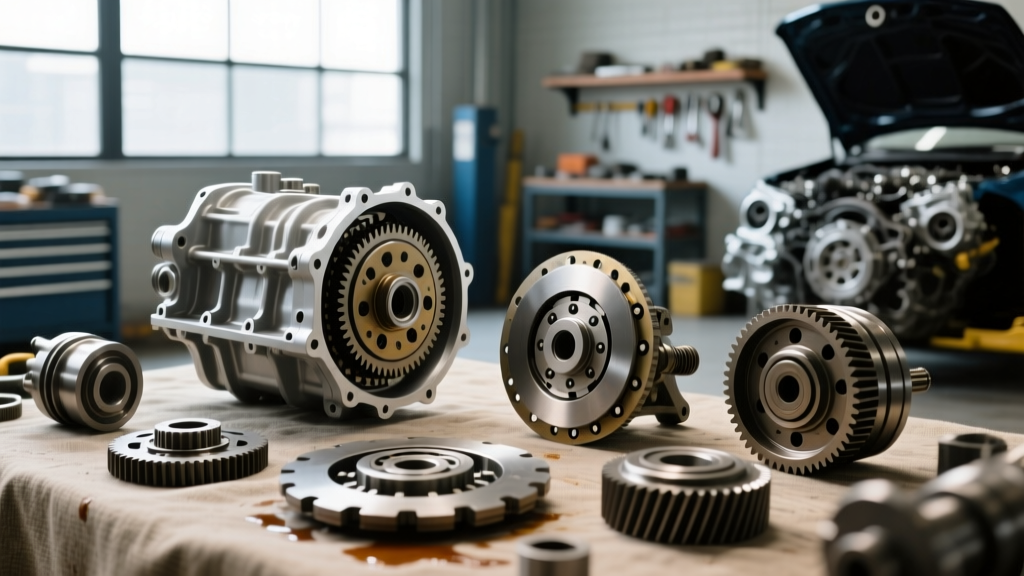
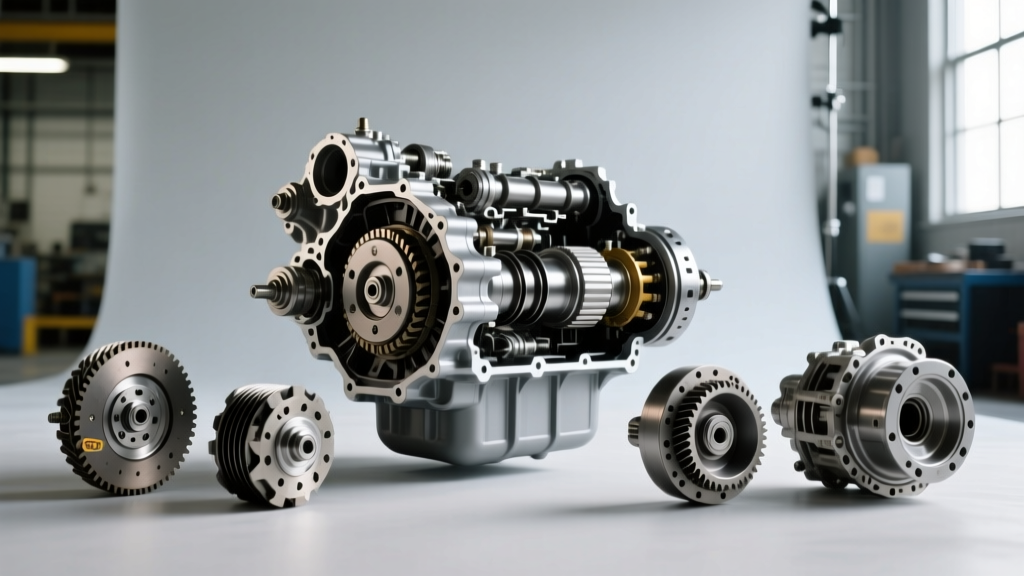
Best diff repair for tested equipment depends on failure mode, gear backlash, bearing preload, seal condition, and whether the differential carrier or housing is damaged. In rebuild-cost estimating, a tested differential repair usually costs $850 to $3,200 for light trucks and $1,800 to $7,500 for construction vehicles, depending on OEM versus aftermarket parts, labor rates, and diagnostic time. This article reviews repair options, brands, measurements, approval controls, and budgeting steps that project managers use when a rebuilt assembly must pass post-repair testing. The goal is not simply to quiet a whine; it is to deliver an assembly that meets torque, runout, temperature, and leak limits during a documented test cycle.
What Tested Means in a Differential Rebuild
Tested is not a marketing label. In a rebuild shop, it means the unit was assembled to a written procedure and then operated under controlled load, speed, and time before shipping. A quality tested repair includes a cold break-in, a warm torque check, and an oil temperature sample that proves the setup is stable. The test record should identify gear oil, additive package, bearing preload, backlash, runout, and any shims used. Without those data points, the buyer has a repaired assembly, not a tested one.
For construction fleet managers, the difference matters because a differential failure can stop a loader, dozer, or tandem truck during a shift. A tested unit should include at least 15 minutes of unloaded rotation, 20 minutes of loaded road or dynamometer simulation, and a final inspection for seepage. Some shops add a 500-mile field test for high-value axles, but that is usually reserved for warranty-sensitive rebuilds rather than routine maintenance.
Acceptance Criteria for a Tested Repair
Before accepting a diff repair, compare the work order to the measured limits used by the original equipment manufacturer. Dana Spicer axles commonly require backlash in the 0.008 to 0.018 inch range, while some heavy-duty Eaton and Dana carriers specify 0.012 to 0.020 inch. Bearing preload should be recorded, often 15 to 35 inch-ounces for side bearings on medium-duty differentials and higher when specified by the housing or carrier design.
- Ring gear backlash measured at three points and recorded on a dial indicator.
- Carrier case runout checked to 0.002 inch or less unless the manufacturer allows more.
- Bearing preload measured after final torque and rechecked after the unit reaches operating temperature.
- Pinion flange torque and seal condition verified against the factory service data.
- Oil temperature held below the shop limit, often 180°F to 210°F during break-in.
- No active leak at the cover, pinion seal, side bearing caps, or vent after a 30-minute test.
A tested repair should also have a clear explanation of why the old unit failed. Common root causes include wrong shims, a collapsed pinion bearing, a damaged carrier bearing race, contaminated gear oil, or a housing that has been bent by overload. If the repair report does not identify the failure mode, the project manager should treat the unit as unproven and request retesting.
How Differential Repair Costs Are Calculated in Rebuild Projects
Rebuild cost estimating uses four buckets: parts, labor, consumables, and validation. A light-duty rear axle might be quoted at $1,100 to $2,600, while a construction vehicle differential with a limited-slip or locking carrier can reach $3,000 to $6,500. The labor line is often 4 to 9 billable hours for disassembly, measurement, machining, reassembly, and test. A skilled technician may charge $85 to $165 per hour in North America, and specialty shops can exceed that when the work requires a press, bore, or magnetic particle inspection.
| Cost Item | Typical Range | Notes for Project Managers |
|---|---|---|
| Diagnostic teardown and report | $120 to $350 | Should include photos, measurements, and failure cause. |
| Ring and pinion gear set | $450 to $1,800 | Heavy-duty Eaton or Dana sets cost more than light truck sets. |
| Bearings and seals kit | $150 to $650 | Use Timken, SKF, National, or OEM equivalents. |
| Labor | $520 to $1,485 | 4 to 9 hours at $130 per hour is common. |
| Gear oil and additives | $35 to $120 | API GL-5 or manufacturer-specified fluid only. |
| Post-repair testing | $75 to $225 | Required if the contract calls for tested. |
These figures do not include freight, core credit, or machine shop work such as housing alignment. If the housing runout exceeds 0.010 inch on axle tube bores or 0.002 inch on the carrier seat, the estimate should increase by $300 to $900 for line boring or replacement. A project manager should ask whether the quoted price includes final torque-to-yield bolt replacement, because many modern carriers use bolts that are not reusable.
Cost Drivers That Change the Estimate
Several variables can move a quote by 20 to 60 percent. First, whether the repair is performed by a general mechanic or a certified axle shop. Second, whether the differential has a locker, limited-slip clutch pack, or integrated power take-off hardware. Third, whether the customer requests OEM parts such as Dana Spicer, Ford, Caterpillar, Komatsu, or John Deere components versus aftermarket brands such as Yukon, ARB, Motive Gear, or Richmond Gear. Fourth, whether the unit must pass a documented test or only a road test.
Location also affects cost. Urban shops with high overhead may charge $145 to $175 per hour, while rural shops may charge $85 to $115. Parts availability matters: a standard 8.8-inch Ford carrier gear set from Motive Gear may cost $650 to $950, while a Dana 60 or Eaton heavy-duty set can exceed $1,200. When estimating a construction rebuild, include a contingency for core exchange delays, because a housing or carrier core may be on backorder for 7 to 21 days.
Best Repair Options by Differential Type
There is no single best diff repair for every tested unit. The correct option is the one that restores the original torque path and passes acceptance limits without hiding structural damage. For a lightly worn open differential, a bearing, seal, and shim repair may be enough. For a unit with chipped ring gear teeth, a full gear set replacement is safer. For a locker or limited-slip unit, clutch pack and preload settings require more precision and often more labor.
Open Differentials, Lockers, and Limited-Slip Units
Open differentials are the simplest to rebuild. A typical job includes a new Timken or SKF bearing set, National or OEM pinion seal, shims, and API GL-5 gear oil such as Motul Gear 300, Red Line Heavy Duty, Amsoil Severe Gear, or Castrol Syntrax. The critical measurement is backlash. If the ring gear shows scoring but less than 0.006 inch of material loss, some shops polish and reuse it, but replacement is usually recommended for tested work.
Locker-equipped differentials such as ARB Air Locker, Eaton Detroit Locker, TruTrac, or Lokka units add parts and setup time. An ARB repair may require checking the air line, piston, lock collar, and gear oil compatibility. Eaton Detroit units need precise side bearing preload and often a new clutch or spring pack. Limited-slip units from Dana or Eaton may require friction modifier additives; using the wrong fluid can cause chatter and fail the test.
- Open diff repair: best for low-mileage wear and correctable bearing noise.
- Gear set replacement: best when backlash cannot be corrected with shims or when teeth are chipped.
- Locker rebuild: best for off-road, fleet, or construction use where traction is required.
- Limited-slip rebuild: best when clutch packs are worn but the carrier and gears are sound.
- Full housing replacement: best when axle tubes are bent, threads are stripped, or weld cracks are found.
For a tested repair, the shop should not skip the carrier bearing race inspection. A small pit or brinell mark can create noise that looks like gear whine. If the race is damaged, the correct repair is replacement, not shimming, because the load pattern will remain incorrect.
Tested Brands and Parts to Compare
Brand choice affects both cost and test risk. OEM parts are the safest when the contract requires original tolerances. Dana Spicer parts are common in truck and axle rebuilds, while Eaton provides heavy-duty differentials and lockers for commercial and construction applications. Yukon, Motive Gear, and Richmond Gear are popular aftermarket gear sets. ARB, Lokka, TruTrac, and Eaton Detroit are known for lockers. Bearings should come from Timken, SKF, NTN, NSK, or OEM stock rather than unknown low-cost suppliers.
Seals and kits are another decision point. National, NAPA Echlin, and SKF seal sets are widely available. Gasket material should match the cover design; silicone alone is not enough for some pinion flange areas. A tested assembly should use fresh lock washers, new crush sleeves where required, and torque-to-yield bolts if specified. Reusing old bolts can cause preload variation, and that can fail a post-repair test.
OEM, Aftermarket, and Rebuild Kits
OEM gear sets may cost 25 to 50 percent more than aftermarket sets but offer consistent heat treatment and tooth geometry. Motive Gear and Richmond Gear can provide good value for light truck and medium-duty applications, but the project manager should verify warranty terms and backlash data. Yukon often appeals to performance and off-road buyers, while Dana or Eaton remains preferred for commercial fleet work.
Rebuild kits save time if they include the correct shims, seals, bearing cups, cones, and lock washers. However, not all kits fit every year, model, and carrier code. A shop should confirm the axle code, such as Ford 7.5, 8.8, Dana 30, 44, 60, or 70, and Eaton 10 or 11.8 series. If the kit is wrong, the labor estimate grows by 2 to 4 hours.
Labor, Diagnostics, and Project Management Controls
Project managers control cost by making the repair scope measurable. The work order should state the torque specs, backlash target, preload target, oil grade, test duration, and acceptance limit. For example, a typical pinion nut might require 180 to 300 ft-lb depending on flange size and crush sleeve, while carrier bolts may require 65 to 95 ft-lb on medium-duty axles. These numbers must come from the manufacturer, not the tech memory.
- Review the original failure report before approving parts.
- Require a teardown measurement sheet with dial indicator readings.
- Approve parts with brand, part number, and warranty stated.
- Set a test plan with cold and hot checks.
- Require sign-off before shipping to the field.
A tested repair should include a change control process. If the technician finds a damaged carrier, the shop must stop and issue a revised estimate. In construction projects, unapproved scope creep can delay a critical path. A well-run rebuild manager will require a one-page change order showing the new failure cause, parts added, hours added, and impact on delivery.
When to Replace Instead of Repair
Replacement becomes the better option when the housing, carrier, or axle tubes are damaged beyond economical correction. A cracked Dana 60 housing, a worn Eaton carrier bore, or a bent axle tube with more than 0.015 inch runout usually requires replacement. The cost of a used or rebuilt housing may be $400 to $1,400, while machining and alignment can push a repair past the cost of a tested replacement unit.
For construction equipment, replacement also reduces downtime. A loader that cannot dig during a paving operation can lose hundreds of dollars per hour. If the repair estimate exceeds 75 percent of a tested replacement unit, choose replacement. If the unit has a history of overheating, oil contamination, or overloaded service, a full carrier replacement may be safer than a gear-only repair.
Budgeting and Approval Process for Construction Rebuilds
Budgeting for a tested diff repair should include three lines: base repair, contingency, and validation. A practical budget for a light-duty axle might be $1,200 base, $180 contingency, and $120 testing. For a heavy-duty construction axle, a $3,800 base, $570 contingency, and $220 testing is more realistic. These values assume no major housing machining. If the project requires after-hours service, add 25 to 50 percent to labor and 1 to 2 days to the schedule.
Contingency and Change Orders
Contingency is not padding; it is the cost of uncertainty. Common triggers include stripped carrier threads, missing shims, damaged side bearings, and wrong gear oil additives. A project manager should reserve 10 to 15 percent for light-duty repairs and 15 to 25 percent for heavy-duty or locker units. Change orders should be approved electronically with photographs and measurement data, not verbal promises.
Warranty terms should be clear. A tested repair often carries 12 months or 12,000 miles for light-duty use, and 90 to 180 days for severe construction service. Some shops offer a 24-month limited warranty when OEM gear sets are used. The project manager should require the warranty to include labor, not just parts, because the highest cost in a diff failure is often the second teardown.
Before authorizing the repair, collect the axle code, VIN or equipment serial number, failure symptoms, oil sample, and service history. If the unit is making a howl that changes with speed, suspect gear wear or preload. If it clicks during turns, suspect side gears or carrier bearings. If the oil smells burnt or contains metal flakes, the repair scope must include a flush and inspection of all bearings and races.
Ask the shop to provide a written acceptance test. It should say the unit ran at a specified RPM or road speed, under a specified load, for a specified duration, with oil temperature below a limit. For a tested diff repair, the report should list backlash, preload, torque values, oil type, and any shims installed. If the shop cannot provide those values, the project manager should reject the tested label and require a repeat test or replacement.