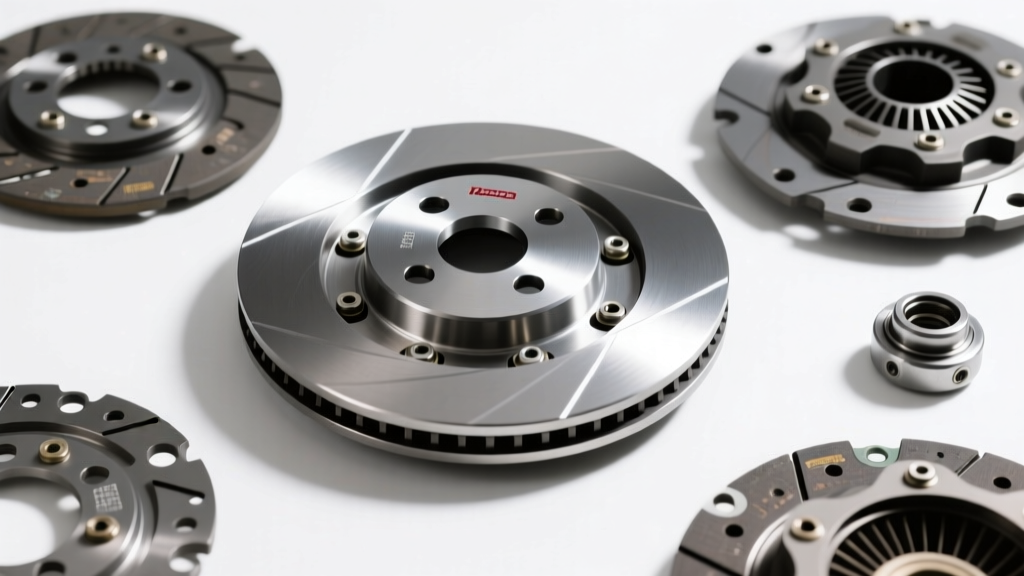
Best Clutch Disc Plate For Real: What Real Means
The best clutch disc plate for real-world driving is not the stickiest disc you can buy; it is the disc that matches your flywheel, pressure plate, torque curve, and pedal feel. For stock or lightly modified street cars, an organic disc from Exedy or Luk often lasts longer than ceramic. For boosted or track cars, an ACT or Centerforce sintered-metallic disc paired with a proper flywheel can hold 550 to 800 lb-ft without chatter. Start with flywheel surface, spline size, and clamping load, not just friction material.
Real means repeated launches, warm traffic, hill starts, cold mornings, and a car that does not vibrate across the rearview mirror. A clutch disc plate is a friction plate, but it is only one part of a torque-transfer system. The flywheel provides mass and a mounting surface, the pressure plate provides clamping force, the release bearing provides pedal modulation, and the disc hub protects the transmission input shaft. If any one component is wrong, the clutch feels harsh, slips, shudders, or fails early.
From a flywheel shop perspective, the best clutch disc plate for real use is selected after measuring the flywheel face. Runout above 0.003 in, deep score marks, heat blueing, or a worn starter ring can turn a premium disc into a poor choice. A 0.020 in difference in rivet countersink can be the line between a smooth engagement and a chatter that customers blame on the flywheel.
Friction Material Choices for Real Driving
Friction material is the first big fork in the road. Organic pads are resin-bonded fiber and metal powders, usually with split pads or torsion springs. They are quiet, forgiving, and easy to modulate. Ceramic and sintered metallic pads are denser, hotter, and less forgiving, but they can transmit far more torque before slipping. The right material is not the one with the highest sticker torque; it is the one that stays below its thermal and pressure limits during your actual duty cycle.
Organic Discs for Daily Drivers
For daily drivers, organic remains the default. A typical 8.0 in organic disc from Exedy or Luk can handle a stock V6, a mild turbo four-cylinder, or a light-duty truck transmission with predictable pedal effort. Pad thickness is often around 0.160 in when new, with service limits near 0.120 in. Split pads with torsion springs help absorb driveline shock, reducing noise at highway cruising and during light throttle shifts.
Organic discs work best when the flywheel face is flat and the pressure plate clamping load is modest, often 900 to 1,400 lb. If the engine torque climbs above 350 to 400 lb-ft, especially with launch control or towing loads, organic pads may fade at high heat. A good organic disc is not weak; it is simply tuned for comfort and long life rather than peak bite.
Ceramic and Kevlar Hybrids for Modified Engines
Ceramic friction is common in performance kits for cars making 400 to 650 lb-ft. These discs use ceramic or ceramic-kevlar blends with a more rigid hub and higher pressure plate loads. The pedal feel is firmer, engagement is quicker, and the clutch can tolerate repeated heat cycles better than organic. The tradeoff is noise: rattles from torsion springs and a more abrupt bite point are common.
ACT and Centerforce offer many hybrid kits that pair well with steel flywheels in street cars. A 7.875 or 8.063 in ceramic disc may be rated for 500 to 700 lb-ft when mated to a pressure plate around 1,500 to 1,900 lb of clamping force. The flywheel must be machined or replaced if the surface is uneven, because a rigid disc will transmit chatter more readily than a soft organic pad.
Sintered Metallic for Drag and Heavy Load
Sintered metallic discs are the heavy hitters. They use compressed metal friction and are common in drag cars, diesel trucks, and high-torque turbo builds. A full-face sintered disc can hold 800 to over 1,000 lb-ft, but it demands a flat flywheel, strong pressure plate, and often a heavier flywheel or dual-mass setup to control vibration. The pedal effort can exceed 100 lb, so hydraulic assist or a proper slave cylinder becomes important.
South Bend, North Star, and some ACT or Centerforce kits supply sintered options for big-torque applications. In real-world use, sintered metallic is not always the best clutch disc plate for a street car because it can be harsh, noisy, and hard on the transmission. It excels when traction, boost, and launch loads are the limiting factors, not driver comfort.
- Choose organic for comfort, quiet operation, and stock to mild torque under 400 lb-ft.
- Choose ceramic or kevlar hybrids for boosted street cars and track days with 400 to 700 lb-ft.
- Choose sintered metallic for drag launches, heavy towing, or diesel torque above 700 lb-ft.
- Choose a full-face design only when the flywheel and pressure plate can maintain even clamping.
- Choose a hub-style disc when spline alignment and input shaft support are the priority.
Matching the Disc to the Flywheel and Pressure Plate
The clutch disc plate does not work alone. It is clamped between a friction surface and a flywheel, and its life depends on how evenly that load is applied. A disc that is too soft for a heavy pressure plate can wear quickly. A disc that is too rigid for a worn flywheel can cause judder. The best system balances friction torque capacity, clamping load, torsional damping, and flywheel inertia.
Pressure Plate Clamping Load
Pressure plate load is measured in pounds and often rises with performance. A stock light truck pressure plate may apply 1,100 to 1,300 lb. A performance street kit may apply 1,500 to 1,800 lb. A drag pressure plate can exceed 2,200 lb. If the disc torque capacity is lower than the pressure plate can clamp, the flywheel or input shaft may be damaged. If the disc is too sticky for the flywheel, the engine may stall at launch instead of slipping smoothly.
For real driving, I prefer to match the disc to the flywheel material. Steel flywheels tolerate higher loads and are more stable across heat cycles. Aluminum flywheels, such as many Exedy, Fidanza, or ACT lightweight wheels, are excellent for throttle response but need careful surface preparation. A light aluminum flywheel paired with an aggressive sintered disc can make a street car feel twitchy and increase wear if the flywheel face flexes or the pilot bearing is loose.
Input Shaft and Spline Details
Spline count and hub design matter as much as friction material. Common manual transmissions use 21, 26, or 31 splines on small cars, and 10 to 12 splines on some older or heavy-duty units. The disc hub should slide freely on the input shaft but not rock. A hub that is too loose creates chatter; a hub that is too tight can drag and cause the clutch to stay engaged slightly, leading to premature wear.
Measure the input shaft before buying a disc plate. The spline OD, length, and root diameter must match the transmission. Also check the pilot bearing or bushing. A worn pilot can allow the disc to run off-center, causing one side of the friction pad to heat faster. On a 26-spline Tremec T56 or a 21-spline Toyota V158, small hub differences can decide whether a clutch kit lasts 40,000 miles or 4,000 miles.
Another real-world detail is disc centering. Many flywheels have a pilot spigot, but some performance flywheels rely on the pressure plate centering. A disc centered only by the input shaft can vibrate if the shaft is bent or if the clutch fork pushes unevenly. A centered hub with proper pilot alignment reduces heat checking and keeps the friction surface parallel.
Real Brands and Model Families That Earn Trust
Exedy is a strong choice for street and mild performance because it supplies organic and ceramic options for Japanese, American, and European vehicles. Its clutch kits are often used as factory replacements, and many flywheels are available with matched organic discs. For a 2JZ, Honda B-series, or Subaru EJ, an Exedy organic disc with a proper flywheel can hold 350 to 450 lb-ft while keeping pedal feel civil.
Luk and Sachs are excellent for OE-style replacements and light modified use. Luk kits often include a pressure plate, disc, and release bearing, which simplifies assembly. Their organic discs are quiet and predictable, but they are not always the best clutch disc plate for a car making 600 lb-ft. A boosted GTI, Focus, or Subaru can outgrow a stock-style Luk disc quickly if the pressure plate load is not increased.
ACT is known for performance flywheels and clutch kits, including ClutchX-style two-piece flywheels and discs for street, track, and drag use. ACT ceramic and sintered discs are popular on boosted Mustangs, Camaros, and diesel trucks. For real driving, ACT kits are strong when the owner wants firmer pedal feel and is willing to accept a little noise. They are especially useful when torque exceeds 500 lb-ft and a stock organic disc would slip.
Centerforce, South Bend, and North Star cover different real-world niches. Centerforce DYAD and Power Torque kits are often praised for progressive pressure plate design, which can soften engagement while raising torque capacity. South Bend is common in diesel and heavy-duty applications, while North Star is a supplier for high-load disc plates. ZF and Sachs are frequently seen in European manual transmissions, where a matched disc and pressure plate are critical for smooth shifting.
Measurements and Specs That Prevent Repeat Failures
Before recommending a clutch disc plate, I measure the old disc, flywheel, pressure plate, and input shaft. These numbers tell more than a catalog label. The table below summarizes typical real-world ranges. Values vary by brand and vehicle, but they help avoid mismatched kits.
| Item | Typical Range | Why It Matters |
|---|---|---|
| Disc outer diameter | 7.25, 8.00, 8.375 in | Larger diameter increases torque capacity and pad area. |
| New pad thickness | 0.150 to 0.200 in | Thin pads reduce heat capacity and engagement height. |
| Service pad thickness | 0.120 in minimum | Rivets may score the flywheel if pads wear low. |
| Pressure plate load | 1,100 to 2,200 lb | Higher load requires stronger disc and release system. |
| Torque capacity | 300 to 1,000+ lb-ft | Must exceed peak engine torque by 25 to 40 percent. |
| Flywheel face runout | 0.003 in TIR maximum | Excess runout causes chatter and uneven heat. |
| Flywheel surface finish | 32 to 125 microinch | Too smooth can glaze; too rough can wear pads fast. |
| Spline count | 10, 21, 26, 31 common | Hub must match the transmission input shaft exactly. |
A 25 percent safety margin on torque capacity is a practical rule for real use. If an engine makes 600 lb-ft, do not choose a disc rated for exactly 600 lb-ft. Heat soak, boost spikes, and driver error will find the weak link. A 750 to 850 lb-ft rated disc gives a buffer, provided the flywheel and pressure plate can support the load without making the pedal unbearable.
Also check rivet countersink. A rivet head should sit 0.020 to 0.040 in below the friction pad surface. If the countersink is too shallow, rivets can rub the flywheel. If too deep, the pad may be too thin or weak. On a machined flywheel, always recheck clearance after cutting. A 0.005 in cut can change the story.
Choosing the Best Clutch Disc Plate for Street, Track, and Towing
For a street car, the best clutch disc plate is usually organic or a mild ceramic hybrid. A 300 to 450 lb-ft boosted Civic, Miata, or 240SX can run smoothly on an Exedy or Luk organic disc if the flywheel is flat and the torque is limited. If the car makes 500 lb-ft, a ceramic disc and a stronger pressure plate become more attractive. Pedal effort should stay under 50 to 60 lb for daily use.
For track cars, heat cycles matter more than peak torque. A 450 to 600 lb-ft turbo car doing 20-minute sessions needs a disc that can reject heat and not glaze. Ceramic from ACT or Centerforce is common. The flywheel should be steel or a quality two-piece with a steel friction ring. Aluminum flywheels are fine for short bursts, but repeated heat checks the surface and can increase chatter.
For towing or diesel, a sintered or full-face disc is often necessary. A 6.0L or 6.4L diesel making 650 to 800 lb-ft can destroy an organic disc in traffic. South Bend or North Star kits with heavy pressure plates and steel flywheels are better. If the truck also sees highway cruising, a torsion-damped disc reduces driveline noise, but the friction material must still resist heat and constant slip at low speed.
Installation Notes From a Flywheel Shop Bench
Installation separates a good clutch from a long-lived clutch. Even the best disc plate can fail if the flywheel is dirty, the pilot is worn, or the pressure plate bolts are not torqued evenly. Use a clutch alignment tool sized to the transmission input shaft. Do not use grease on the friction surfaces. Clean the flywheel with brake cleaner or alcohol and a lint-free cloth.
- Remove the old disc and inspect the flywheel for heat blueing, cracks, and runout.
- Measure pad thickness, rivet countersink, and hub wear.
- Check input shaft runout and pilot bearing condition.
- Mount the flywheel and torque bolts to specification in a star pattern.
- Align the disc with the correct tool and confirm free rotation.
- Install the pressure plate evenly and torque to spec.
- Adjust pedal free play or hydraulic slave clearance.
- Road test for chatter, drag, and heat fade.
After installation, expect a short break-in. Organic discs may feel slightly grabby at first, then smooth out after 100 to 200 miles. Ceramic and sintered discs often improve after a few controlled heat cycles. Do not tow a trailer or launch hard until the pads have bedded. During break-in, use moderate throttle and avoid slipping the clutch at high engine rpm.
One of the most common real-world mistakes is mixing a performance disc with a stock flywheel that has too much runout. A customer may buy a Centerforce or ACT kit, install it on a warped flywheel, and then blame the clutch. If the flywheel face is beyond 0.003 in total indicated runout, resurface it with a proper flywheel lathe or replace it. Do not rely on sandpaper.
The other mistake is ignoring the release system. A disc plate that requires 1,800 lb of clamping load needs a strong diaphragm spring, good fork geometry, and a release bearing that can handle side load. If the pedal feels light but the clutch slips, check pressure plate adjustment and flywheel surface before condemning the disc. If the pedal is heavy, check hydraulic ratio, master cylinder size, and slave bearing preload.
From a flywheel expert view, the best clutch disc plate for real is a matched system choice. Exedy and Luk organic discs suit stock and mild daily driving. ACT and Centerforce ceramic or sintered discs suit boosted street and track use. South Bend and North Star kits suit diesel and towing. The final answer changes with torque, flywheel condition, and driver duty cycle, but the rules stay practical: measure the surfaces, match the splines, keep a torque margin, and respect heat.