The Custom Swap Dilemma: Wilwood Pedals and IHTOB Failures
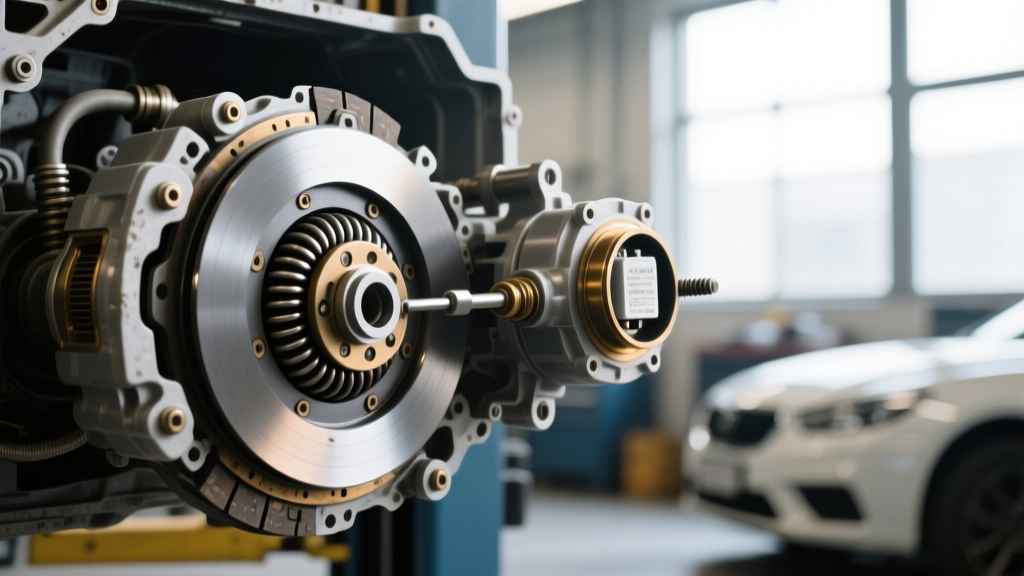
When executing a modern drivetrain swap into a classic chassis—such as dropping a Tremec T56 Magnum and LS-based V8 into a 1969 Camaro or an early Mazda Miata track build—fabricators almost universally turn to aftermarket pedal boxes. The Wilwood clutch pedal reverse-mount firewall assemblies (like the universally praised 340-13820 series) offer unparalleled adjustability and structural rigidity. However, as of 2026, we continue to see a massive spike in premature Internal Hydraulic Throw-Out Bearing (IHTOB) failures directly tied to improper Wilwood pushrod calibration.
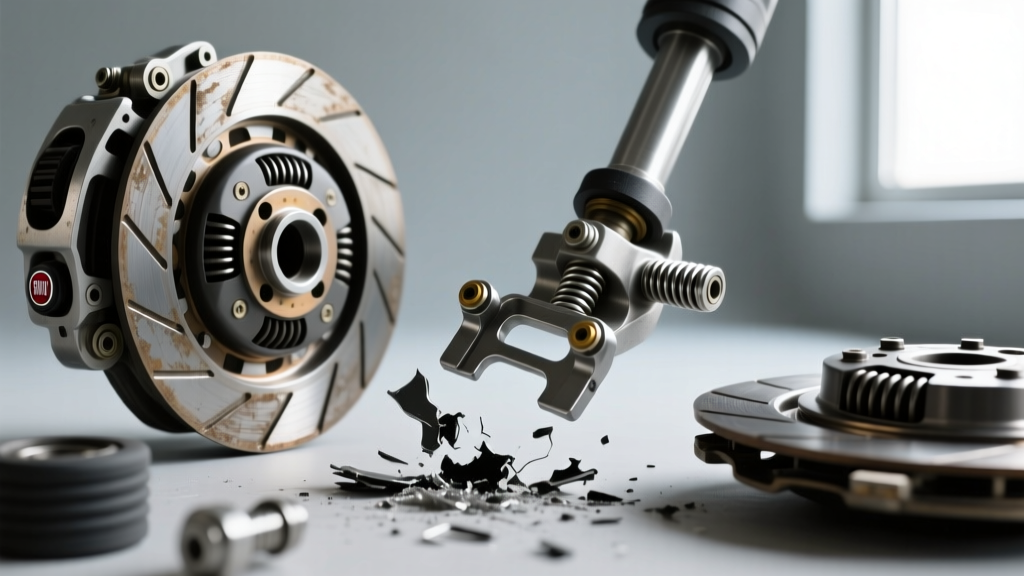
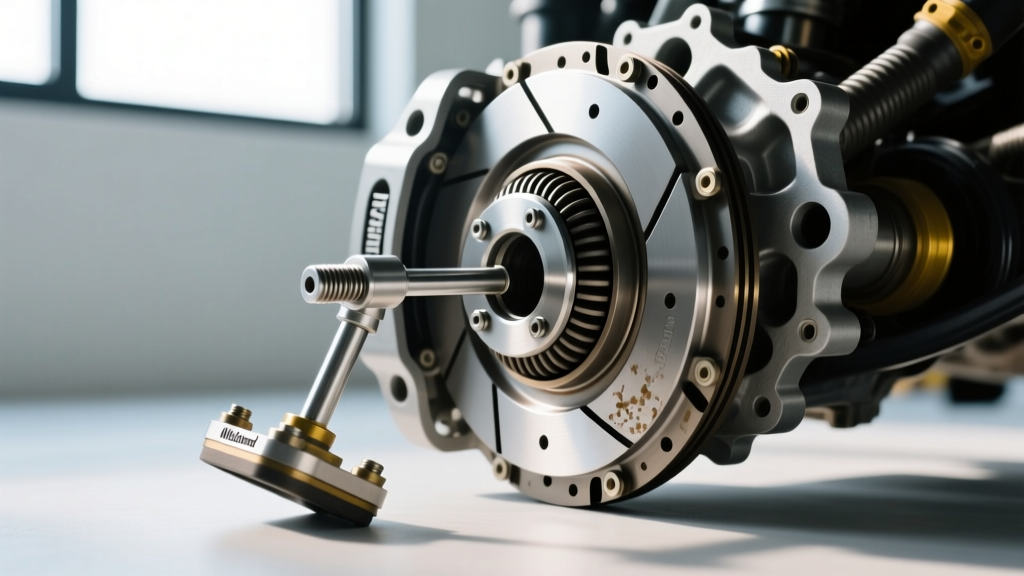
Unlike factory hydraulic systems that utilize stamped-steel pushrods with built-in mechanical stops, Wilwood master cylinder pushrods are fully adjustable threaded units. If installed without a precise understanding of hydraulic freeplay, the master cylinder piston will fail to retract fully. This seemingly minor setup error forces the throw-out bearing into constant, high-RPM friction against the pressure plate diaphragm fingers, leading to catastrophic bearing failure in as little as 500 miles.
Auditory Diagnostics: Decoding Throw-Out Bearing Noise
Before tearing into the bellhousing, you must accurately diagnose the acoustic signature of the failure. Throw-out bearing noise is often misdiagnosed as transmission input shaft bearing wear or pilot bearing failure. Use the diagnostic matrix below to isolate the exact failure mode within your Wilwood-to-T56 hydraulic circuit.
| Acoustic Signature | Pedal State | Probable Failure Mode | Wilwood-Specific Root Cause |
|---|---|---|---|
| High-pitched metallic whine | Foot OFF pedal (Engaged) | IHTOB riding pressure plate fingers | Pushrod adjusted too long; zero freeplay; compensating port blocked. |
| Harsh mechanical rattle | Foot OFF pedal (Engaged) | Worn IHTOB retainer clips or worn input shaft snout | Harsh pedal return spring causing violent retraction impacts. |
| Grinding upon engagement | Foot ON pedal (Disengaged) | Incomplete clutch release or pilot bearing failure | Master cylinder bore too small (e.g., 3/4-inch) lacking volume to fully stroke the IHTOB. |
| Chirping at take-up point | Light pressure applied | Dry or scoring bearing face | Fluid expansion from blocked compensating port pushing bearing into fingers. |
The Hidden Culprit: Master Cylinder Compensating Port Blockage
To understand why a Wilwood clutch pedal setup destroys throw-out bearings, you must understand the master cylinder's internal anatomy. Inside the Wilwood 260-1304 (3/4-inch bore) or 260-1305 (7/8-inch bore) master cylinder, there is a tiny compensating port (or fluid return port) located near the top of the bore. When the pedal is fully released, the piston must retract past this port. This action accomplishes two things:
- It allows excess fluid to return to the reservoir.
- It equalizes line pressure, allowing the IHTOB's internal return spring to pull the bearing face away from the pressure plate fingers.
If the Wilwood adjustable pushrod is tightened even one-half turn too far, the piston rests over the compensating port, sealing the system. As the engine bay heat transfers into the DOT 3 or DOT 4 brake fluid, the trapped fluid expands. Because it cannot expand backward into the reservoir, it pushes forward, driving the IHTOB into the spinning pressure plate. This constant drag generates immense heat, melting the bearing's internal Teflon liners and shattering the ceramic ball retainers.
Pushrod Freeplay Calibration Protocol
To cure and prevent throw-out bearing noise, you must establish exact mechanical freeplay between the Wilwood pedal and the master cylinder piston. According to Wilwood Engineering's technical guidelines, the pushrod must never hold the piston in a pre-loaded state.
- Step 1: Measure Piston Depth. Remove the master cylinder from the firewall. Use a depth micrometer to measure from the mounting flange to the bottom of the piston dimple. On standard Wilwood 3/4-inch clutch masters, the piston rests approximately 0.050 inches below the snap-ring.
- Step 2: Set Pushrod Length. Adjust the threaded pushrod so that when the pedal is resting against the firewall stop, there is exactly 0.015 to 0.020 inches of freeplay between the pushrod spherical end and the master cylinder piston dimple.
- Step 3: Verify Pedal Freeplay. Reinstall the master cylinder. At the top of the pedal pad, you should feel roughly 1/2-inch to 5/8-inch of dead travel before the pedal meets hydraulic resistance. If the pedal is rock-solid the millimeter it moves, your pushrod is too long.
- Step 4: The Air-Gap Check. For ultimate verification, remove the bellhousing inspection cover. With the clutch fully engaged (foot off pedal), use a feeler gauge to check the gap between the IHTOB wear ring and the diaphragm spring fingers. You must see a minimum 0.100-inch to 0.150-inch air gap. If there is zero gap, your hydraulic system is over-pressurized.
Hydraulic Volume Mismatches and Over-Travel
Conversely, if your throw-out bearing is failing due to excessive side-loading or bottoming out internally, you may have a hydraulic volume mismatch. A common error in 2026 track builds is pairing a high-volume Wilwood 7/8-inch master cylinder with a standard GM LS-style IHTOB (Part #12557939). The 7/8-inch bore moves too much fluid volume, over-extending the IHTOB piston past its safe travel limit, causing the internal seals to blow out under the extreme 4,000+ PSI generated during heavy pedal effort.
Expert Recommendation: For standard 11-inch to 12-inch aftermarket clutches (like McLeod RST or Centerforce DYAD), stick to the Wilwood 3/4-inch bore (Part #260-1304). This provides the correct fluid volume to fully disengage the clutch fingers while leaving a safe 0.100-inch buffer at the bottom of the pedal stroke, preventing IHTOB over-extension and subsequent fluid bypass.
Bleeding the IHTOB: Eliminating Sponginess and Partial Engagement
A throw-out bearing will also chirp and rattle if it is only partially engaging the pressure plate due to aerated fluid. Internal hydraulic throw-out bearings are notoriously difficult to bleed because the bleeder screw points upward into the bellhousing, trapping air bubbles inside the piston cavity.
Pro-Tip: Never rely on gravity bleeding or standard pump-and-hold methods for an IHTOB paired with a Wilwood pedal box. You must use a motive pressure bleeder set to 15-20 PSI, or utilize a vacuum bleeder directly at the bellhousing bleeder screw while rapidly cycling the Wilwood pedal through its full stroke to agitate trapped micro-bubbles out of the IHTOB cavity.
Always use a high-dry-boiling-point fluid like Wilwood EXP Super DOT 4 or Castrol SRF. Standard DOT 3 fluid will boil under the radiant heat of the T56 Magnum bellhousing, creating vapor pockets that mimic the symptoms of a failing, slipping throw-out bearing.
Replacement Specs and Torque Data
If your diagnostics confirm that the throw-out bearing has already suffered mechanical failure, the transmission must be pulled. When replacing the IHTOB in a Tremec T56 Magnum or GM LS application, adhere strictly to the following torque specifications and part numbers to ensure longevity. For detailed drivetrain alignment specs, refer to the Tremec Service Downloads portal.
| Component | OEM / Aftermarket Part # | Torque Specification | 2026 Est. Cost |
|---|---|---|---|
| GM LS IHTOB (Standard) | GM 12557939 | Retainer Bolts: 15 lb-ft | $65 - $85 |
| McLeod Adjustable IHTOB | McLeod 16505 | Retainer Bolts: 15 lb-ft | $280 - $320 |
| Wilwood 3/4" Master Cyl. | Wilwood 260-1304 | Firewall Nuts: 18 lb-ft | $110 - $130 |
| GM LS Pilot Bearing | GM 12557583 | Press-Fit (No Torque) | $15 - $25 |
| Bellhousing to Block (LS) | OEM Grade 10.9 | 35 lb-ft | N/A |
Critical Inspection: The Input Shaft Snout
Before installing a new IHTOB, you must inspect the Tremec T56 Magnum's front bearing retainer collar (the snout that the throw-out bearing rides on). If the previous IHTOB failed catastrophically and spun on the shaft, it will machine a deep groove into the aluminum or steel retainer. If you slide a new IHTOB over a grooved snout, it will cock sideways under hydraulic pressure, causing immediate clutch chatter and a renewed rattle. If the snout is scored deeper than 0.005 inches, you must replace the front bearing retainer plate or machine it and install a steel sleeve.
Summary
Integrating a Wilwood clutch pedal assembly into a custom T56 or LS swap offers incredible pedal feel and firewall clearance, but it removes the factory safety nets. Throw-out bearing noise in these setups is rarely a defect of the bearing itself; it is almost always a symptom of hydraulic mismanagement. By meticulously setting your pushrod freeplay to 0.020 inches, verifying the 0.100-inch air gap at the diaphragm fingers, and pressure-bleeding the system with high-temp DOT 4 fluid, you will eliminate bearing noise and secure a bulletproof clutch actuation system for the street and the track.