The High-Stakes World of Performance Transmission Leaks
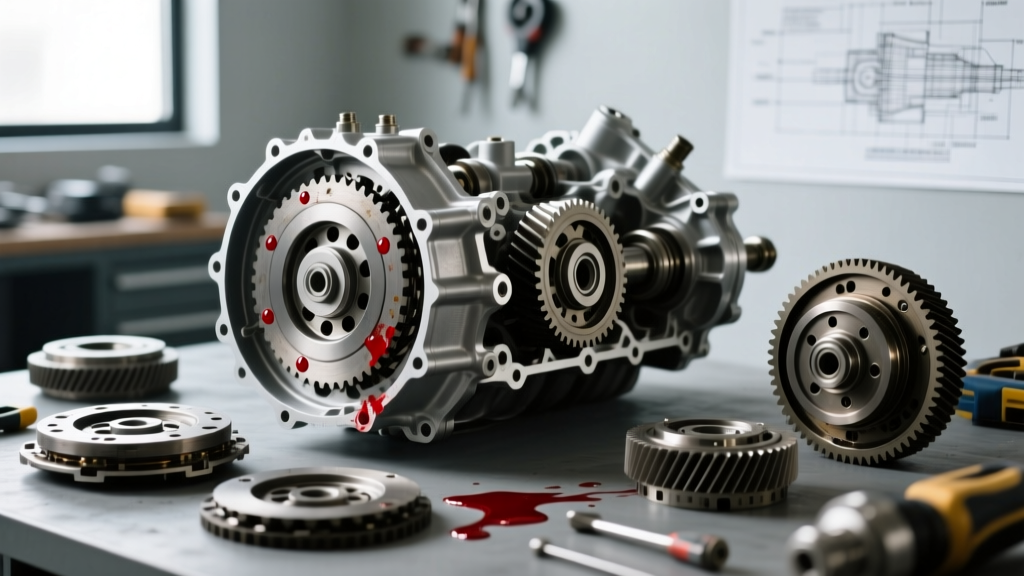
As we navigate the 2026 performance automotive landscape, the line between daily driver and track weapon is blurrier than ever. Enthusiasts are routinely pushing platforms like the GM 6L80, ZF 8HP, and the legendary 4L60E well past their factory torque limits. When you increase line pressure, install high-stall torque converters, and run aggressive tuning, the transmission case and sealing surfaces are subjected to immense hydraulic stress. Transmission leak diagnosis in a modified vehicle is no longer just about spotting a red puddle on the driveway; it requires forensic pressure analysis and an understanding of high-flow fluid dynamics.
However, when a high-pressure fluid leak leads to catastrophic internal damage, builders and owners are immediately faced with a harsh financial reality. The most common question we receive in the performance community is: does car insurance cover transmission failure when it stems from a leak or an aftermarket upgrade? Before we tear into the valve bodies and mechatronic units, we must address the financial safety net—or lack thereof—surrounding your drivetrain investment.
The Financial Safety Net: Insurance vs. Mechanical Breakdown
When a built drivetrain grenades due to a blown seal, the immediate question from owners is: does car insurance cover transmission failure? The short answer is almost always no, unless specific external criteria are met. Standard auto insurance policies are designed to cover sudden, accidental physical damage from external forces, not internal mechanical breakdowns or wear-and-tear.
Collision, Comprehensive, and the 'External Force' Rule
If you are tracking your vehicle and a piece of track debris punctures your transmission pan, causing a massive leak and subsequent failure, your Comprehensive coverage will likely foot the bill. Similarly, if a collision damages the cooler lines or the bellhousing, Collision coverage applies. However, if your 6L80 accumulator piston cracks under 280 PSI of line pressure from a custom tune, or a 4L60E servo cover O-ring blows out during a drag pass, the insurance company will classify this as a mechanical failure. Standard policies explicitly exclude mechanical breakdowns, meaning you will be paying out-of-pocket for a $4,000 to $8,000 rebuild.
The Aftermarket Modification Exclusion
Even if you carry Mechanical Breakdown Insurance (MBI) or an aftermarket extended powertrain warranty, performance upgrades often void your coverage. Installing an aftermarket valve body, a high-stall torque converter, or an external high-flow cooler can give warranty administrators grounds to deny a claim. According to industry data analyzed by Transmission Digest, warranty denial rates for modified drivetrains have surged as tuners increasingly alter factory hydraulic circuits. To protect a high-horsepower build, enthusiasts must rely on specialized 'Stated Value' collector car policies or dedicated motorsports insurance, though these rarely cover mechanical failures during competitive racing.
Diagnosing High-Pressure Leaks in Performance Builds
When insurance won't save your wallet, precise diagnosis becomes your best defense. Performance transmissions operate at elevated temperatures and pressures. A leak that only appears when the fluid is at 220°F and line pressure is maxed out requires advanced diagnostic techniques. In 2026, top-tier shops utilize FLIR thermal imaging cameras alongside UV dye to trace atomized fluid spray back to its origin point under load.
GM 6L80 / 6L90: Accumulator and Valve Body Weep
The GM 6L80 and 6L90 are staples in the LS and LT swap community. When tuners raise the line pressure to handle 800+ lb-ft of torque, the factory plastic accumulator pistons in the valve body are prone to cracking. This results in a high-pressure weep between the valve body and the transmission case, often misdiagnosed as a rear main seal or torque converter hub leak.
- Diagnosis: Remove the transmission pan and inspect the accumulator bores. Look for scoring on the bore walls or cracked plastic piston caps.
- Performance Upgrade: Install the Sonnax Zip Kit (Part # 6L80-ZIP) or their heavy-duty accumulator piston kit. These utilize anodized aluminum pistons with Viton O-rings capable of withstanding over 300 PSI.
- Torque Spec: When reinstalling the valve body, the case-to-valve body bolts must be torqued to exactly 8 Nm (71 in-lbs). Over-torquing will warp the aluminum separator plate, causing internal cross-leaks.
ZF 8HP: Mechatronic Sleeve and Integrated Pan Failures
The ZF 8HP70 and 8HP90 transmissions dominate the European performance scene and modern heavy-duty applications. A notorious leak point on tuned ZF units is the Mechatronic sealing sleeve, which degrades under the extreme heat generated by high-stall converters. Furthermore, the ZF 8HP utilizes a plastic integrated transmission pan and filter assembly that can warp or crack if the vehicle experiences track-day heat soaking.
- Diagnosis: Fluid will be seen weeping directly from the electrical connector pass-through on the side of the transmission case. Do not confuse this with the dipstick tube O-ring leak common on older Chrysler applications of this transmission.
- Performance Upgrade: Replace the factory sleeve with the updated ZF OE part (Part # 24117583802). For the pan, upgrade to a billet aluminum deep-sump pan from manufacturers like Cast Transmissions, which increases fluid capacity by 1.5 quarts and lowers fluid temps by up to 15°F.
- Torque Spec: The integrated plastic pan bolts are torque-to-yield. If reusing the OE pan, new bolts are mandatory, torqued to 10 Nm (88 in-lbs). Billet pans often require a specific sequence and slightly higher torque; always consult the manufacturer's spec sheet.
GM 4L60E: Servo Cover and Pump Bushing Blowouts
The 4L60E remains a budget-friendly powerhouse for street/strip builds. When subjected to the shock loading of drag radials and trans-brakes, the front pump bushing can walk, destroying the front seal and causing a massive leak from the bellhousing. Additionally, the 4th gear servo cover O-ring is a frequent failure point under elevated line pressure.
- Diagnosis: A bellhousing leak requires dropping the transmission to inspect the torque converter hub and pump bushing. If the bushing has spun, the pump housing is likely ruined.
- Performance Upgrade: Use a Sonnax heavy-duty front pump slide and install a pinned servo cover with high-temperature Viton O-rings. For extreme builds, a billet aluminum pump stator support is mandatory to prevent bushing walk.
Performance Leak Diagnosis & Upgrade Cost Matrix
Understanding the financial commitment of upgrading your sealing surfaces is crucial, especially since your standard car insurance won't cover a failure resulting from neglected maintenance on a modified vehicle.
| Transmission | Leak Source | OE Fix Cost | Performance Upgrade Cost | Insurance Coverage Likelihood |
|---|---|---|---|---|
| GM 6L80/6L90 | Accumulator Pistons | $450 - $600 | $850 - $1,100 (Sonnax Zip Kit) | 0% (Mechanical Failure) |
| ZF 8HP70/90 | Mechatronic Sleeve | $300 - $500 | $700 - $900 (Billet Pan + Sleeve) | 0% (Wear / Heat Damage) |
| GM 4L60E | Front Pump Bushing | $1,200 - $1,500 | $2,000+ (Billet Pump + Converter) | 0% (Shock Load Failure) |
| Any Platform | External Cooler Lines | $150 - $300 | $400 - $600 (AN-8 Braided Lines) | 100% (If caused by collision/debris) |
Pro-Tips for High-Flow Cooler Line Diagnostics
Performance builds generate immense heat, necessitating large external transmission coolers. The factory rubber hose and crimp-style fittings on cooler lines are notorious for bursting under the 150+ PSI return pressures seen in modified ZF and GM 10-speed units. When diagnosing a leak in the engine bay or along the chassis, inspect the crimp collars on the rubber hose sections. Upgrading to AN-6 or AN-8 braided stainless steel lines with reusable aluminum fittings eliminates this failure point entirely. When pressure testing AN lines, always use a dedicated hydraulic test pump filled with mineral oil, never compressed air, which can cause catastrophic hose whip if a fitting fails.
Final Verdict: Protecting Your Drivetrain Investment
So, does car insurance cover transmission failure? Only if an external accident or debris strike causes the physical damage. For the vast majority of performance enthusiasts, a blown seal or cracked accumulator caused by high line pressure is strictly an out-of-pocket expense. By shifting your mindset from reactive repairs to proactive, high-pressure leak diagnosis and utilizing upgraded components like Viton O-rings, billet pump stators, and aluminum accumulator pistons, you can keep your fluid inside the case and your hard-earned money in your bank account. Treat your transmission's hydraulic circuit with the same reverence as your engine's bottom end, and your build will survive the rigors of the track and the street.