The Anatomy of a Transmission Failure Cascade
When vehicle owners ask what causes transmission problems, the answer is rarely a single, isolated event. Modern automatic transmissions are highly complex electro-hydraulic systems where a minor electrical fault can quickly cascade into catastrophic mechanical destruction. Understanding the root cause of transmission failure symptoms is not just about restoring drivability; it is fundamentally a financial exercise. A delayed shift might be a $40 solenoid, or it might be a $4,500 complete rebuild. By mapping specific transmission failure symptoms to their underlying mechanical or electrical causes, drivers and technicians can accurately forecast repair costs and avoid unnecessary dealership markups.
In this comprehensive cost analysis, we break down the most common transmission failure symptoms across popular modern platforms—including the GM 6L80, ZF 8HP, and Ford 10R80—and provide exact part numbers, torque specifications, and real-world pricing data to help you navigate the repair landscape.
Early-Stage Symptoms: Electrical & Sensor Failures ($150 - $800)
The earliest transmission failure symptoms rarely involve grinding gears or slipping clutches. Instead, they manifest as electronic anomalies: illuminated check engine lights, harsh garage shifts, or temporary 'limp mode' engagement. Because modern transmissions rely on the Transmission Control Module (TCM) to regulate line pressure via variable force solenoids, electrical degradation is often the first domino to fall.
GM 6L80 TEHCM Internal Pressure Switch Failures
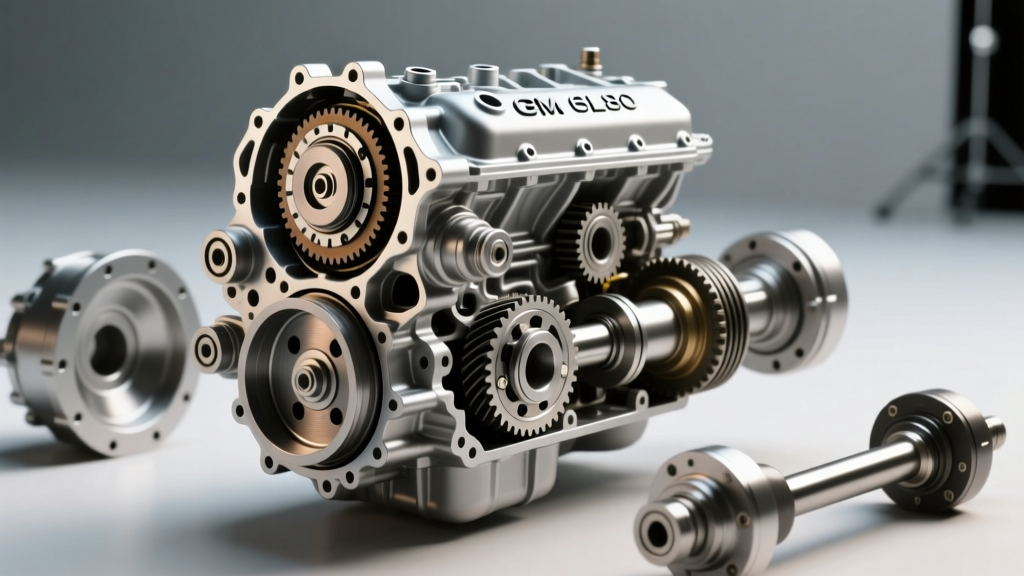
One of the most documented early-stage symptoms in GM trucks and SUVs equipped with the 6L80 transmission is erratic shifting accompanied by Diagnostic Trouble Codes (DTCs) like P0877 or P0878. This is almost exclusively caused by internal fluid pressure switch failures within the Transmission Electro-Hydraulic Control Module (TEHCM). The TEHCM houses the TCM and the solenoid body as a single, sealed unit.
- Part Number: AC Delco 24257640 (or updated revisions)
- Parts Cost: $450 - $650 (Source: RockAuto)
- Labor Time: 2.5 - 3.5 hours (Pan removal, valve body drop, TEHCM swap)
- Fluid Requirement: 6 to 7 quarts of ACDelco Dexron VI (approx. $60 - $80)
- Hidden Cost: Dealership J2534 programming and module relearn ($120 - $180)
- Total Estimated Cost: $750 - $1,100
Expert Note: When reinstalling the TEHCM, the mounting bolts must be torqued to exactly 10 Nm (89 lb-in). Overtorquing will crack the plastic housing and cause immediate internal cross-leaks.
Mid-Stage Symptoms: Hydraulic & Friction Degradation ($800 - $2,500)
As electrical issues go unresolved, or as fluid degrades over 80,000+ miles, the transmission begins to exhibit hydraulic symptoms. These include shift flares (RPMs climbing between gears), torque converter shudder, and delayed reverse engagement. At this stage, the repair costs escalate significantly because the transmission must often be removed from the vehicle to access the failing components.
ZF 8HP Mechatronic Adapter Sleeve Leaks
The ZF 8HP (found in BMW, Audi, Dodge, and Chrysler vehicles) is a masterpiece of engineering, but it suffers from a well-known mid-stage failure: the mechatronic adapter sleeve. Over time, the plastic sleeve degrades and leaks fluid externally from the rear of the transmission case. This causes low fluid levels, leading to shift flares and eventual clutch pack burnout. The symptom is often a slow drip of fluid near the bell housing and harsh 3-4 or 4-5 shifts when cold.
- Part Number: ZF 0501 216 243 (Mechatronic Adapter Sleeve)
- Parts Cost: $75 - $110 for the sleeve; $45 for the ZF 8HP fluid filter pan kit
- Labor Time: 5.0 - 6.5 hours (Requires transmission removal to access the rear output seal and sleeve)
- Fluid Requirement: ZF Lifeguard 8 (approx. $25/qt, 8-9 quarts needed for dry fill)
- Total Estimated Cost: $1,100 - $1,800 at an independent specialist
Expert Note: The ZF mechatronic unit E-bolts are aluminum and stretch upon removal. They must be replaced and torqued to exactly 8 Nm (71 lb-in) in a specific star pattern to prevent valve body warping.
Ford 10R80 Torque Converter Shudder & Checkball Wear
Ford's 10-speed automatic is notorious for a low-speed shudder that feels like driving over rumble strips. According to NHTSA consumer complaint databases, this symptom is caused by a combination of degraded friction material in the torque converter clutch (TCC) and worn plastic checkballs in the valve body. If caught early, a fluid flush using the exact specification fluid can resolve it. If ignored, the valve body and torque converter must be replaced.
- Parts Cost: $250 (Valve Body) + $600 (Billet Torque Converter)
- Fluid Requirement: Motorcraft Mercon ULV (Ultra Low Viscosity) - Crucial to use exact spec
- Total Estimated Cost: $1,400 - $2,200
Terminal Symptoms: Catastrophic Mechanical Destruction ($3,000 - $6,500+)
Terminal transmission failure symptoms are unmistakable: loud whining that changes with engine RPM, metallic crunching, complete loss of forward or reverse gears, and massive fluid expulsion. These symptoms indicate that hard parts—planetary gearsets, sun shells, or the transmission case itself—have physically shattered. At this point, component-level repair is no longer viable. The cost analysis shifts from 'repair' to 'replacement or rebuild.'
When facing a terminal failure, consumers generally have three options, each with vastly different cost structures:
- OEM Dealership Replacement: $5,500 - $8,000+ (Highest cost, includes OEM crate transmission and dealership labor rates of $180-$220/hr).
- ATRA-Certified Rebuild: $3,200 - $4,800 (The transmission is removed, torn down, and rebuilt with upgraded clutches and hard parts. Backed by the Automatic Transmission Rebuilders Association (ATRA) nationwide warranty).
- Remanufactured Unit (Jasper/Etegent): $3,500 - $5,000 (A factory-rebuilt unit is shipped and swapped in. Excellent for fleet vehicles or older trucks where downtime must be minimized).
Comprehensive Symptom-to-Cost Matrix
To provide a quick-reference framework for diagnostics, the following matrix correlates common symptoms with their most likely root causes and average market costs (parts + independent shop labor).
| Observable Symptom | Probable Root Cause | Common Component / Platform | Avg Parts Cost | Avg Labor Cost |
|---|---|---|---|---|
| Harsh 1-2 Shift / Limp Mode | Internal Pressure Switch Failure | GM 6L80 TEHCM | $450 - $650 | $300 - $450 |
| External Rear Case Leak | Degraded Plastic Adapter Sleeve | ZF 8HP Mechatronic Sleeve | $120 - $150 | $700 - $950 |
| Low-Speed Rumble Strip Shudder | TCC Friction Degradation / Checkballs | Ford 10R80 TCC & Valve Body | $850 - $1,000 | $600 - $800 |
| Slipping in 3rd or 4th Gear | Burnt Clutch Pack / Worn Sealing Rings | Chrysler 62TE Underdrive Clutch | $300 - $500 | $1,200 - $1,500 |
| Whining Noise in Park/Neutral | Fluid Pump Cavitation / Gear Scoring | GM 8L90 Pump Assembly | $400 - $600 | $800 - $1,100 |
| No Forward or Reverse Movement | Shattered Planetary / Snapped Sun Shell | All Platforms (Terminal Failure) | $2,500 - $4,000 | $1,200 - $1,800 |
Labor Rate Variables: Dealership vs. Independent vs. ATRA
Understanding what causes transmission problems is only half the battle; knowing where to pay for the repair dictates your final out-of-pocket expense. Labor rates vary wildly based on the facility type.
Franchised Dealerships: Dealerships charge premium labor rates (typically $160 to $230 per hour). Furthermore, dealerships rarely perform internal transmission repairs. Their standard operating procedure is to replace the entire transmission assembly with an OEM crate unit. While this guarantees OEM quality, it is the most expensive route and often unnecessary for isolated solenoid or valve body failures.
Independent General Mechanics: General shops offer lower labor rates ($110 to $150 per hour) and will happily swap a transmission. However, they usually lack the specialized clean rooms, Sonnax upgrade kits, and dyno-testing equipment required to rebuild a transmission internally. They will typically sublet the rebuild to a specialized shop, adding a 15% to 30% markup to your final invoice.
Dedicated Transmission Specialists: Shops certified by ATRA specialize exclusively in drivetrains. Their labor rates sit in the middle ($130 to $170 per hour), but their diagnostic accuracy is vastly superior. A specialist can hook up a bidirectional scan tool, command individual solenoids, and read live clutch volume index (CVI) data to pinpoint a failure without ever dropping the pan. This diagnostic precision saves consumers thousands of dollars in misdiagnosed parts.
Diagnostic Overhead: The Hidden Costs of Pinpoint Testing
Before any wrench turns, a reputable shop will charge a diagnostic fee. For complex transmission failure symptoms, expect to pay $150 to $250 for a 'pinpoint diagnostic.' This fee covers the technician's time to perform a line-pressure test using a mechanical gauge, inspect the fluid pan for metallic debris or friction material, and perform advanced OBD2 network scanning.
Do not attempt to bypass this step. Replacing a $400 TEHCM or a $300 valve body based on a generic OBD2 code from an auto parts store scanner is a financial gamble. Many transmission codes are secondary effects of low fluid pressure caused by a $15 cracked cooler line or a failing $60 external filter. Paying for professional, data-driven diagnostics is the most cost-effective first step in resolving any drivetrain anomaly.
Summary: Act Early to Cap Your Costs
Ultimately, what causes transmission problems to become financially ruinous is driver neglect. A minor shudder or a slightly delayed shift is the vehicle's way of communicating a low-cost hydraulic or electrical fault. Ignoring these early symptoms guarantees that metal will eventually meet metal, transforming an $800 solenoid job into a $5,000 rebuild. By understanding the symptom-to-cost matrix and seeking out specialized, ATRA-certified diagnostics, you can accurately budget for repairs and keep your vehicle on the road without falling victim to unnecessary dealership upcharges.