Understanding the TCM's Role in Sensor Networks
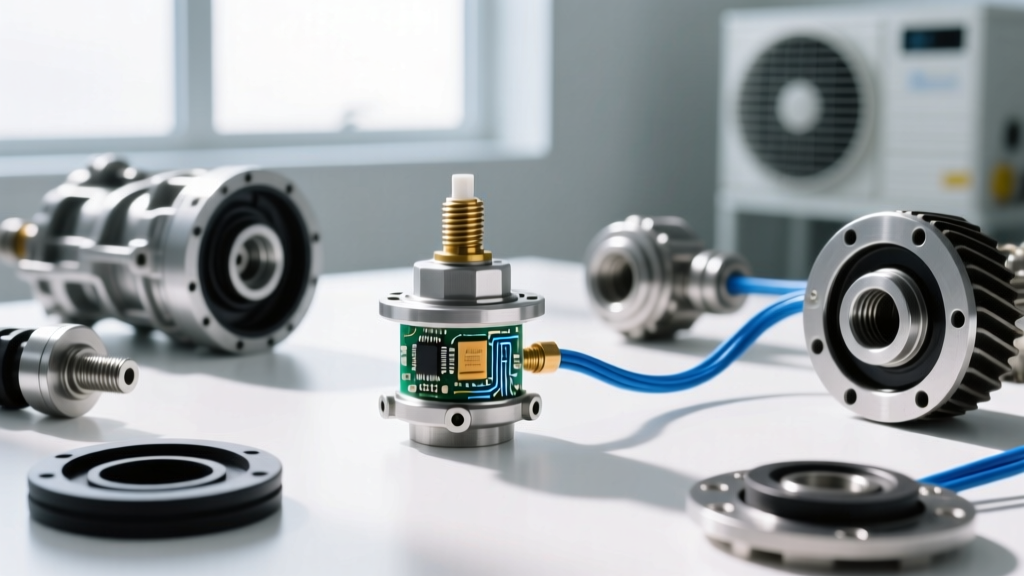
When drivers and technicians encounter transmission sensor problems, the immediate instinct is often to replace the sensor triggering the diagnostic trouble code (DTC). However, in modern vehicles, sensors are merely the endpoints of a complex data network governed by the Transmission Control Module (TCM). As of 2026, the vast majority of late-model automatic transmissions rely on high-speed Controller Area Network (CAN) bus architectures and internal 5-volt reference circuits. When the TCM suffers an internal fault—such as a degraded Analog-to-Digital Converter (ADC) or a cracked solder joint—it can mimic catastrophic sensor failures, sending the vehicle into limp mode and locking it in a single gear.
Diagnosing these issues requires moving beyond simple plug-and-play parts swapping. True expertise involves tracing the signal path from the sensor, through the wiring harness, and deep into the TCM's microprocessor logic. This guide breaks down the most common TCM-related failures that manifest as sensor problems, focusing on the ubiquitous GM 6L80 and ZF 8HP transmission families.
The 5-Volt Reference Circuit Cascade Failure
One of the most misunderstood transmission sensor problems involves a cascade of seemingly unrelated codes. A technician might scan a vehicle and find P0715 (Input Speed Sensor), P0720 (Output Speed Sensor), and P0711 (Transmission Fluid Temperature) stored simultaneously. The amateur mistake is replacing all three sensors and the internal wiring harness.
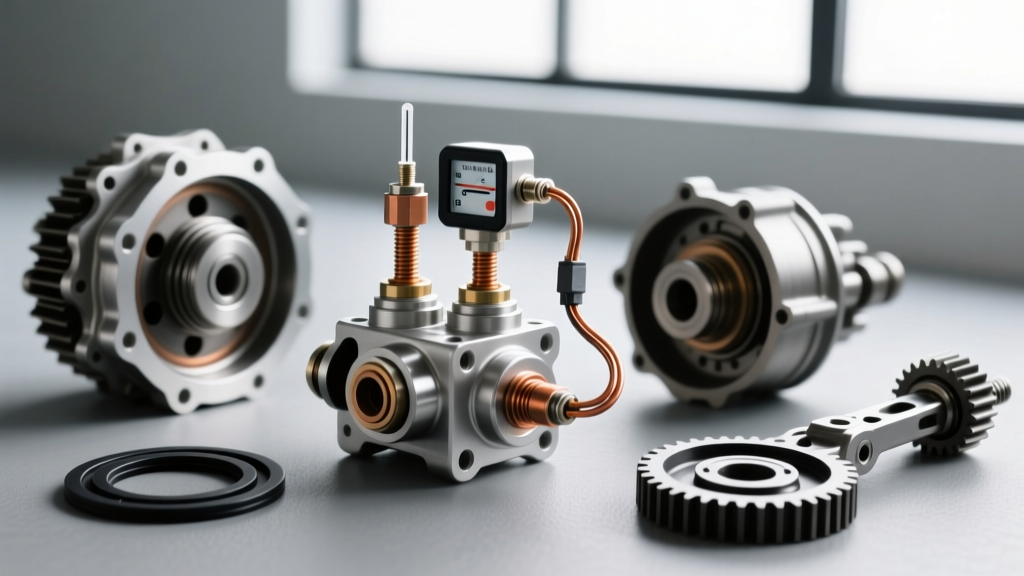
The expert diagnosis recognizes that these sensors share a common 5-volt reference circuit generated inside the TCM. If a single sensor—most commonly the Transmission Fluid Temperature (TFT) thermistor—shorts out internally due to heat degradation, it pulls the entire 5V reference bus down to 0.5V or 0V. Starved of reference voltage, the speed sensors cannot generate a readable signal. The TCM then incorrectly flags the speed sensors as faulty. Testing this requires a digital multimeter (DMM) to back-probe the 5V reference pin at the TCM connector or at the sensor harness plug with the key on, engine off (KOEO). If the 5V reference reads below 4.8V, you must isolate the circuit to find the short before condemning the TCM.
GM 6L80/6L90 TEHCM Deep Dive
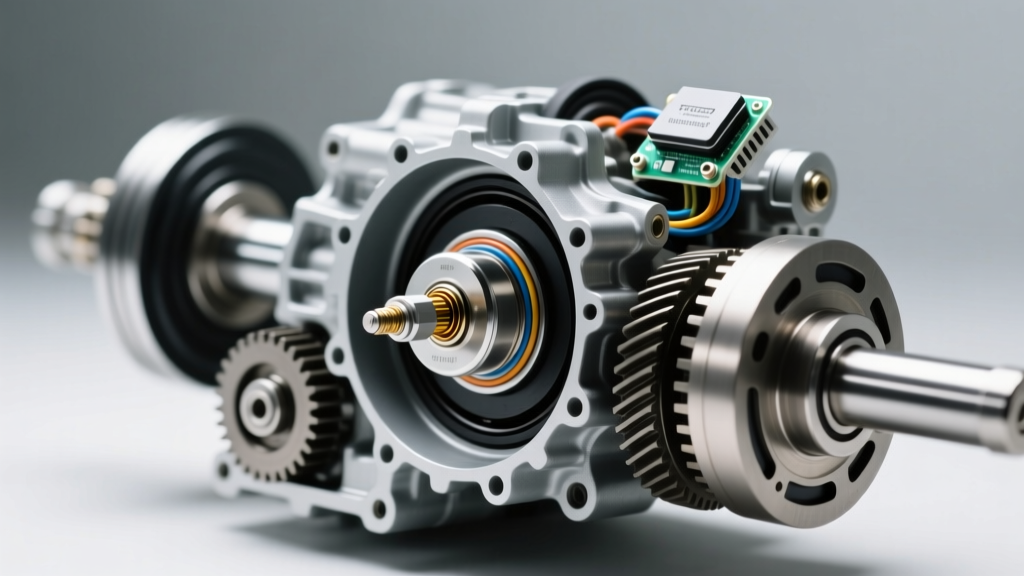
The GM 6L80 and 6L90 transmissions utilize a TEHCM (Transmission Electro-Hydraulic Control Module), which integrates the TCM, shift solenoids, and pressure switches into a single unit mounted inside the transmission pan. A notorious failure mode in these units involves thermal cycling causing micro-fractures in the solder joints connecting the Input Speed Sensor (ISS) to the TEHCM printed circuit board.
This specific hardware defect results in intermittent P0715 codes that only appear when the transmission reaches operating temperatures above 180°F (82°C). As the ATF heats up, the PCB expands, breaking the compromised solder connection and dropping the ISS signal to zero. The TCM interprets this as a slipping transmission and commands harsh line pressure, resulting in violent shifts.
Replacement requires dropping the pan, removing the filter, and unbolting the TEHCM. Crucially, the TEHCM-to-case mounting bolts must be torqued to exactly 10 Nm (89 lb-in). Overtightening these bolts warps the TEHCM plastic housing, leading to internal hydraulic cross-leaks and immediate solenoid pressure faults. Furthermore, a new TEHCM requires VIN programming and a 'Service Fast Learn' adaptation procedure using GM GDS2 software.
ZF 8HP Mechatronic Integration and Fluid Intrusion
In the ZF 8HP family (8HP45, 8HP70, 8HP90), the TCM is fully integrated into the mechatronic unit and submerged directly in the ATF. This design eliminates external wiring harnesses but introduces a unique failure point: the mechatronic sealing sleeve (ZF part number 8634 304 021). According to ZF technical documentation, this sleeve seals the electrical pass-through from the vehicle chassis into the transmission pan.
Over time, the plastic sleeve degrades, allowing ATF to wick up into the TCM's electronic cavity via capillary action. Once conductive fluid bridges the CAN bus pins on the circuit board, the TCM drops off the high-speed CAN network. This triggers a global P0700 code and forces the transmission into limp mode (typically locked in 3rd or 5th gear). Diagnosing this requires removing the mechatronic unit and inspecting the electrical connector for fluid residue. If ATF is present inside the sealed TCM chamber, the entire mechatronic assembly must be replaced, as the internal multi-layer PCB cannot be reliably cleaned or repaired.
Diagnostic Trouble Codes (DTCs) Pointing to TCM Faults
While P0700 is a generic gateway code indicating the TCM has requested a Check Engine Light, the following specific codes often point to TCM internal hardware failures rather than external sensor faults:
| DTC | Description | TCM Internal Failure Mode |
|---|---|---|
| P0715 | Input Speed Sensor Circuit | Cracked PCB solder joint on ISS receiver; failed internal pull-up resistor. |
| P0720 | Output Speed Sensor Circuit | ADC failure; inability to process the PWM frequency from the OSS. |
| P0711 | TFT Sensor Range/Performance | Internal 5V reference regulator failure; corrupted thermistor lookup table. |
| P0700 | TCM Malfunction (Gateway) | CAN transceiver short; ATF intrusion on mechatronic PCB; EEPROM corruption. |
Step-by-Step TCM Troubleshooting Protocol
1. CAN Bus Oscilloscope Testing
The TCM communicates via a Controller Area Network (CAN). Following SAE J1939 standards, CAN High should idle at 2.5V and pulse to 3.5V, while CAN Low idles at 2.5V and pulses down to 1.5V. If the TCM is failing internally, you may see a CAN High voltage stuck at 5V or a completely flat line, indicating the TCM's internal transceiver has shorted. You must measure this at the OBD2 port (Pins 6 and 14) or directly at the TCM harness connector using a PicoScope or equivalent automotive oscilloscope.
2. Wiring and Pinout Verification
Before condemning a TCM for a speed sensor code, verify the physical circuit. Check for 120 ohms of resistance across the CAN bus termination resistors. Test the sensor signal wire for continuity and ensure there are no shorts to ground or power. For variable reluctance sensors, verify the air gap and sensor resistance (typically 200-400 ohms). For Hall-effect sensors, ensure the TCM is providing a clean 12V or 5V power supply to the sensor.
3. Module Reflashing vs. Hardware Replacement
Software corruption can mimic hardware failure. If the TCM passes all physical electrical tests, a reflashing of the EEPROM with the latest OEM calibration file may resolve phantom sensor codes. However, if the 5V reference remains dead with all external sensors unplugged, the TCM's internal voltage regulator has failed, necessitating a hardware replacement.
Repair vs. Replace: 2026 Cost and Part Number Breakdown
Pricing and part availability vary significantly based on the transmission architecture. Below is a breakdown of common TCM/TEHCM replacements and associated costs for the 2026 aftermarket and dealership landscape.
| Transmission | Component | OEM Part Number (Example) | Est. Part Cost | Programming Required? |
|---|---|---|---|---|
| GM 6L80/6L90 | TEHCM Assembly | 24264089 | $650 - $850 | Yes (GDS2 VIN & Fast Learn) |
| ZF 8HP (BMW/FCA) | Mechatronic Unit | 8634 314 007 | $1,800 - $2,400 | Yes (OEM Dealer Tool / ZF Tester) |
| ZF 8HP | Sealing Sleeve Kit | 8634 304 021 | $40 - $60 | No (Mechanical Repair) |
| Ford 6R80 | TCM (External) | AL3Z-7G276-A | $350 - $500 | Yes (FORScan / IDS) |
Final Diagnostic Takeaways
Solving complex transmission sensor problems requires a systematic approach that respects the hierarchy of the electronic control system. Never replace a TCM or TEHCM without first verifying the integrity of the 5V reference circuits, the CAN bus topology, and the physical condition of the sensor wiring. By understanding the specific failure modes of units like the GM 6L80 TEHCM and the ZF 8HP Mechatronic, technicians can accurately diagnose the root cause of limp mode conditions, saving customers from unnecessary parts swapping and ensuring long-term drivetrain reliability.