The True Cost of Maintaining Symmetrical AWD
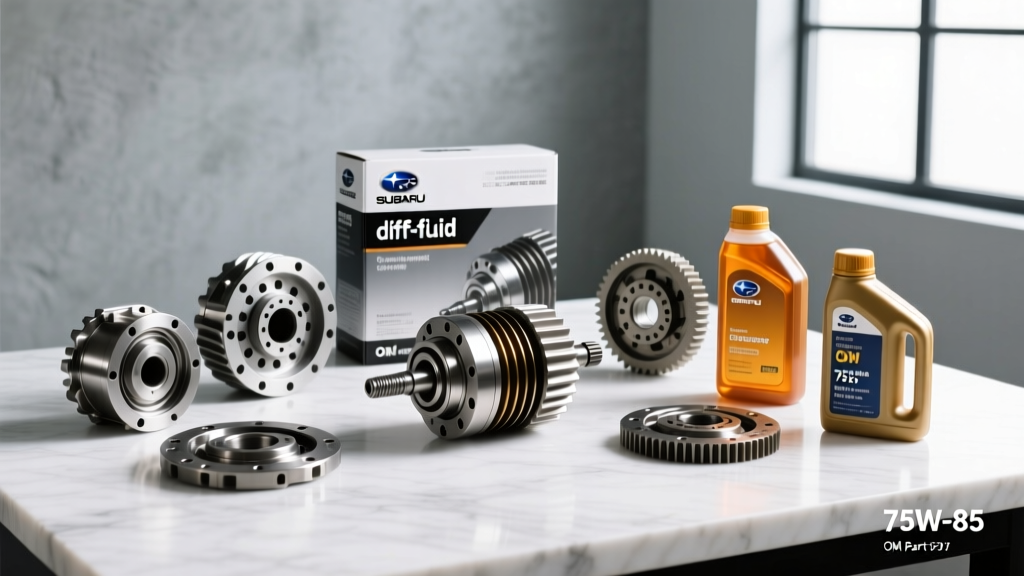
Subaru’s legendary Symmetrical All-Wheel Drive system relies on a complex network of gears, clutches, and viscous couplings to distribute power efficiently. At the heart of this system is the often-overlooked subaru differential fluid. Whether you are driving a 2026 Outback Wilderness, a WRX with a 6-speed manual, or a daily-driver Forester, the gear oil protecting your hypoid ring and pinion gears is subject to immense shear forces and thermal degradation.
As dealership labor rates continue to climb in 2026, understanding the exact specifications, fluid capacities, and true cost breakdown of differential service is critical for owners looking to optimize their maintenance budget without sacrificing drivetrain longevity. This guide dissects the chemistry, pricing, and mechanical requirements of Subaru gear oil.
Decoding Subaru Differential Gear Oil Specifications
Unlike standard engine oil, differential gear oil must withstand extreme sliding friction generated by hypoid gear sets. For the vast majority of Subaru rear differentials and manual transmission front/center differentials, the factory specification calls for a 75W-90 viscosity, API GL-5 certified gear oil.
Why API GL-5 is Non-Negotiable
API GL-5 gear oils contain high levels of sulfur-phosphorus Extreme Pressure (EP) additives. Under the heavy loads of AWD cornering and towing, these additives form a sacrificial tribofilm on the gear teeth, preventing microwelding and pitting. However, there is a critical caveat for Subaru owners:
- Rear Differentials: Standard GL-5 is perfectly safe and required for the steel hypoid gears in the rear differential.
- Manual Transaxles (Front/Center Diffs): On 5-speed and 6-speed manual Subarus, the front differential and center differential share a sump with the manual transmission synchronizers. Standard GL-5 sulfur additives can corrode yellow metals (brass/bronze synchros) over time. For these applications, you must use a synchro-safe GL-5 or the specific OEM Subaru Extra-HP fluid.
'Never dump a standard, high-sulfur off-the-shelf GL-5 into a Subaru 6-speed manual transaxle. The sulfur will eat the brass synchronizers over 30,000 miles, leading to gritty shifts and eventual gear engagement failure. Always verify the fluid is yellow-metal safe or use the OEM formulation.' — Senior Drivetrain Technician, BITOG Forums
Fluid Cost Analysis: OEM vs. Premium Aftermarket
When budgeting for a differential service, the fluid itself represents a fraction of the dealership cost, but choosing the right brand matters. Below is a 2026 market price breakdown for the most common 75W-90 fluids used in Subaru applications.
| Brand / Product | Part Number | Spec / Additives | Avg. Cost (Per Quart) | Best Application |
|---|---|---|---|---|
| Subaru Extra-HP | SOA868V9270 | API GL-5, Synchro-Safe | $14.50 | Manual Trans / Rear Diff |
| Motul Gear 300 | 105783 | API GL-5, 100% Synthetic | $23.99 | High-Load Rear Diffs (WRX/STI) |
| Red Line 75W90 NS | 50304 | API GL-5, No Sulfur | $19.50 | Manual Transaxles (Front/Center) |
| Valvoline SynPower | VV975 | API GL-5, Standard EP | $11.25 | Open Rear Differentials (CVT Models) |
Note: Prices reflect early 2026 retail averages. Purchasing directly from Subaru Online Parts can sometimes yield a 10-15% discount on OEM fluids compared to dealer parts counters.
Dealership vs. DIY: The Labor Cost Breakdown
The most significant variable in your maintenance budget is labor. Subaru rear differentials are remarkably easy to service, featuring straightforward drain and fill plugs, making them an ideal DIY candidate. However, many owners still opt for dealer service for warranty compliance or convenience.
Dealership Service Costs (2026 Estimates)
Most Subaru dealerships bundle the rear differential fluid exchange into a '30,000-Mile Major Service' or charge a standalone flat-rate fee.
- Standalone Rear Diff Service: $165 - $245 (Includes 1 qt fluid, shop supplies, and 0.5 - 0.8 hours labor at $180+/hr).
- Manual Transmission & Rear Diff Bundle: $350 - $490 (Requires ~4.5 quarts of fluid and significantly more drain/fill time).
The DIY Cost Reality
Servicing your own rear differential costs pennies on the dollar, provided you have basic hand tools and a fluid pump.
- Fluid (1 Quart): $11.25 - $14.50
- Crush Washers (Qty 2): $3.80 (Part # 803926090)
- Manual Fluid Pump: $8.00 (One-time purchase)
- Total DIY Cost: $15.05 - $26.30
By performing the service in your driveway, you save upwards of $200 per service interval, money that is better spent on upgrading to a premium synthetic like Motul or Red Line.
Capacities, Torque Specs, and Application Guide
Overfilling or underfilling a differential can lead to aeration, overheating, or gear starvation. Furthermore, stripping the aluminum threads on a differential housing is a costly mistake. Always adhere to the factory torque specifications. For comprehensive factory service manuals, owners can pull model-specific PDFs via the Subaru Technical Information System (STIS).
| Component | Typical Models | Fluid Capacity | Plug Torque Spec | Crush Washer Size |
|---|---|---|---|---|
| Rear Differential | Outback, Forester, Impreza (CVT) | 0.8L (27.1 oz) | 33 ft-lbs (44.7 Nm) | M16 (P/N 803926090) |
| Manual Transaxle (F/R/C) | WRX, BRZ, Crosstrek (6MT) | 3.5L - 3.7L | 33 ft-lbs (44.7 Nm) | M16 / M24 (Varies) |
| Front Diff (Separate) | Legacy 3.0R, Tribeca (5EAT) | 1.2L - 1.5L | 33 ft-lbs (44.7 Nm) | M16 (P/N 803926090) |
The Golden Rule of Differential Service
Always remove the FILL plug first. If you drain the fluid and subsequently discover that your fill plug is seized or stripped, you will be left with an immobile vehicle and a dry differential. Penetrating fluid and a 6-point 1/2-inch drive socket are highly recommended for Subaru differential plugs, which are prone to corrosion from road salt.
The Limited Slip Differential (LSD) Modifier Trap
A frequent point of confusion discussed in depth on the Bob Is The Oil Guy (BITOG) Drivetrain Forums is the necessity of friction modifiers. Do you need to add a bottle of Limited Slip Friction Modifier to your subaru differential fluid?
The answer depends entirely on your differential type:
- Open Differentials: (Found in most base model CVT Subarus). No modifier required.
- Viscous LSD (VLSD) & Torsen Diffs: (Found in WRX/STI and modern Trail models). These rely on fluid viscosity or mechanical gear binding, not clutch packs. Do not add friction modifiers. Doing so can reduce the locking threshold and cause slip.
- Clutch-Type LSDs: (Found in older Subaru models and specific aftermarket upgrades). These require a friction modifier (Subaru Part # SOA868V9170) to prevent clutch chatter during low-speed cornering.
Adding a $9 bottle of friction modifier to a Torsen or Viscous differential is not only a waste of money, but it actively degrades the performance of the AWD system.
Final Verdict: Maximizing Drivetrain ROI
Maintaining your Subaru’s AWD system does not require a blank check at the dealership. By understanding the exact API GL-5 specifications, recognizing the yellow-metal dangers in manual transaxles, and adhering to strict 33 ft-lbs torque specs, you can execute a flawless differential service for under $30. Whether you choose the reliable OEM Extra-HP or a high-shear synthetic like Motul Gear 300, timely fluid changes every 30,000 to 60,000 miles remain the most cost-effective insurance policy for your Symmetrical AWD drivetrain.