Understanding the Manual Drivetrain Start Sequence
Operating a stick shift requires a fundamental understanding of mechanical sympathy, especially during the engine ignition sequence. While modern automatics rely on a torque converter to buffer the engine from the drivetrain, a manual transmission creates a direct mechanical link via the friction disc and flywheel. Learning how to start a car with manual transmission correctly is not just about turning a key or pressing a button; it is about managing parasitic drag, engaging safety interlocks, and preserving the starter motor and ring gear. Whether you are driving a classic Porsche 911 with a G50 gearbox or a 2026 Mazda MX-5 Miata with a modern push-button ignition, the physics of cranking a manual remain identical.
The Anatomy of a Manual Engine Start
Before executing the starting procedure, it is crucial to understand the components involved in the ignition circuit. Modern manual vehicles are equipped with a Clutch Pedal Position (CPP) switch, often referred to as a clutch interlock switch. This safety device prevents the starter motor from engaging unless the clutch pedal is fully depressed to the firewall. This ensures the transmission is disconnected from the engine, preventing the vehicle from lurching forward if it was accidentally left in gear.
When the CPP switch closes the circuit, the starter relay sends 12V power from the battery to the starter solenoid. The solenoid pushes the Bendix drive gear forward to mesh with the flywheel's ring gear (typically featuring 115 to 130 teeth on passenger vehicles), while simultaneously closing high-amperage contacts to spin the electric motor. A standard 1.4kW Permanent Magnet Gear Reduction (PMGR) starter can draw between 150 and 200 amps under load.
Step-by-Step: How to Start a Car With Manual Transmission
Follow this precise sequence to ensure a smooth start while minimizing wear on the drivetrain components.
Step 1: Secure the Perimeter and Verify Neutral
Before touching the ignition, ensure the parking brake is fully engaged. Next, verify that the gear selector is in the neutral position. You can confirm this by moving the shifter laterally across the neutral gate; it should swing freely from left to right. While the CPP switch technically allows you to start the car in gear (provided the clutch is depressed), starting in neutral is a best practice that reduces unnecessary load on the clutch master cylinder and release bearing.
Step 2: Defeat the Clutch Interlock System
Firmly press the clutch pedal to the floor with your left foot. You must push it all the way to the firewall to actuate the CPP switch. In older vehicles, this switch is a simple mechanical plunger located near the pedal pivot pin (e.g., Dorman part number 924-003 or OEM Motorcraft SW-6534, typically costing between $15 and $25). In modern 2026 vehicles, this is often a non-contact Hall-effect sensor that reads the exact angle of the pedal arm to determine clutch disengagement.
Step 3: Engage the Starter Motor
With your right foot firmly pressing the brake pedal (a critical safety redundancy), turn the ignition key to the 'Start' position or press the push-button start. Listen to the cranking RPM. The engine should spin at roughly 200-250 RPM. Release the key or button the exact moment the engine achieves combustion and idle stability. Holding the starter engaged after the engine fires will cause the Bendix gear to over-rev, potentially shattering the starter drive or stripping the flywheel ring gear teeth.
Step 4: Modulate the Bite Point
Once the engine is idling (typically 750-900 RPM), slowly release the clutch pedal until you feel the vehicle settle. Even in neutral, releasing the clutch pedal too abruptly can cause a slight RPM dip due to the sudden rotational mass of the transmission input shaft engaging with the engine. Smooth modulation preserves the dual-mass flywheel (DMF) springs and the throw-out bearing.
Cold Weather Cranking: Viscosity and Parasitic Drag
One of the most overlooked aspects of starting a manual car is the effect of ambient temperature on transmission fluid. Manual gearboxes rely on gear oil (commonly 75W-85 or 75W-90 GL-4 synchromesh fluid) to lubricate the countershaft and synchronizers. In sub-freezing temperatures, this fluid thickens significantly.
If you attempt to start a manual car in gear with the clutch depressed on a freezing morning, the starter motor must overcome the viscous drag of the cold gear oil churning inside the transmission case, as the input shaft and clutch disc are still spinning. This parasitic drag can drop cranking voltage below the ECU's minimum threshold (often 9.5V), resulting in a no-start condition. Always start in neutral during extreme cold to isolate the transmission drag from the engine cranking load.
Ignition Systems: Keyed vs. Push-Button
As automotive technology has evolved, so has the method of initiating the start sequence. Below is a comparison of how different ignition architectures handle the manual starting process.
| Ignition Type | Interlock Mechanism | Common Applications | Failure Mode |
|---|---|---|---|
| Traditional Keyed Cylinder | Mechanical plunger switch on pedal box | Classic sports cars, older commuter vehicles | Plunger spring fatigue, wiring harness chafing |
| Push-Button Start (Smart Key) | Hall-effect pedal sensor + BCM logic | Modern performance cars (e.g., Porsche 992, Honda Civic Si) | Sensor calibration loss, BCM relay failure |
| Remote Start Enabled | Requires neutral safety switch + hood pin | Aftermarket setups, select OEM trucks | Leaving car in gear causes remote start abort |
Troubleshooting Manual Starting Failures
Even with perfect technique, mechanical and electrical faults can prevent a manual car from starting. Here is how to diagnose the most common issues using professional methodologies.
The Dead Clutch Interlock Switch
If you press the clutch to the floor and turn the key, but hear absolute silence (no starter click), the CPP switch is the primary suspect. To diagnose this, locate the switch near the top of the clutch pedal arm. Disconnect the two-pin connector and use a Digital Multimeter (DMM) set to continuity mode. Depress the pedal; the DMM should beep, indicating a closed circuit. If it remains open, replace the switch. As a temporary emergency bypass to get home, you can jump the two harness pins with a paperclip, but you must be absolutely certain the car is in neutral, or it will launch forward upon cranking.
Starter Ring Gear Grinding
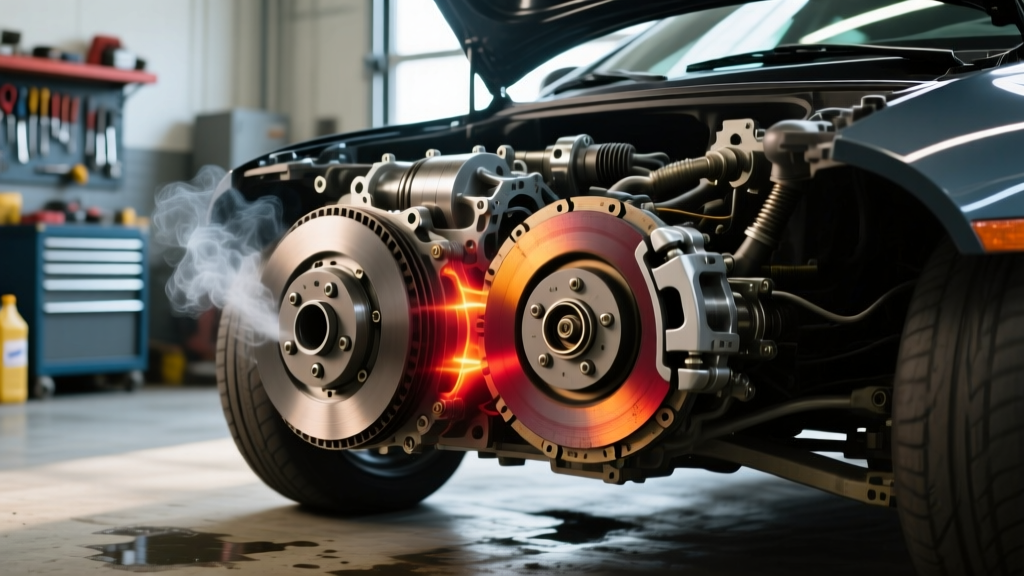
A harsh, metallic grinding noise during cranking usually indicates that the starter Bendix gear is failing to mesh with the flywheel ring gear. This is often caused by worn teeth on the ring gear or a failing starter solenoid. On vehicles with Tremec or Getrag manual transmissions, replacing the ring gear requires removing the transmission and unbolting the flywheel (torque specs for flywheel bolts typically range from 70 to 95 Nm, requiring a new set of stretch bolts). If the grinding only happens occasionally, rotating the engine manually via the crankshaft pulley bolt can move the damaged teeth away from the starter pinion.
Dual-Mass Flywheel (DMF) Rattle on Startup
If you hear a distinct metallic 'clunk' or rattling sound the moment the engine fires, but it disappears as RPMs rise, your DMF internal damping springs may be worn. This is incredibly common in modern turbocharged manuals (like the Ford Mustang EcoBoost or VW GTI) due to the high torsional vibrations produced by small-displacement turbo engines. While not an immediate electrical starting failure, a degraded DMF will eventually cause catastrophic chatter upon clutch engagement and requires a full clutch and flywheel replacement kit (typically costing between $600 and $1,200 for parts alone).
Expert Summary
Mastering how to start a car with manual transmission goes beyond basic operation; it is an exercise in preserving the drivetrain. By respecting the clutch interlock, understanding the effects of cold fluid viscosity, and listening to the acoustic feedback of the starter motor, you can extend the life of your ring gear, starter, and release bearing by tens of thousands of miles.
For further reading on manual transmission operation and safety, consult the Car and Driver Manual Transmission Guide and the Edmunds Manual Driving Tutorial. Always refer to your specific vehicle's factory service manual for exact torque specifications and electrical pinout diagrams.