Introduction to Rear Differential Assembly Selection
When transferring torque from a modern 8-speed or 10-speed automatic transmission to the pavement, the final point of multiplication and distribution lies in the rear axle. Whether you are building a dedicated track car, a heavy-duty overland rig, or simply upgrading a daily driver, selecting the correct rear differential assembly is critical to your drivetrain's longevity and performance. In 2026, the aftermarket and OEM crate assembly market offers highly engineered solutions tailored to specific traction needs. The most fundamental decision you will face is choosing between an open differential and a limited slip differential (LSD). This buyer's guide breaks down the mechanical realities, fluid requirements, and setup tolerances of both systems to help you make an informed investment.
The Open Differential: Engineering and Limitations
The open differential is the baseline for most factory rear axle assemblies. Its primary engineering goal is to allow the outer wheel to rotate faster than the inner wheel during cornering, preventing tire scrub and driveline bind. Inside the carrier, a cross-shaft holds two or four spider gears that mesh with two side gears connected to the axle shafts.
Failure Modes and Traction Deficits
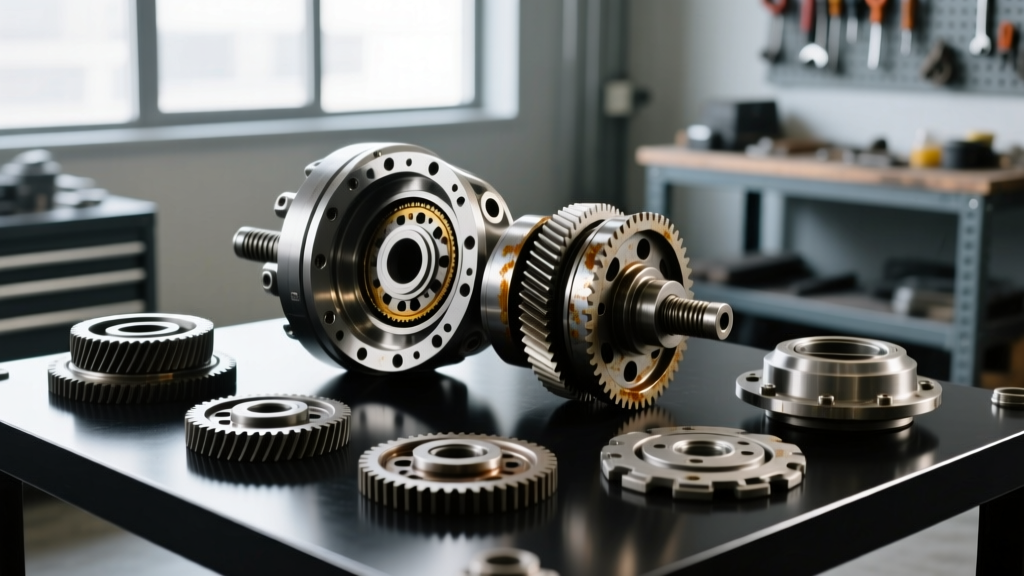
While open differentials are incredibly reliable and require minimal maintenance, their fatal flaw is torque distribution. An open differential always sends torque to the path of least resistance. If the left wheel loses traction on ice or mud, the spider gears spin on their cross-shaft, sending 100% of the available rotation to the slipping wheel while the right wheel receives zero torque. This 'one-wheel peel' phenomenon makes the open rear differential assembly unsuitable for high-horsepower drag applications, off-road crawling, or aggressive cornering. Furthermore, under extreme shock loads (like dropping the clutch on a sticky drag radial), the spider gears and cross-shaft can physically weld together or shear the cross-pin, destroying the carrier.
Limited Slip Differentials (LSD): Clutch-Pack vs. Helical
To mitigate the traction loss inherent in open designs, the aftermarket offers two primary limited slip architectures for your rear differential assembly: clutch-type and helical gear-type.
Clutch-Pack LSDs (e.g., Eaton Posi, Auburn Pro)
Clutch-type LSDs utilize a series of alternating friction and steel discs positioned behind the side gears. Under straight-line acceleration, spring pressure and internal hydraulic forces lock the clutches together, forcing both axle shafts to turn at the same speed. When cornering, the torque differential overcomes the clutch friction, allowing the wheels to differentiate. However, these units require periodic rebuilding as the friction discs wear down, and they are notorious for 'chatter' during low-speed turns if the fluid lacks the proper modifier.
Helical Gear LSDs (e.g., Eaton Detroit Truetrac)
Helical gear limited slip differentials operate entirely without clutches. Instead, they use a complex planetary gear set with helical-cut teeth. When one wheel loses traction, the helical gears separate and push against the carrier pocket walls, creating friction and torque biasing. According to Eaton Performance, the Truetrac design can bias torque up to 3.5:1 without requiring special friction modifiers. This makes them virtually maintenance-free and ideal for both front and rear differential applications, particularly in vehicles that see mixed street and trail duty.
Fluid Dynamics: Gear Oil and Friction Modifiers
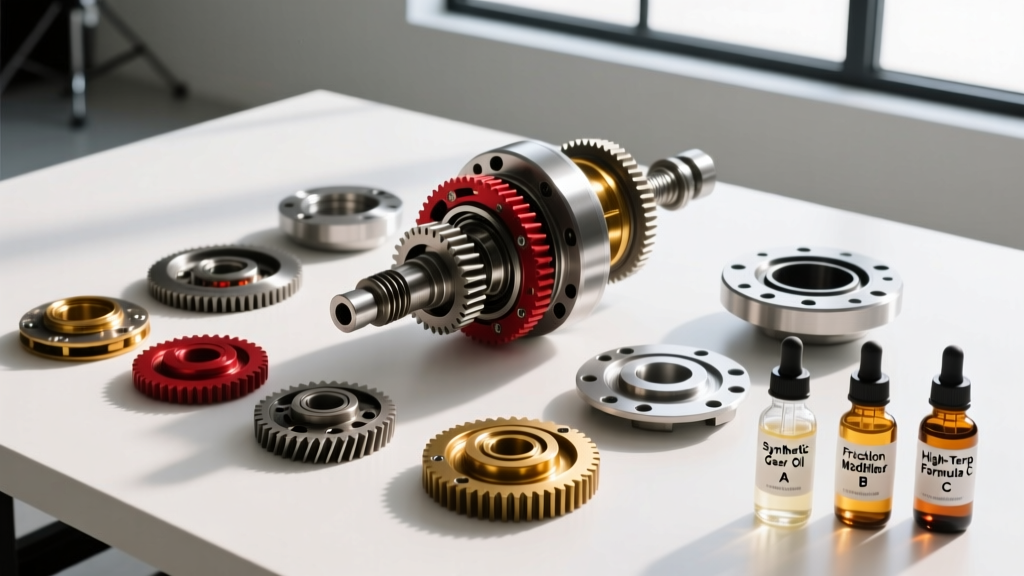
The lifeblood of any rear differential assembly is its gear oil. Hypoid ring and pinion gears experience extreme sliding friction, requiring an API GL-5 rated lubricant with high levels of zinc and phosphorus (ZDDP) for boundary lubrication.
- Open Differentials: Require a standard 75W-90 or 80W-90 GL-5 gear oil. A high-quality synthetic like AMSOIL Severe Gear provides excellent shear stability and protects against micro-pitting on the gear teeth.
- Clutch-Type LSDs: Require the same GL-5 base oil, but must have a limited-slip friction modifier added (typically 4 oz per quart). GM's official Friction Modifier (P/N 88900333) or Ford's XL-3 prevents the clutches from grabbing and releasing abruptly, which causes the dreaded rear-end chatter.
- Helical LSDs: Do not require friction modifiers. In fact, adding a modifier to a helical unit can reduce the internal friction necessary for torque biasing, effectively turning it into an open differential.
Head-to-Head Comparison Chart
| Feature | Open Differential | Clutch-Pack LSD | Helical Gear LSD |
|---|---|---|---|
| Traction Biasing | None (1:1) | Up to 4:1 | Up to 3.5:1 |
| Friction Modifier | Not Required | Strictly Required | Do Not Use |
| Rebuild Interval | Rarely (Bearings only) | 30,000 - 50,000 miles | 100,000+ miles |
| Low-Speed Chatter | None | Common as clutches wear | None |
| Ideal Application | Highway cruisers, budget builds | Drag racing, burnout boxes | Street/Strip, Overland, Towing |
2026 Buyer's Guide: Pricing, Part Numbers, and Crate Assemblies
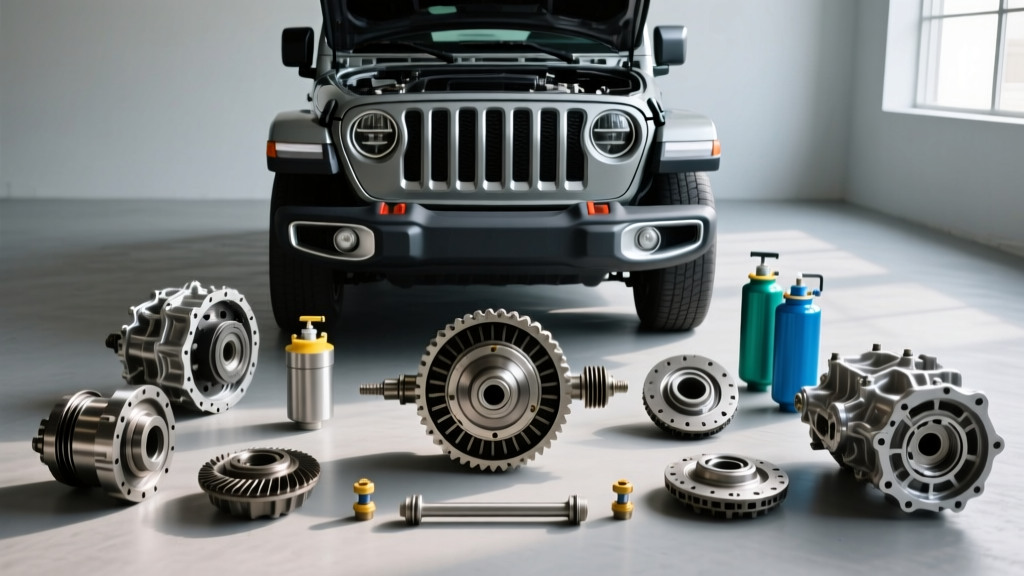
Purchasing a bare carrier and setting it up yourself requires specialized tools like a dial indicator, bearing puller, and inch-pound torque wrench. For most enthusiasts, buying a complete, pre-assembled crate rear differential assembly or a third-member drop-in is the most cost-effective route.
OEM and Aftermarket Pricing Tiers
- Open Differential Assemblies: A remanufactured open carrier assembly for a popular GM 10-bolt 8.5-inch axle typically ranges from $650 to $900. These are ideal for restoring a classic C10 truck where high traction is not a priority.
- Clutch LSD Assemblies: An Auburn Gear Pro Series or Eaton Posi carrier, pre-loaded and set up with a new ring and pinion (e.g., Spicer 3.73 ratio), will cost between $1,400 and $1,800.
- Helical LSD Assemblies: A complete Ford 9-inch third-member assembly featuring a Detroit Truetrac and a Motive Gear 4.11 ring and pinion often retails between $2,200 and $2,800. This is the gold standard for modern restomod and pro-touring builds.
Precision Setup: Torque Specs and Tolerances
If you opt to assemble the rear differential carrier yourself, adhering to strict tolerances is non-negotiable. A poorly set up hypoid gear set will whine under deceleration and fail prematurely under load.
Critical Setup Measurements
Backlash: The clearance between the ring gear and pinion gear teeth. For most street-driven street/strip applications, target 0.006" to 0.009". Measure at a minimum of four points around the ring gear to check for warping.
Pinion Bearing Preload: Measured in inch-pounds of rotational force. A new crush sleeve typically requires 15 to 25 in-lbs of preload, while reusing a seasoned crush sleeve requires 10 to 15 in-lbs.
Hardware Torque Specifications (GM 10-Bolt 8.5" Reference)
- Ring Gear Bolts (7/16" - 20 UNF): 70 - 85 lb-ft. Always apply a medium-strength threadlocker (e.g., Loctite 262 Red) to prevent backing out under high-torque reversals.
- Carrier Bearing Cap Bolts: 60 - 70 lb-ft. These caps are line-bored with the housing; never mix and match caps from different axles.
- Pinion Nut (7/8" - 14 UNF): 150 - 250 lb-ft. This is not a fixed torque spec; you must tighten incrementally while checking rotational preload with an inch-pound dial torque wrench until the crush sleeve yields and the target preload is achieved.
- Differential Cover Bolts (5/16" - 18 UNC): 18 - 22 lb-ft. Over-torquing these will warp the stamped steel cover or crack the aluminum housing, leading to persistent fluid leaks.
Final Verdict: Which Assembly Should You Buy?
If your vehicle is a dedicated drag car or spends its life doing burnouts, a clutch-type limited slip rear differential assembly offers the aggressive, immediate lockup required for straight-line hook. However, for 90% of modern enthusiasts building street-driven muscle cars, daily-driven trucks, or weekend off-roaders, a helical gear LSD like the Eaton Truetrac is the superior investment. It eliminates the need for friction modifiers, drastically extends the service interval of your 75W-90 gear oil, and provides seamless, chatter-free torque biasing. Regardless of your choice, ensure your ring and pinion setup is verified with a proper contact pattern before ever putting the assembly under the load of the vehicle's weight.