The Intersection of Fluid Service and Pinion Seal Leaks
Differential maintenance is often overlooked by vehicle owners until a distinct whining noise emerges on the highway or a puddle of thick, sulfur-scented 75W-90 gear oil appears on the driveway. In 2026, with the rising cost of full-synthetic lubricants and average shop labor rates pushing past $150 per hour, understanding the financial and mechanical intersection of routine differential fluid service and unexpected repairs is critical. Specifically, a routine drain-and-fill can quickly escalate into a differential pinion seal replacement if underlying axle pressures are ignored, or conversely, a pinion seal repair inherently mandates a complete fluid service.
This preventive maintenance guide breaks down the real-world costs, technical requirements, and hidden mechanical traps associated with differential fluid pricing and pinion seal repairs for common light truck, SUV, and performance car axles.
Baseline Differential Fluid Service Costs in 2026
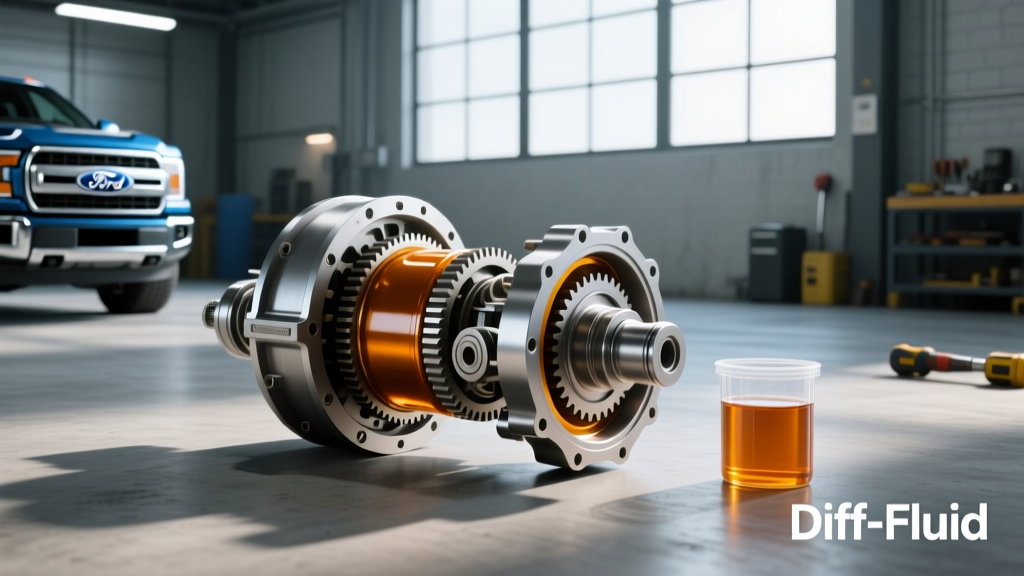
A standard differential fluid service involves removing the differential cover (or using a fluid extraction pump on axles without a drain plug), cleaning the RTV sealing surface or replacing the rubber gasket, and refilling with the manufacturer-specified gear oil. Most light-duty truck and SUV rear axles (such as the GM 8.6-inch, Ford 8.8-inch, or Dana 44) require between 2.5 and 3.5 quarts of fluid.
Fluid Pricing and Specifications
The cost of the fluid itself varies wildly based on chemistry. Conventional 80W-90 gear oil might cost $8 to $12 per quart, but modern preventive maintenance heavily favors full-synthetic 75W-90 or 75W-140 fluids for their superior thermal stability and shear resistance. According to Red Line Synthetic Oil, high-quality ester-based synthetic gear oils typically retail between $18 and $26 per quart. Furthermore, if your vehicle is equipped with a clutch-type Limited Slip Differential (LSD), you must factor in the cost of a friction modifier additive, which adds $10 to $15 to the parts bill.
| Service Component | Dealership Pricing | Independent Shop Pricing | DIY Cost |
|---|---|---|---|
| Standard Drain & Fill (Open Diff) | $220 - $350 | $150 - $240 | $60 - $90 |
| Drain & Fill (LSD w/ Additive) | $250 - $380 | $175 - $275 | $75 - $110 |
| Heavy-Duty 75W-140 Synthetic | $280 - $420 | $200 - $310 | $90 - $130 |
When Fluid Service Turns Into Differential Pinion Seal Replacement
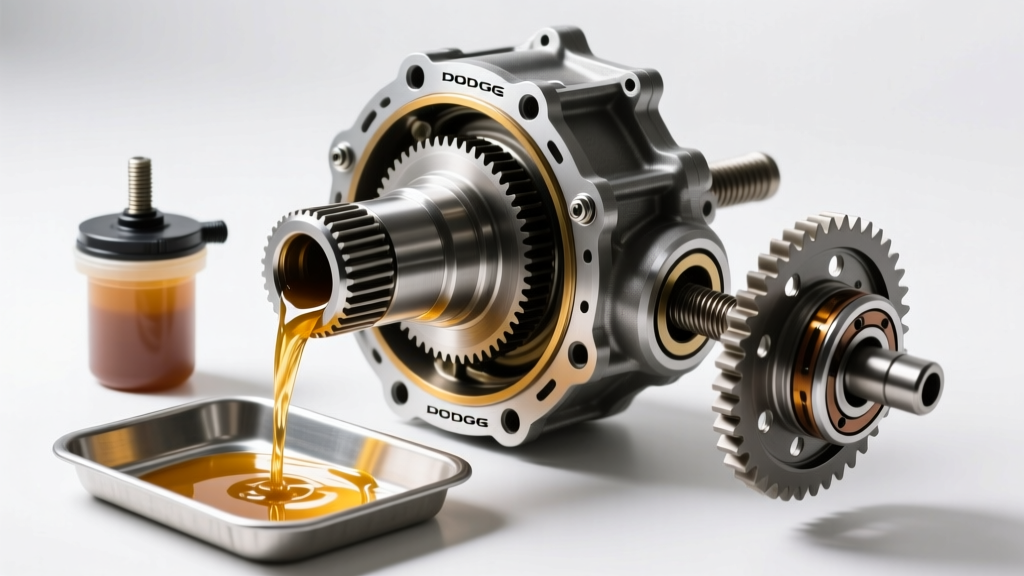
The pinion seal sits at the front of the differential housing, sealing the gap between the rotating pinion flange (where the driveshaft connects) and the stationary axle housing. Its job is to keep gear oil inside the differential and keep water and dirt out.
Why does this matter during a fluid service? Overfilling the differential is a primary cause of pinion seal failure. If a technician or DIYer fills the axle past the bottom of the fill hole, the gear oil expands as it reaches operating temperatures (often exceeding 200°F). If the axle breather valve is clogged, the internal pressure spikes and forces the expanding oil past the pinion seal lip. Therefore, a proper fluid service must always include inspecting the pinion seal for weeping and clearing the axle breather tube.
Differential Pinion Seal Replacement Cost Breakdown
If your pinion seal is actively leaking, a simple fluid top-off is no longer sufficient. The seal must be replaced. Because the differential must be drained to prevent a mess when the pinion flange is removed, and because fresh fluid is required upon reassembly, the cost of a differential pinion seal replacement always includes the price of a full fluid service.
Parts and Labor Matrix
- Pinion Seal: $15 - $45
- Crush Sleeve & Pinion Nut Kit: $20 - $55
- Synthetic Gear Oil & Additive: $60 - $110
- Labor (1.5 to 3.0 hours): $225 - $450
Total Estimated Shop Cost: $320 to $660 depending on vehicle make and axle complexity.
The Hidden Cost: Crush Sleeves and Bearing Preload
The most misunderstood aspect of differential pinion seal replacement is the crush sleeve. On most solid axles, the pinion bearing preload is set by a collapsible steel spacer (the crush sleeve) located between the inner and outer pinion bearings. To remove the pinion flange and access the seal, the massive pinion nut must be unbolted.
Critical E-E-A-T Warning: You can never reuse a collapsed crush sleeve. Once the pinion nut is removed, the sleeve loses its structural integrity. Attempting to reuse it will result in zero bearing preload, leading to catastrophic ring and pinion gear failure within a few hundred miles.
Setting the preload requires specialized tools and immense torque. According to Dana Incorporated axle service manuals, crushing a new sleeve often requires upwards of 250 to 300 ft-lbs of torque on the pinion nut. However, the target measurement is rotational preload, measured in inch-pounds using a beam-style torque wrench. For a typical Ford 8.8-inch or GM 9.5-inch axle with used bearings, the target rotational torque is usually between 8 and 14 in-lbs. If you over-tighten the nut and exceed 16 in-lbs, the sleeve is over-crushed. You cannot simply back the nut off; you must tear the assembly down again, install a brand-new crush sleeve, and start over. This risk of error is why professional labor costs for this job are substantial.
Exact Part Numbers for Common Axles
When sourcing parts for a pinion seal replacement, relying on premium OEM or tier-1 aftermarket suppliers like Timken Automotive or SKF is non-negotiable. Cheap, unbranded seals often feature inferior nitrile rubber that hardens and cracks within 10,000 miles. Below are common part references for popular axles:
- Ford 8.8-inch (Explorer, F-150, Mustang): National Oil Seals #710928 or Timken #710928. Requires a 1-5/8 inch inner diameter seal.
- GM 8.6-inch / 9.5-inch (Silverado, Tahoe, Suburban): Timken #710128 or SKF #19845.
- Dana 44 (Jeep Wrangler, older Ford/Chrysler trucks): National #710692 (Note: Verify spline count and yoke style, as Dana 44 variants are numerous).
Preventive Maintenance: Saving Money Before the Seal Fails
The cheapest differential pinion seal replacement is the one you never have to do. To protect your axle and keep your maintenance budget restricted to standard fluid services, follow these preventive protocols:
1. Clear the Axle Breather Valve
Every solid axle has a breather valve, usually a small plastic or metal cap connected to a rubber hose on the upper axle tube or differential cover. Its job is to let expanding air escape as the axle heats up. If this valve gets packed with mud, road grime, or ice, internal pressure will blow out your pinion seal or inner axle seals. During every oil change, locate the breather and ensure it clicks freely or allows air to pass.
2. Inspect the Driveshaft Companion Flange
The pinion seal rides on the polished surface of the pinion flange. If your driveshaft U-joints are failing, they introduce harmonic vibrations that score the metal surface of the flange. Even a brand-new Timken seal will leak instantly if it rides on a grooved, damaged flange. If you catch a groove early, a mechanical repair sleeve (like a Speedway Speedi-Sleeve) can be pressed over the flange to provide a fresh sealing surface for under $25, saving you from replacing the entire pinion yoke.
3. Adhere to Severe-Duty Fluid Intervals
If you tow trailers, carry heavy payloads, or drive in deep water, your differential fluid degrades rapidly. Water ingress turns gear oil into a milky, emulsified sludge that destroys seal lips and bearing surfaces. For severe-duty applications, drop the differential cover, inspect the fluid for metal glitter or water contamination, and refill with a heavy-duty 75W-140 synthetic every 30,000 miles.
DIY vs. Professional Shop: Is the Pinion Seal Job Worth Doing at Home?
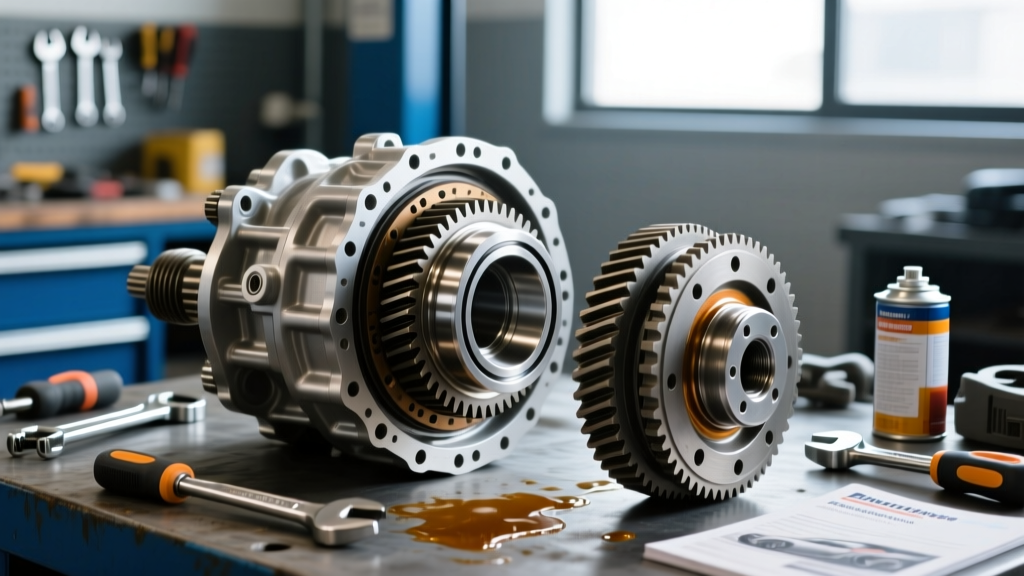
While a standard differential fluid drain-and-fill is an excellent weekend DIY project requiring only basic hand tools, a torque wrench, and a drain pan, a pinion seal replacement crosses the threshold into advanced drivetrain work.
To perform this job correctly at home, you will need:
- A 1/2-inch or 3/4-inch drive torque wrench capable of measuring up to 300 ft-lbs.
- A beam-type or dial-type inch-pound torque wrench to measure rotational bearing preload.
- A specialized pinion flange holding tool (or a heavy-duty strap wrench and a length of chain) to keep the flange from spinning while you break the pinion nut loose.
- A high-quality impact wrench is often required to remove the initial factory pinion nut, which is frequently staked or secured with high-strength threadlocker.
If you lack the inch-pound torque wrench to verify bearing preload, or if you are uncomfortable applying 250+ ft-lbs of torque to a crush sleeve, hand this job over to a drivetrain specialist. The cost of a professional differential pinion seal replacement ($350-$600) is a fraction of the $2,500+ required to replace a ring and pinion gear set destroyed by improper bearing preload.