The Architecture of the 2020 Rogue AWD System
As of 2026, the T32-generation Nissan Rogue remains one of the most prevalent crossover SUVs on North American roads. For technicians and DIY enthusiasts tackling the drivetrain, understanding the 2020 Nissan Rogue rear differential requires looking beyond basic gear mechanics and into the complex synergy between the final drive unit, the Xtronic CVT, and the All-Mode 4x4-i system. Unlike traditional body-on-frame SUVs that utilize a heavy-duty solid rear axle and a mechanical transfer case, the 2020 Rogue employs an independent rear suspension with a compact, lightweight rear final drive unit.
This rear differential does not operate in a vacuum. It is the terminal point of a drivetrain that begins with the 2.5L QR25DE inline-four engine, routes through the RE0F10D (Jatco JF016E) Xtronic Continuously Variable Transmission, and passes through an electronically controlled coupling (ECC) before finally reaching the rear hypoid gear set. When diagnosing performance issues, binding, or planning a fluid service, the specific gear ratio and the ultra-precise tolerances of this system must be respected.
Decoding the 4.364:1 Final Drive Ratio
The 2020 Nissan Rogue AWD models are equipped with a rear differential gear ratio of 4.364:1. This specific ratio was engineered to complement the wide operational band of the Xtronic CVT. Because a CVT lacks fixed mechanical gear steps, the final drive ratio must be steep enough to provide adequate off-the-line torque multiplication for the 170-horsepower QR25DE engine, yet efficient enough to allow the engine to loaf at low RPMs during highway cruising.
The ring and pinion gear set inside the Rogue's rear final drive is a hypoid design. Hypoid gears allow the pinion gear to be mounted below the centerline of the ring gear, which reduces the height of the driveshaft tunnel and increases cabin space. However, hypoid gears generate immense sliding friction and extreme shearing forces on the gear teeth. This is why the 4.364:1 ratio is not just a performance metric; it dictates the exact thermal and chemical requirements of the differential fluid.
The Performance Impact of Gear Ratios and CVT Synergy
Modifying the gear ratio on a 2020 Rogue is virtually impossible and highly discouraged. Unlike older vehicles where swapping a 3.73:1 gear set for a 4.10:1 set was a common weekend garage project to improve towing, the Rogue's AWD system relies on a 1:1 speed correlation between the front transaxle and the rear differential. If the rear ratio were altered, the wheel speed sensors would detect a permanent discrepancy between the front and rear axles. The vehicle's Electronic Control Module (ECM) would interpret this as catastrophic wheel slip or a sensor failure, resulting in a permanent 'AWD Error' dash warning and a default to Front-Wheel Drive (FWD) mode.
The 'Tire Delta' Threat to the Rear Differential
While you cannot change the internal gear ratio, you can inadvertently alter the effective final drive ratio by changing tire sizes. This is the single most common cause of rear differential and ECC failure on the T32 Rogue platform.
Expert Warning: Nissan strictly mandates that the rolling circumference difference between the front and rear tires on the 2020 Rogue AWD must not exceed 5mm (approx. 0.2 inches). Even replacing only two worn tires with brand-new ones can create enough of a speed delta to cause the rear differential coupling to overheat and fail.
When the front tires rotate at a slightly different speed than the rear tires due to uneven wear or mismatched brands, the ECC attempts to modulate the clutch pack to compensate. This continuous micro-slipping generates excessive heat, degrading the differential fluid and eventually burning out the clutch friction material. For a comprehensive look at factory tolerances, technicians frequently reference the Nissan Factory Service Manuals archived on NICOclub.
2020 Rogue Rear Differential Specifications & Torque Data
Precision is paramount when servicing the rear final drive. Below is the exact specification matrix for the 2020 AWD model.
| Parameter | Specification | Notes / Part Numbers |
|---|---|---|
| Final Drive Ratio | 4.364:1 | Must match front transaxle final drive |
| Fluid Type | Nissan Matic S / GL-5 75W-80 | OEM Part: 999MP-GLS00P |
| Fluid Capacity | 0.43 Liters (0.91 US Pints) | Extremely low volume; precision fill required |
| Drain Plug Torque | 44 Nm (33 ft-lb) | Requires new crush washer (11128-4S100) |
| Fill Plug Torque | 44 Nm (33 ft-lb) | Do not over-torque; aluminum housing |
| Ring Gear Backlash | 0.13 - 0.18 mm (0.0051 - 0.0071 in) | Measured at ring gear mounting flange |
Model-Specific Repair Guide: Rear Final Drive Fluid Service
Because the 2020 Nissan Rogue rear differential holds less than half a liter of fluid, thermal breakdown occurs faster than in traditional truck axles that hold 2 to 3 quarts. By 60,000 miles, the extreme pressure (EP) additives in the fluid are heavily depleted, leading to hypoid gear micropitting and bearing whine. As outlined in the official Nissan Owner's Portal, severe driving conditions (frequent AWD engagement, towing, or extreme temperatures) necessitate a fluid change every 30,000 miles.
Step-by-Step Drain and Fill Procedure
- Vehicle Preparation: Raise the vehicle on a level lift. The rear differential must be perfectly level to ensure an accurate fluid fill. An uneven lift will result in under-filling, leading to immediate pinion bearing starvation.
- Remove the Fill Plug First: Located on the passenger side of the differential housing. Always remove the fill plug before the drain plug. If the drain plug strips or the fill plug is seized, you will not be stranded with an empty differential.
- Drain the Fluid: Remove the lower drain plug. Inspect the magnetic tip on the drain plug. A fine, glitter-like metallic paste is normal wear from the hypoid gears. However, distinct metal shards or chunks indicate catastrophic bearing or gear failure requiring a full teardown.
- Replace Crush Washers: Never reuse the aluminum crush washers. Install new OEM washers (Part # 11128-4S100) on both the drain and fill plugs to prevent seepage.
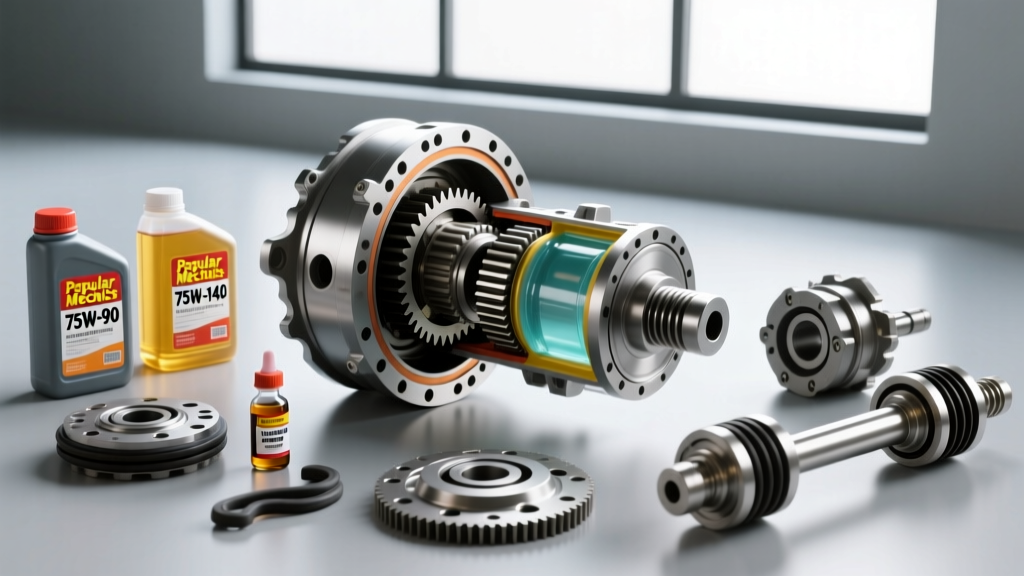
- Fill with Nissan Matic S: Using a fluid transfer pump, inject exactly 0.43 Liters of GL-5 75W-80 gear oil. While some aftermarket 75W-90 GL-5 fluids claim compatibility, the specific friction modifiers in Nissan Matic S are formulated for the tight tolerances and thermal constraints of the Rogue's compact housing.
- Torque and Clean: Torque both plugs to exactly 44 Nm (33 ft-lb). The aluminum housing of the rear final drive is prone to thread stripping if an impact wrench or excessive leverage is used. Clean the exterior with brake cleaner to monitor for future leaks.
Diagnosing Gear Whine vs. Coupling Failure
When a customer complains of rear drivetrain noise or performance shudder, isolating the root cause requires a methodical approach. The 2020 Rogue's rear axle noise profile can be categorized into three distinct failure modes:
- Coast-Down Whine (Pinion Bearing): A high-pitched whine that is only audible when lifting off the throttle at highway speeds (45-65 mph). This indicates wear on the pinion bearing due to fluid starvation or degraded EP additives. The gear ratio remains intact, but bearing preload is lost.
- Acceleration Howl (Ring Gear Wear): A deeper, resonant howl under load. This is often caused by gear tooth micropitting. If the backlash has drifted outside the 0.13 - 0.18 mm specification, the contact pattern on the hypoid gears shifts to the toe or heel of the tooth, causing structural fatigue.
- Low-Speed Shudder (ECC / Fluid Contamination): If the vehicle shudders during tight, low-speed parking lot turns, the issue is rarely the ring and pinion. Instead, water ingress past a compromised rear drive shaft seal or degraded fluid has contaminated the ECC clutch pack. The clutch material glazes, causing a slip-grab-slips shudder that mimics a locking differential engaging erratically.
Final Thoughts on Drivetrain Longevity
The 2020 Nissan Rogue rear differential is a marvel of packaging efficiency, designed to deliver seamless AWD traction without sacrificing cargo space or fuel economy. However, its compact 4.364:1 hypoid gear set and minuscule 0.43L fluid capacity leave zero margin for maintenance neglect or tire mismatching. By adhering strictly to factory torque specs, utilizing the correct Nissan Matic S chemistry, and respecting the delicate speed correlation required by the All-Mode 4x4-i system, technicians can ensure the longevity and performance of this critical drivetrain component well past the 150,000-mile mark.