The Critical Role of Hydraulics in Heavy-Duty Manual Transmissions
When upgrading a heavy-duty diesel truck—whether it is a Dodge Ram 2500/3500 with a G56 manual, a Ford Super Duty with a ZF S6-750, or a classic Cummins swap—South Bend Clutch is frequently the gold standard for friction materials. Their Con-O-Fe, Kevlar, and ceramic dual-disc setups handle immense torque (often exceeding 1,200 lb-ft at the crank). However, the most robust friction assembly will fail to deliver smooth engagement if the hydraulic actuation system is neglected. Hydraulic clutch system diagnosis and preventive maintenance are paramount to ensuring complete disengagement, preventing gear grinding, and extending the life of your transmission synchronizers.
This preventive maintenance guide dives deep into the hydraulics of heavy-duty manual transmissions, outlining exact fluid specifications, diagnostic matrices, and real-world torque specs required to keep your South Bend clutch operating flawlessly in 2026 and beyond.
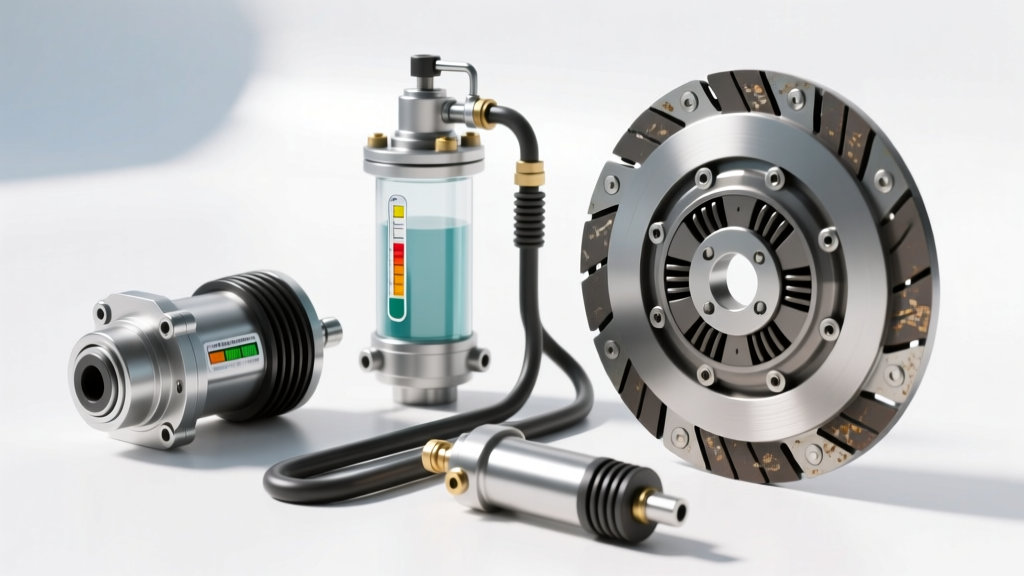
Anatomy of a South Bend Clutch Hydraulic System
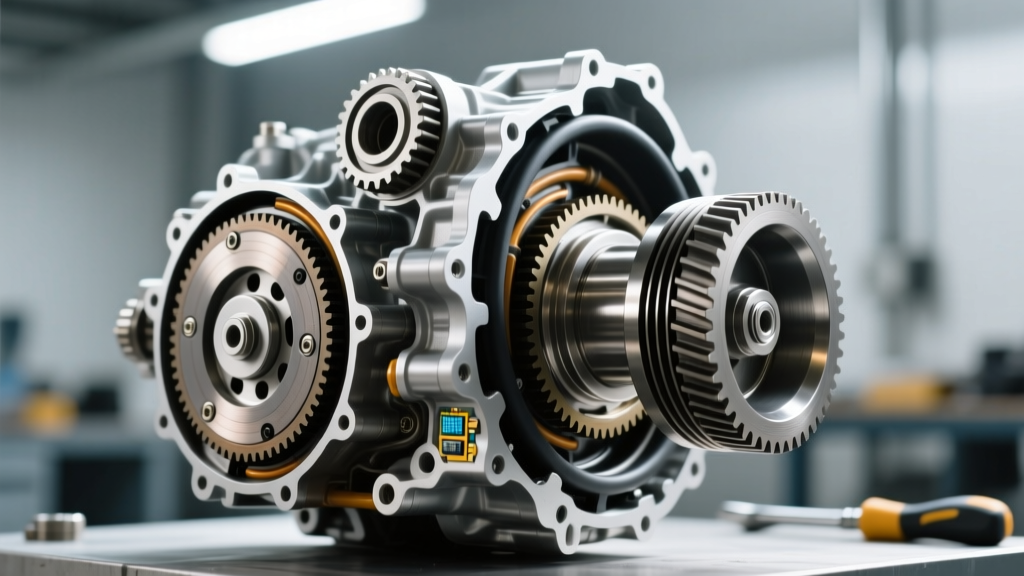
Unlike cable-actuated systems of the past, modern heavy-duty manuals rely on a closed-loop hydraulic circuit. Understanding the specific components is the first step in accurate diagnosis.
Master Cylinder Bore Sizing and Fluid Dynamics
The master cylinder translates pedal mechanical leverage into hydraulic pressure. OEM plastic master cylinders (such as the Mopar 52113729AA) are prone to internal cup degradation and heat warping under heavy towing loads. When installing a high-clamp-load South Bend dual-disc setup, upgrading to a billet aluminum master cylinder with a 13/16-inch (0.812") bore is highly recommended. A larger bore moves a higher volume of fluid per pedal stroke, which is critical for fully collapsing the heavy-duty pressure plates and achieving adequate flywheel clearance.
Hydraulic Throwout Bearings (HTB) vs. External Slaves
While older NV5600 and G56 transmissions utilize external slave cylinders pushing on a mechanical fork, many custom swaps and modernized setups utilize a Hydraulic Throwout Bearing (HTB). The HTB rides directly on the transmission input shaft bearing retainer. South Bend often specifies exact air-gap clearances for HTBs to prevent the bearing from riding constantly against the diaphragm fingers, which would lead to catastrophic fluid boil and bearing failure.
Preventive Maintenance Schedule and Fluid Specifications
Glycol-based brake and clutch fluids are highly hygroscopic, meaning they absorb moisture from the atmosphere through microscopic pores in rubber hoses and reservoir caps. According to NHTSA FMVSS 116 standards, moisture contamination drastically lowers the fluid's boiling point, leading to vapor lock under heavy clutch-slipping scenarios (like backing a heavy trailer up an incline).
| Fluid Type | Dry Boiling Point | Wet Boiling Point (3.7% H2O) | Recommended Use Case |
|---|---|---|---|
| DOT 3 | 401°F (205°C) | 284°F (140°C) | Light duty, daily driving (Not recommended for HD towing) |
| DOT 4 | 446°F (230°C) | 311°F (155°C) | Standard HD towing, OEM replacement |
| DOT 4 LV (Low Viscosity) | 446°F (230°C) | 311°F (155°C) | Cold climate operation, quick pedal response |
| Motul RBF 660 (DOT 4) | 617°F (325°C) | 399°F (204°C) | Extreme towing, sled pulling, South Bend Dual-Disc setups |
| DOT 5.1 | 500°F (260°C) | 356°F (180°C) | High-performance street, frequent flushing required |
Maintenance Interval: Flush the hydraulic clutch system every 24 months or 30,000 miles. Use a high-quality DOT 4 or DOT 5.1 fluid. Never use DOT 5 (silicone-based), as it is compressible, does not absorb water (leading to localized pooling and corrosion), and will result in a dangerously spongy clutch pedal.
Diagnostic Troubleshooting Matrix
When diagnosing hydraulic symptoms, isolate the issue by checking the fluid reservoir first, then the master cylinder pushrod, and finally the slave/HTB. Use the matrix below to pinpoint the failure mode.
| Symptom | Probable Cause | Diagnostic Action & Fix |
|---|---|---|
| Pedal spongy, sinks to floor when held | Internal master cylinder bypass (worn cup seals) or air ingress | Check reservoir level. If full, rebuild or replace master cylinder. Bench bleed before installation. |
| Hard pedal, incomplete disengagement (gear grind) | Blocked compensation port, collapsed flex line, or incorrect HTB air gap | Crack bleeder valve; if fluid flows under pressure but pedal remains hard, replace flex hose. Measure HTB air gap. |
| Pedal drops after heavy towing/slipping | Fluid boil (vapor lock) in the slave cylinder or HTB due to heat soak | Upgrade to high-temp DOT 4 (e.g., Motul RBF 660). Install a heat shield on the slave/HTB or upgrade to an external slave conversion. |
| Clutch chatter on engagement | Hydraulic pulsation, contaminated friction surface, or loose bellhousing | Bleed system using pressure method. Inspect for oil leaks from rear main seal. Verify bellhousing runout. |
Step-by-Step Hydraulic Bleeding and Clearance Setup
Proper bleeding is non-negotiable. Gravity bleeding is rarely sufficient for heavy-duty systems due to the complex routing of hydraulic lines over the transmission bellhousing.
Establishing the HTB Air Gap (Custom Swaps)
If your South Bend clutch utilizes a Hydraulic Throwout Bearing, you must set the air gap before bolting the transmission to the engine block. Target Air Gap: 0.125" to 0.187" (1/8" to 3/16"). Use modeling clay placed on the clutch diaphragm fingers, mate the transmission, and pull it back to measure the compressed clay. Adjust the HTB shims or mounting spacer accordingly. An air gap that is too small will cause the HTB to ride constantly, generating immense heat and destroying the bearing. An air gap that is too large will result in incomplete clutch disengagement.
Pressure Bleeding Protocol
- Connect a pressure bleeder (e.g., Motive Products Power Bleeder) to the master cylinder reservoir.
- Pressurize the system to exactly 15 PSI. Exceeding 20 PSI risks blowing out the slave cylinder seals or rupturing older rubber flex lines.
- Open the slave cylinder or HTB bleed screw (typically 8mm or 10mm). Torque spec for re-tightening the bleed screw is strictly 7-10 Nm (5-7 lb-ft) to avoid stripping the soft aluminum housing.
- Flush a minimum of 500ml of fresh fluid through the system until zero micro-bubbles are visible in the catch tube.
Cost Analysis and Component Replacement
When diagnosis points to hardware failure, budget for the following OEM and aftermarket heavy-duty components (pricing reflects 2026 market averages):
- Master Cylinder Assembly: $80 - $250 (OEM Mopar/Ford vs. Aftermarket Billet)
- External Slave Cylinder: $120 - $220 (Includes concentric throwout bearing for fork setups)
- Hydraulic Throwout Bearing (HTB): $250 - $450 (Tilton or Quartermaster units often spec'd by South Bend)
- Stainless Steel Braided Flex Line: $45 - $85 (Highly recommended to prevent hose expansion under high line pressure)
- High-Performance DOT 4 Fluid: $20 - $35 per 500ml bottle
Crucial Torque Specifications
When replacing hydraulic components, adhere strictly to these torque values to prevent fluid leaks and component cracking:
- Master Cylinder Mounting Nuts: 15 - 20 lb-ft
- Hydraulic Line Flare Nuts (3/16" or 1/4"): 11 - 15 lb-ft (Use a crowfoot wrench; never use pliers)
- Banjo Bolt (if applicable to slave): 18 - 22 lb-ft (Always use two new copper crush washers)
- External Slave Mounting Bolts: 25 - 35 lb-ft (Apply blue Loctite 243 to prevent vibration backing)
Conclusion
A South Bend clutch is an investment in drivetrain longevity and towing capability, but it is only as effective as the hydraulic system commanding it. By adhering to a strict 24-month fluid flush interval, utilizing high-temperature DOT 4 fluids, and understanding the precise diagnostic indicators of master and slave degradation, you can prevent catastrophic disengagement failures. Regularly inspect your hydraulic lines for weeping, monitor your pedal stroke feel, and always verify HTB clearances during installation to ensure your heavy-duty manual transmission shifts smoothly for hundreds of thousands of miles.