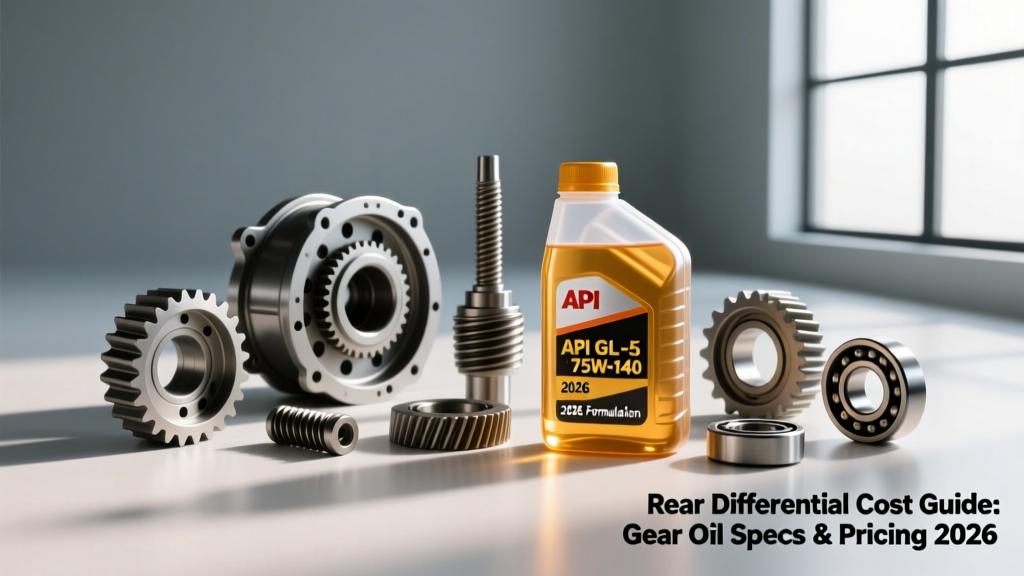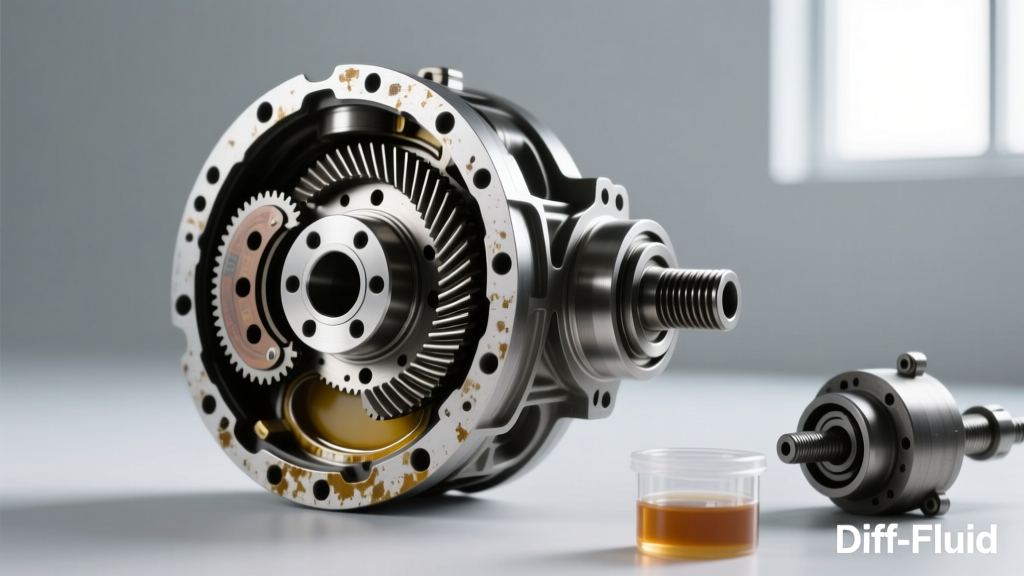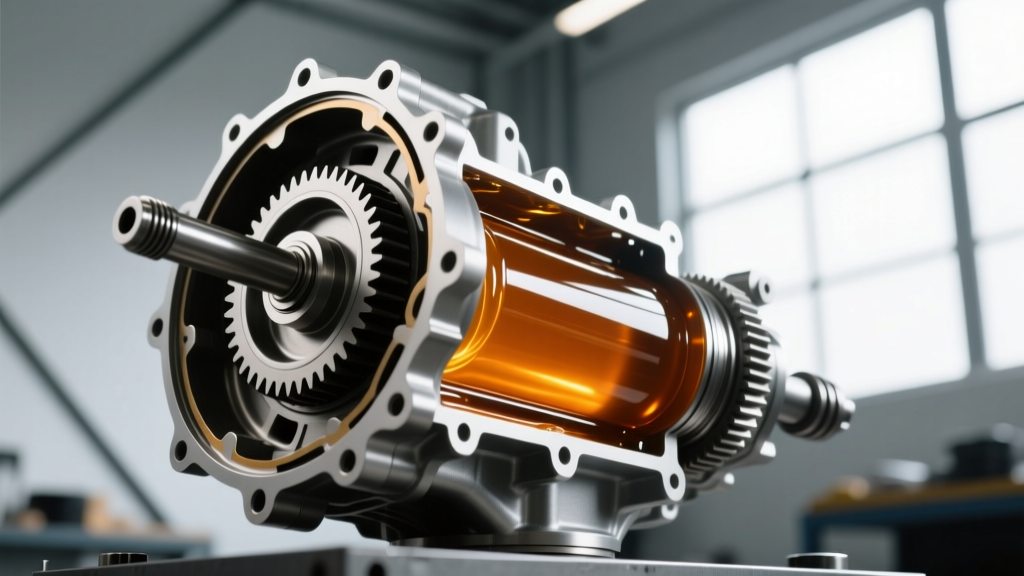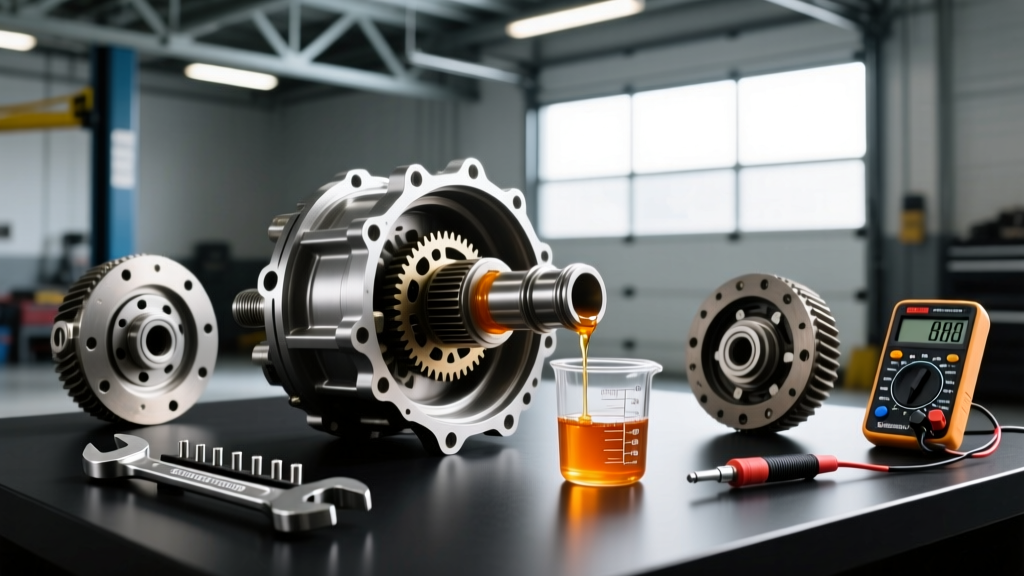
When maintaining an all-wheel-drive (AWD) or four-wheel-drive (4WD) vehicle, the front differential is often the most neglected component in the drivetrain. While rear differentials and transfer cases get regular attention, the front differential operates in a hostile environment—tucked tightly against the engine oil pan, exhaust manifolds, and steering racks. This leads to accelerated thermal breakdown of the gear oil. Naturally, many owners begin their maintenance search by looking up the differential fluid change cost Jiffy Lube and similar quick-lube chains charge, hoping for a fast, budget-friendly solution. However, the reality of front differential servicing is far more nuanced than a standard engine oil change.
The Quick-Lube Reality: Does Jiffy Lube Service Front Differentials?
The short answer is: rarely, and usually not the front. While some quick-lube franchises may offer a generic rear differential drain-and-fill, the front differential presents unique mechanical hurdles. Most modern AWD crossovers and 4WD trucks feature Independent Front Suspension (IFS) or transaxle-integrated front differentials. These setups are heavily shielded by aerodynamic skid plates, splash guards, and complex subframes.
Furthermore, quick-lube technicians are typically trained for high-volume, low-complexity fluid exchanges. Front differententials often require specific friction modifiers for limited-slip clutches, precise torque specifications for aluminum drain plugs, and specialized hand-pump tools to force heavy 75W-90 or 75W-140 gear oil upward into tight fill ports. Because of the high liability of stripping an aluminum differential housing or cross-contaminating fluids, most corporate quick-lube menus explicitly exclude front differential service.
2026 Front Differential Fluid Change Cost Breakdown
If you cannot rely on the local quick-lube joint, where should you go, and what should you expect to pay? Below is a comprehensive cost analysis for front differential service across different provider tiers in 2026.
| Service Provider | Estimated Labor Cost | Fluid Cost (OEM/Premium) | Total Estimated Cost | Service Quality & Risk Factor |
|---|---|---|---|---|
| Quick-Lube (e.g., Jiffy Lube, Valvoline) | $30 - $50 | $15 - $25 (Generic 75W-90) | $45 - $75 | High Risk. Often refuse front diffs; may use wrong GL rating or skip friction modifiers. |
| Independent 4x4 / Drivetrain Specialist | $65 - $110 | $25 - $45 (Red Line, Amsoil) | $90 - $155 | Excellent. Proper torque specs, skid plate removal, and correct LSD additives. |
| OEM Dealership | $95 - $160 | $30 - $60 (OEM Branded) | $125 - $220 | Good, but expensive. High hourly labor rates ($180-$250/hr) inflate the final bill. |
| DIY (Do It Yourself) | $0 (Your Time) | $20 - $40 | $20 - $40 | Variable. Requires specific tools (3/8" square drive, fluid pump, torque wrench). |
Analyzing the Price Tiers
The data clearly shows that chasing the lowest differential fluid change cost Jiffy Lube might offer is a false economy. If a quick-lube shop actually attempts a front differential service on a modern vehicle like a Subaru Outback or a Ford F-150, they frequently over-torque the soft aluminum fill plugs, leading to catastrophic housing cracks. An independent drivetrain specialist charges roughly $40 more but brings the necessary expertise, OEM-spec crush washers, and correct hypoid gear lubricants to the table.
Labor Variables: IFS vs. Solid Front Axles
The labor portion of your invoice is heavily dictated by your vehicle's front suspension architecture. Understanding this helps you contextualize the quotes you receive.
- Independent Front Suspension (IFS): Found on the Toyota Tacoma, Ford F-150, and most AWD crossovers. The differential is a standalone 'clamshell' or drop-out unit mounted to the subframe. Technicians must remove multiple plastic splash shields and sometimes lower the front skid plate. Labor time is typically 0.4 to 0.6 hours.
- Solid Front Axles: Found on the Jeep Wrangler (Dana 30/44), Ford Super Duty (Dana 60), and Ram 2500. While the differential cover or plug is easily accessible, the fluid capacity is much larger (often 2.0 to 3.5 quarts), and the vehicle may require specialized lifting equipment to achieve a level fill. Labor time is typically 0.3 to 0.5 hours, but fluid costs are higher.
- Transaxle-Integrated (Transaxle AWD): Found on many FWD-based AWD systems (e.g., Honda CR-V, Toyota RAV4). The front differential shares fluid with the transmission or requires a highly specific, low-viscosity hypoid fluid (like Honda Dual Pump II). Many general repair shops will not service this, pushing you to the dealership where labor rates are highest.
OEM Specifications: Torque, Capacity, and Crush Washers
True automotive expertise lies in the details. A proper front differential service is not just about dumping old oil and squeezing in new oil. It requires adherence to exact engineering specifications. Here is a snapshot of what a professional service entails for three popular platforms:
Subaru Symmetrical AWD (e.g., WRX, Outback, Forester)
Subaru front differentials are notorious for running hot due to their proximity to the turbocharger and exhaust headers.
- Fluid Spec: 75W-90 GL-5 Hypoid Gear Oil.
- Capacity: ~1.2 Liters (1.27 US Quarts).
- Plug Torque: 33 lb-ft (45 Nm) for both drain and fill plugs.
- Critical Detail: You must replace the aluminum crush washers (Subaru Part #803918060). Reusing old washers guarantees a slow weep that will eventually destroy the ring and pinion gears.
Ford F-150 IFS (8.8 Front Axle)
- Fluid Spec: 75W-140 Synthetic (Motorcraft XY-75W140-QL) for heavy towing, or 75W-90 for standard duty.
- Capacity: ~1.5 Liters (1.58 US Quarts).
- Plug Torque: 33 lb-ft.
- Critical Detail: The fill plug is often tucked behind the steering tie-rod and CV axle, requiring a specialized flexible-hose fluid pump or a modified transfer tube to fill without spilling gear oil onto the exhaust.
Toyota Tacoma (8-Inch Clamshell Front Diff)
- Fluid Spec: 75W-90 GL-5 (Toyota Part #08885-81010).
- Capacity: ~1.1 Liters (1.16 US Quarts).
- Plug Torque: 29 lb-ft (39 Nm).
- Critical Detail: If equipped with an electronic locking differential, a specific friction modifier must be added, or the locker mechanism will bind and chatter violently upon engagement.
The Danger of Universal Gear Oils and Flushing Machines
One of the primary reasons enthusiasts and master technicians avoid quick-lube chains for drivetrain service is the reliance on 'universal' fluids and bulk flushing machines. According to discussions on the Bob Is The Oil Guy Gear Oil Forums, bulk gear oils stored in open vats can absorb ambient moisture, leading to internal differential corrosion. Furthermore, flushing machines use high pressure to push fluid through the housing. Differentials are not designed for pressurized flushing; doing so can force gear oil past the axle seals and into the wheel bearings, causing catastrophic brake and bearing failure.
'A front differential is a precision splash-lubricated gearbox, not an automatic transmission. Putting a pressurized flush machine on a Dana 30 or a Subaru front diff is a fast track to blowing out the pinion seal and contaminating your brake rotors with 75W-90.' — ASE Certified Drivetrain Specialist
Instead, a proper gravity drain-and-fill using premium synthetic gear oils, such as those detailed in the AMSOIL Gear Oil Guide, ensures that the sulfur-phosphorus extreme-pressure (EP) additives are correctly distributed without risking seal damage.
DIY Front Diff Service: The True Cost of Doing It Yourself
If the dealership quote exceeds $180 and the independent shops are booked out for weeks, the DIY route is highly viable for mechanically inclined owners. The financial savings are significant, but the tooling investment must be factored into your first service.
Required Tooling Investment:
- 3/8-inch Square Drive Socket (for standard differential plugs): $8
- 10mm or 12mm Hex Bit Socket (for European/Some Asian diffs): $10
- Manual Fluid Transfer Pump (Crucial for IFS diffs): $15 - $25
- 1/2-inch Torque Wrench: $40 - $80
- OEM Crush Washers / Gaskets: $4 - $10
Once you own the tools, your recurring cost drops strictly to the price of the fluid and washers—typically around $25 to $40 every 30,000 to 60,000 miles. As noted by Consumer Reports Maintenance Guides, taking over basic drivetrain fluid maintenance is one of the most effective ways to offset the rising labor rates at modern dealerships.
Final Verdict: Where Should You Spend Your Money?
Searching for the lowest differential fluid change cost Jiffy Lube can provide is ultimately a misguided strategy for front differential maintenance. The mechanical complexity, tight clearances, and strict chemical requirements of modern front differentials demand the attention of a qualified independent 4x4 shop or a dedicated drivetrain specialist. Expect to pay between $90 and $155 for a job done correctly, with the right synthetic fluids, fresh crush washers, and properly torqued plugs. Your front ring and pinion gears will easily outlast the vehicle, provided you avoid the quick-lube trap and respect the engineering of your drivetrain.