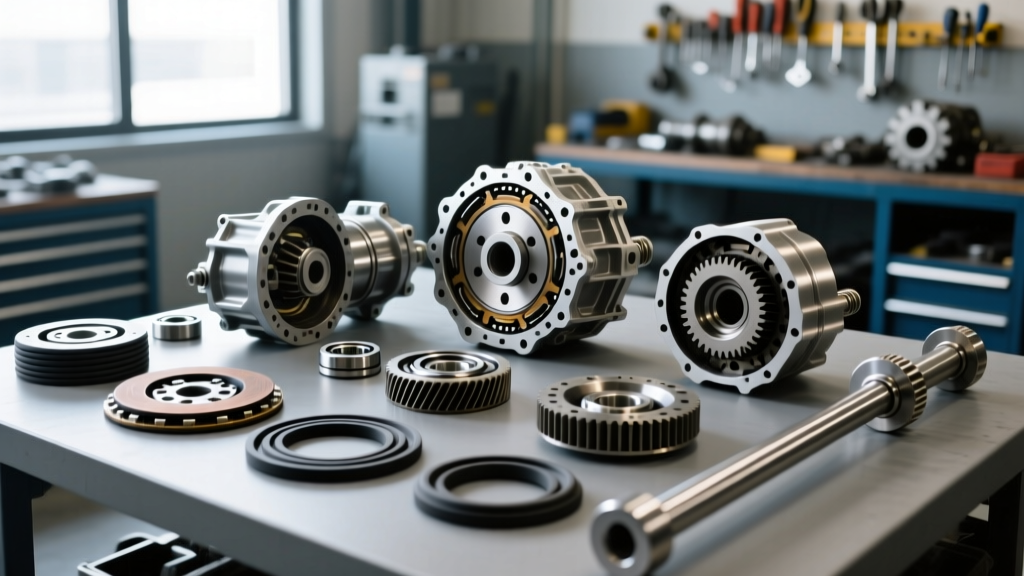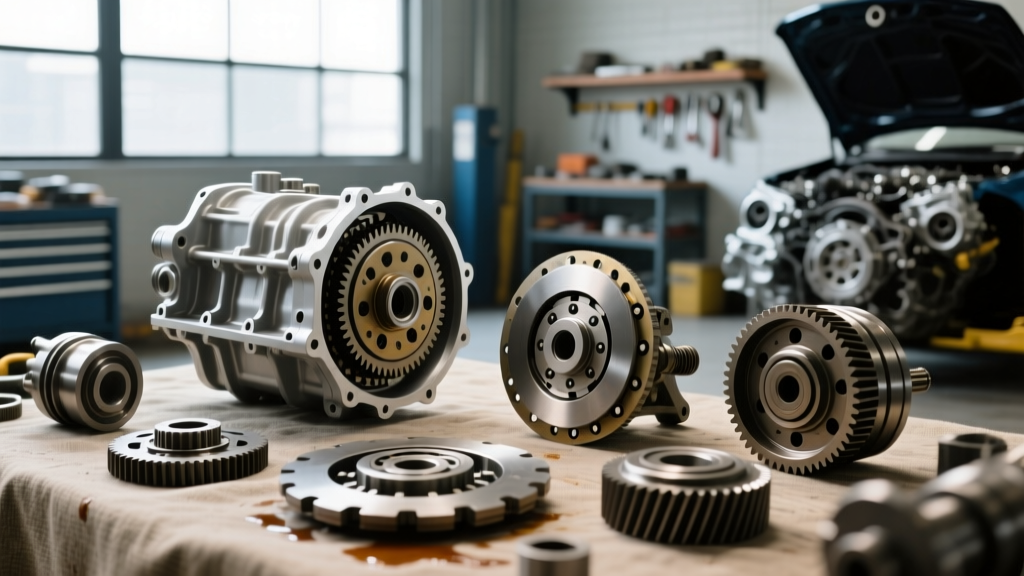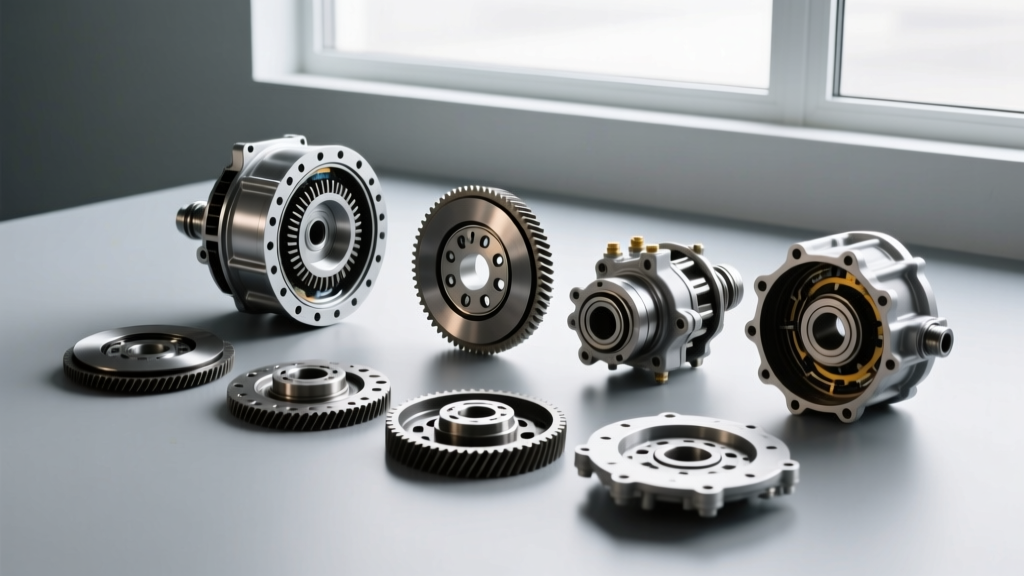
The 6F55 Platform: Why the Ford Flex Demands a Performance Rebuild
The Ford Flex, particularly the 3.5L EcoBoost AWD variants producing 365 horsepower and 350 lb-ft of torque, is a heavy, high-output crossover. To manage this power, Ford utilized the 6F55 6-speed automatic transmission (a heavy-duty variant of the 6F50). While capable, the 6F55 is notorious for specific failure points when subjected to aggressive driving, towing, or long-term wear. Common casualties include the 3-5-R clutch hub, intermediate shaft splines, and valve body cross-leaks.
As of 2026, the aftermarket support for the 6F50/6F55 platform has matured significantly. A standard OEM rebuild is no longer the only—or best—option for enthusiasts. This guide provides a comprehensive, step-by-step performance overhaul procedure for the Ford Flex transmission rebuild, integrating high-capacity friction materials, reinforced hard parts, and precise calibration protocols to handle up to 500 wheel horsepower.
Phase 1: Teardown and Forensic Inspection
Before ordering performance parts, a complete teardown and forensic inspection are mandatory to identify collateral damage.
- PTU Separation: The Power Transfer Unit (PTU) is bolted directly to the transmission case. Drain the PTU gear oil (75W-140 synthetic) and carefully separate it from the bellhousing. Inspect the PTU splines for stripping—a common Ford Flex AWD failure.
- Pump and Stator Removal: Remove the transmission pump (M8x1.25 bolts). Inspect the pump gears for scoring and the stator support shaft for wear. The stator support is a known weak point; if the splines show twisting, replacement with a billet unit is required.
- Clutch Pack Disassembly: Extract the clutch drums. Pay special attention to the 3-5-R and 4-5-6 clutch packs. In high-mileage Flex models, the stamped steel 3-5-R hub frequently fractures or strips, leading to a sudden loss of reverse and 3rd/5th gears.
- Chain and Sprocket Inspection: The 6F55 uses a heavy-duty link chain for the final drive. Measure the chain for stretch. If the chain exhibits more than 0.125 inches of deflection under moderate thumb pressure, replace both the chain and the drive/driven sprockets to prevent case-walking and bearing destruction.
Phase 2: Performance Upgrade Selection
To transform the 6F55 into a high-torque performer, you must move beyond standard OEM paper frictions and cast aluminum hubs. Below is the recommended upgrade matrix for a performance-oriented Ford Flex transmission rebuild.
| Component | OEM Specification | Performance Upgrade (2026 Standard) | Benefit |
|---|---|---|---|
| Friction Clutches | Standard Paper/Cellulose | Raybestos GPZ Pro-Series | High-torque capacity, resists glazing under EcoBoost torque spikes |
| 3-5-R Clutch Hub | Stamped Steel / Powdered Metal | Billet Steel 3-5-R Hub | Eliminates spline stripping and hub fracture under heavy loads |
| Valve Body | Cast Aluminum (prone to bore wear) | Sonnax Zip Kit (6F50/55-ZIP) | Restores line pressure, eliminates cross-leaks, and improves shift firmness |
| Torque Converter | Single-stage lockup | Billet Cover Multi-Plate TCC | Handles 500+ lb-ft, prevents flex-plate cracking and TCC shudder |
| Intermediate Shaft | OEM Cast/Stamped | 300M Billet Intermediate Shaft | Prevents snapping under hard AWD launches |
Pro-Tip: Sourcing parts from established manufacturers like Raybestos Powertrain and Sonnax ensures you are getting metallurgy tested specifically for the 6F55's unique hydraulic pressures.
Phase 3: Step-by-Step Performance Reassembly
With your upgraded components on the bench, precision assembly is critical. The 6F55 relies heavily on precise clutch clearances and selective thrust washer sizing.
1. Clutch Pack Indexing and Clearances
When installing the Raybestos GPZ frictions, ensure they are pre-soaked in Motorcraft MERCON LV (XT-10-QLV) for a minimum of two hours.
- 3-5-R Pack Clearance: Target 0.040" - 0.055". Use selective pressure plates to achieve this. A tighter pack yields faster shifts but risks drag; a looser pack causes slip and heat.
- 4-5-6 Pack Clearance: Target 0.050" - 0.070". This pack handles the brunt of the EcoBoost torque in the highest gears.
2. Valve Body and Solenoid Integration
The 6F55 utilizes a solenoid-integrated valve body. When installing a Sonnax Zip Kit or replacing worn pressure control solenoids (PCS), cleanliness is paramount. Use a dedicated transmission assembly lube (like Sonnax Slippery Stick) on all valve bores. Torque the valve body to case bolts to 11 Nm (97 lb-in) in a crisscross pattern to prevent casting distortion.
3. Pump and Final Assembly Torque Specs
Incorrect pump torque leads to immediate bushing failure and loss of prime. Follow these exact specifications:
- Pump to Case Bolts (M8x1.25): 18 Nm (13 lb-ft)
- Bellhousing to Engine Block: 48 Nm (35 lb-ft)
- Transmission Pan Bolts: 11 Nm (97 lb-in) - *Use a bead of Motorcraft TA-357 silicone if the pan gasket design requires it, though most 6F55 pans use a reusable molded rubber gasket.*
- Axle Half-Shaft Nuts: 250 Nm (184 lb-ft) - *Always use new, one-time-use torque-to-yield axle nuts upon reinstallation into the vehicle.*
Phase 4: Cost Breakdown - OEM vs. Performance Build
Understanding the financial commitment is crucial for planning your Ford Flex transmission rebuild. Below is a comparative cost analysis for a 2026 market rebuild.
| Cost Category | Standard OEM Rebuild (Shop) | DIY Performance Overhaul | Pro-Built Performance (Shop) |
|---|---|---|---|
| Core / Rebuild Kit | $450 - $600 | $800 - $1,100 (Master Kit + GPZ) | $1,500 - $2,200 (Billet internals) |
| Hard Parts (Hubs/Shafts) | $0 - $200 (Used OEM) | $400 - $700 (Billet upgrades) | $800 - $1,200 (Full billet) |
| Torque Converter | $250 (Reman OEM) | $650 - $900 (Billet Multi-Plate) | $900 - $1,400 (Custom Stall) |
| Labor / Assembly | $1,200 - $1,800 | $0 (Your Time) | $1,500 - $2,500 |
| Total Estimated Cost | $1,900 - $2,600 | $1,850 - $2,700 | $4,700 - $7,300 |
Expert Insight: While the DIY performance build costs roughly the same as a standard shop rebuild, the resulting 6F55 will easily handle 100+ horsepower more than the OEM unit. For daily-driven EcoBoost Flex owners who tow or drive aggressively, the DIY performance route offers the highest ROI.
Phase 5: Fluid Fill, TCM Calibration, and Break-In
The rebuild does not end when the transmission is bolted back into the Flex. The 6F55's Transmission Control Module (TCM) relies on adaptive learning tables that must be reset to accommodate the new clutch volumes and firm shift pressures.
Fluid Capacity and Fill Procedure
The 6F55 requires Motorcraft MERCON LV (or an approved equivalent meeting Ford WSS-M2C938-A). The total dry-fill capacity is approximately 11.2 Liters (11.8 Quarts).
- Install a new transmission filter and pan gasket.
- Add 8 quarts of MERCON LV through the dipstick tube (if equipped) or the top-fill plug.
- Start the vehicle, cycle through all gears (P-R-N-D-S), and let the fluid reach operating temperature (190°F - 200°F).
- With the engine idling on a level surface, check the fluid level. Add incrementally until it reaches the cross-hatched 'HOT' zone on the dipstick or weeps slightly from the side-level check plug.
TCM Relearn and Break-In
Using a bidirectional OBD2 scanner (such as FORScan or an Autel/Snap-on professional tool), navigate to the TCM module and execute the "Keep Alive Memory (KAM) Reset" and "Transmission Adaptive Learning" routines.
The break-in period for high-performance friction materials like the GPZ series requires approximately 300 to 500 miles of varied driving. Avoid wide-open-throttle (WOT) launches or heavy towing during this window. Allow the friction surfaces to mate properly to the steels, ensuring optimal clamping force and longevity for your newly upgraded Ford Flex drivetrain.
For official fluid specifications and OEM part cross-references, always consult the Ford Parts Authority database to ensure compatibility with your specific model year.