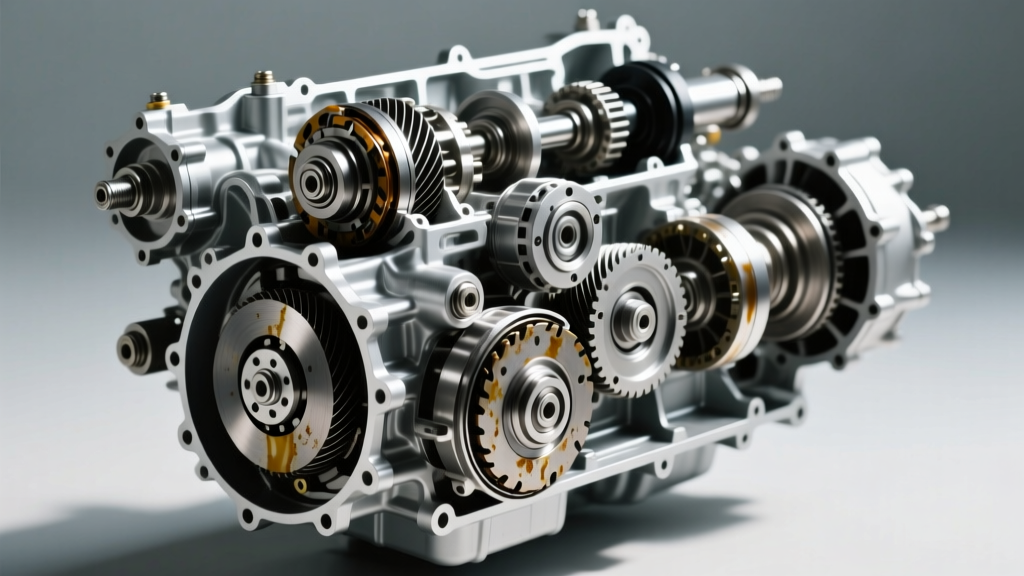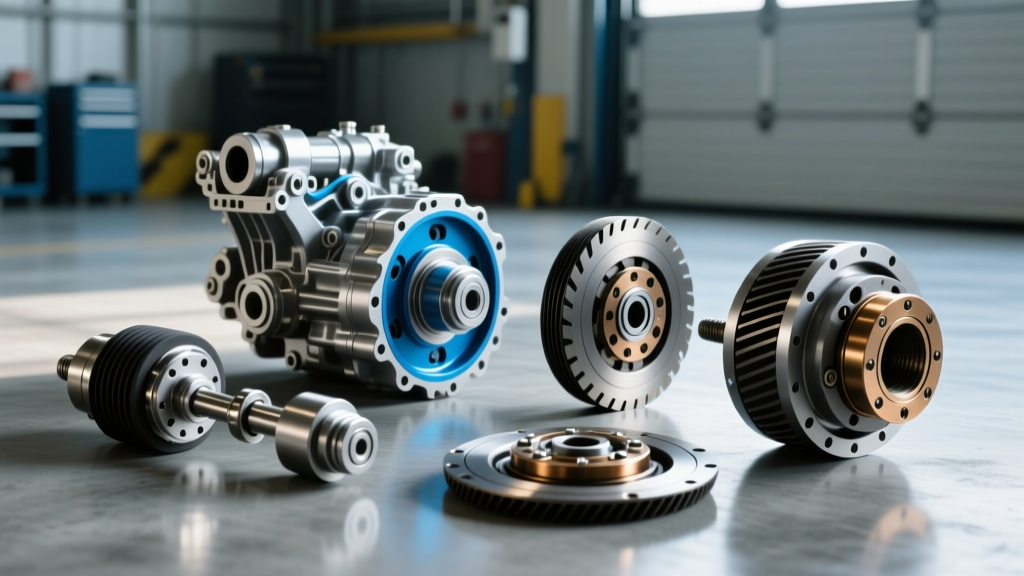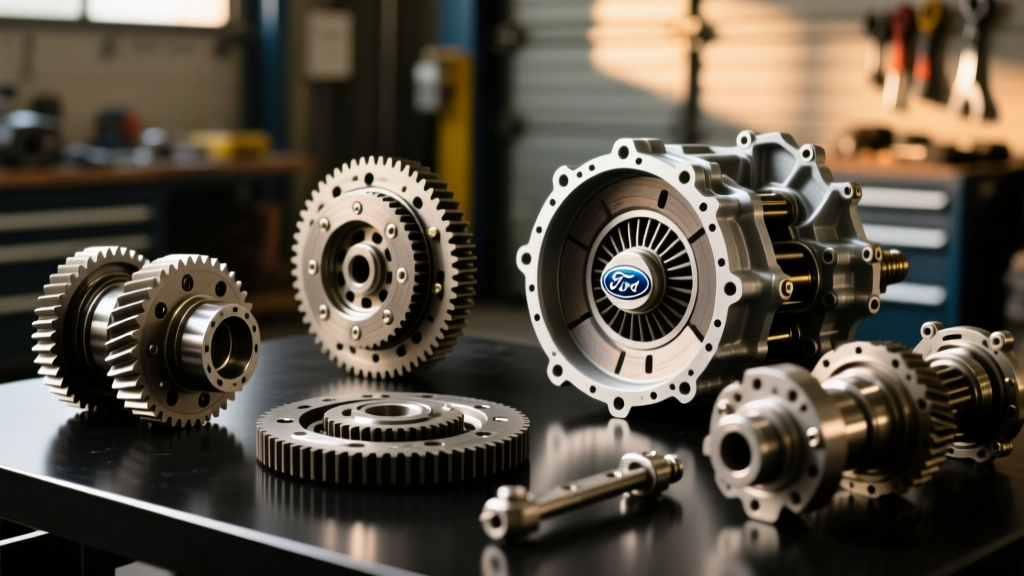
If you own a 2017–2020 Ford F-150, Mustang, or Expedition, you have likely asked yourself (or typed into a search engine): has Ford fixed their 10-speed transmission problems? The 10R80 transmission, co-developed with General Motors, had a notoriously rocky launch. Early models suffered from harsh garage shifts, hunting for gears, and, in the most frustrating scenarios, a complete refusal to shift out of limp mode or engage Drive/Reverse.
As we navigate the used and repair market in 2026, the short answer is yes, but with caveats. Ford released a barrage of Technical Service Bulletins (TSBs) and PCM/TCM software recalibrations between 2019 and 2021 that drastically improved shift logic. Furthermore, hardware revisions to the valve body and internal wiring were implemented on the assembly line for 2020+ models. However, if you are driving an early-generation 10R80 that suddenly won't shift, you are likely dealing with a specific set of electro-hydraulic failures that software alone cannot fix.
This beginner-friendly guide will walk you through exactly how to diagnose a Ford 10R80 that refuses to shift, complete with the exact fluid specifications, torque specs, and diagnostic trouble codes (DTCs) you need to know.
The Short Answer: Did Ford Fix the 10R80?
According to investigations into early 10-speed automatic transmission issues, Ford's primary 'fix' for shifting complaints was software-based. TSBs like 21-22-03 addressed harsh shifts by reprogramming the Powertrain Control Module (PCM) to alter line pressure and shift timing.
However, when a 10R80 completely fails to shift or gets stuck in 3rd or 5th gear (Limp Mode), it is rarely a software glitch. It is almost always a hardware failure involving the internal lead frame, speed sensors, or shift solenoids. While Ford fixed the calibration problems, the physical components in 2017–2019 models are now aging out of warranty and failing due to heat, wear, and contaminated fluid.
Why Won't My 10R80 Shift? (The Beginner's Breakdown)
To understand why your truck won't shift, you need to understand how the 10R80 operates. Unlike older transmissions that used a maze of hydraulic valves, the 10R80 uses an electro-hydraulic control system. The Transmission Control Module (TCM) is mounted directly inside the transmission pan, bolted to the valve body. It relies on a network of speed sensors and pressure switches to fire solenoids that route fluid to the clutch packs.
Scenario A: Stuck in Limp Mode (Default 3rd or 5th Gear)
If your RPMs flare but the vehicle feels like it is starting in a high gear, or it simply will not downshift, the TCM has detected a critical fault and entered Failsafe Limp Mode. It cuts power to the solenoids and defaults to a single mechanical gear to protect the drivetrain and allow you to limp home.
Scenario B: Refuses to Engage Drive or Reverse
If you shift into 'D' or 'R' and the engine just revs without the vehicle moving, you have a severe loss of hydraulic line pressure. This is usually caused by a failed transmission fluid pump, a massively clogged filter, or a catastrophic internal seal blowout.
Step 1: Verify Fluid Level and Condition (MERCON ULV)
Before throwing parts at a no-shift 10R80, you must verify the fluid level. The 10R80 is incredibly sensitive to fluid volume. Overfilling causes aeration (foaming), which leads to slipping and no-shift conditions. Underfilling causes pump cavitation.
CRITICAL WARNING: The 10R80 requires MERCON ULV (Ultra Low Viscosity) fluid, typically Motorcraft part number XT-12-QULV. Do NOT use MERCON LV or MERCON V. Using the wrong fluid will destroy the clutch packs within a few hundred miles.
How to Check the 10R80 Fluid Level Properly
- Place the vehicle on a perfectly level hoist.
- Start the engine and let it idle in Park. The transmission must be at operating temperature.
- Using a high-end OBD2 scanner or FORScan, monitor the Transmission Fluid Temperature (TFT) PID. It must be between 120°F and 140°F (49°C - 60°C).
- Cycle the shifter through every gear, pausing for 3 seconds in each, then return to Park.
- Locate the 3mm Allen check plug on the side of the transmission pan (near the rear).
- Remove the plug. A steady dribble of fluid means the level is correct. A massive gush means it is overfilled. No fluid means you need to add MERCON ULV through the dipstick/fill tube until it dribs out.
Note: When reinstalling the transmission pan bolts after a service, the torque specification is exactly 106 lb-in (12 Nm). Do not overtighten, or you will warp the stamped steel pan and cause leaks.
Step 2: Scan for TCM Codes (Skip the Cheap Scanners)
A standard $30 OBD2 scanner from an auto parts store will only read the PCM (engine) codes. To diagnose a 10R80 that won't shift, you must read the TCM (Transmission Control Module) network. We highly recommend using FORScan with an OBDLink MX+ adapter, as it accesses Ford's proprietary MS-CAN and HS-CAN networks.
According to standard OBD-Codes diagnostic guides for shift solenoids, here are the most common DTCs associated with a 10R80 no-shift or limp-mode condition:
| DTC Code | Description | What It Means for Your 10R80 |
|---|---|---|
| P0751 | Shift Solenoid 'A' Performance | Solenoid A is stuck off or blocked by debris. The TCM cannot route fluid to the 1st/2nd gear clutch pack. |
| P0731 | Gear 1 Incorrect Ratio | The transmission commanded 1st gear, but the Turbine Shaft Speed (TSS) and Output Shaft Speed (OSS) sensors show slipping. |
| P2701 | Transmission Friction Element 'B' Apply Time | Clutch pack B is taking too long to engage. Often points to a worn clutch or a leaking internal piston seal. |
| P0715 / P0720 | TSS / OSS Sensor Circuit | The TCM has lost RPM data. Without speed data, the TCM will instantly trigger Limp Mode to prevent over-revving. |
Step 3: The Notorious Lead Frame and Valve Body
If your fluid is full, clean, and you have speed sensor or multiple solenoid codes, you are likely staring at a failed Molded Lead Frame.
In the 10R80, the solenoids, pressure switches, and TSS/OSS sensors are all integrated into a single plastic and metal wiring harness called the lead frame, which sits directly beneath the valve body. Over time, the intense heat of the transmission fluid causes the plastic to become brittle, and the microscopic solder joints on the speed sensors crack. When this happens, the TCM loses communication with the transmission's internal sensors, resulting in an immediate no-shift or limp-mode event.
Part Numbers and Repair Specs
- Replacement Part: Motorcraft JL3Z-7G234-A (Solenoid Body / Lead Frame Assembly). Always verify with your local dealer using your exact VIN, as Ford has issued multiple hardware revisions.
- Valve Body to Case Torque: The 11mm valve body bolts must be torqued to 89 lb-in (10 Nm) in the specific spiral sequence outlined in the Ford Workshop Manual. Uneven torque will bind the valves and cause harsh shifts.
- TCM Strategy Download: After replacing the lead frame or valve body, you must use a Ford-approved J2534 pass-through device to download the As-Built data and perform an adaptive learning reset. The truck will not shift correctly without this step.
Cost Breakdown: Dealer vs. Independent vs. DIY
Because the 10R80 TCM and lead frame are located inside the transmission pan, you do not need to remove the transmission from the vehicle to fix most no-shift electrical issues. This saves thousands in labor. Here is what you can expect to pay in 2026 for a lead frame/solenoid body replacement:
| Repair Route | Estimated Cost (Parts + Labor) | Pros & Cons |
|---|---|---|
| Ford Dealership | $1,800 - $2,600 | Guaranteed OEM parts and factory TCM flashing. Highest cost. |
| Independent Transmission Shop | $1,200 - $1,700 | Lower labor rates. Ensure they have an Autel or Snap-On tool capable of Ford TCM As-Built programming. |
| DIY Driveway Repair | $450 - $650 | Requires purchasing the lead frame, 6+ quarts of MERCON ULV, a new pan gasket, and a capable OBD2 programmer (like FORScan + OBDLink EX) to reset the KAM (Keep Alive Memory). |
Summary Checklist for a No-Shift 10R80
If your 10-speed Ford is currently stuck in your driveway, follow this exact diagnostic sequence before authorizing a $4,000 rebuild:
- Check for TSBs: Visit the NHTSA Safety Recalls and TSB Database or a Ford dealer to ensure your PCM/TCM software is updated to the latest 2021+ calibration.
- Verify Fluid: Check the level using the 120°F–140°F side-plug method with MERCON ULV.
- Scan the TCM: Use FORScan to pull transmission-specific codes. Ignore generic engine codes for now.
- Inspect the Pan: Drop the transmission pan. If you find excessive metallic glitter on the magnets, the clutch packs or pump are physically destroyed, and a full rebuild or replacement is required.
- Test the Lead Frame: If the pan is clean but you have speed sensor or solenoid codes, replace the molded lead frame and perform the adaptive relearn procedure.
While early 10R80 models earned a bad reputation, understanding the precise electro-hydraulic nature of this transmission allows you to accurately diagnose a no-shift condition without throwing unnecessary money at the problem. Armed with the right fluid specs, torque values, and diagnostic software, you can get your F-150 or Mustang back on the road and shifting smoothly through all 10 gears.