The High-Mileage Ford Focus Transmission Landscape
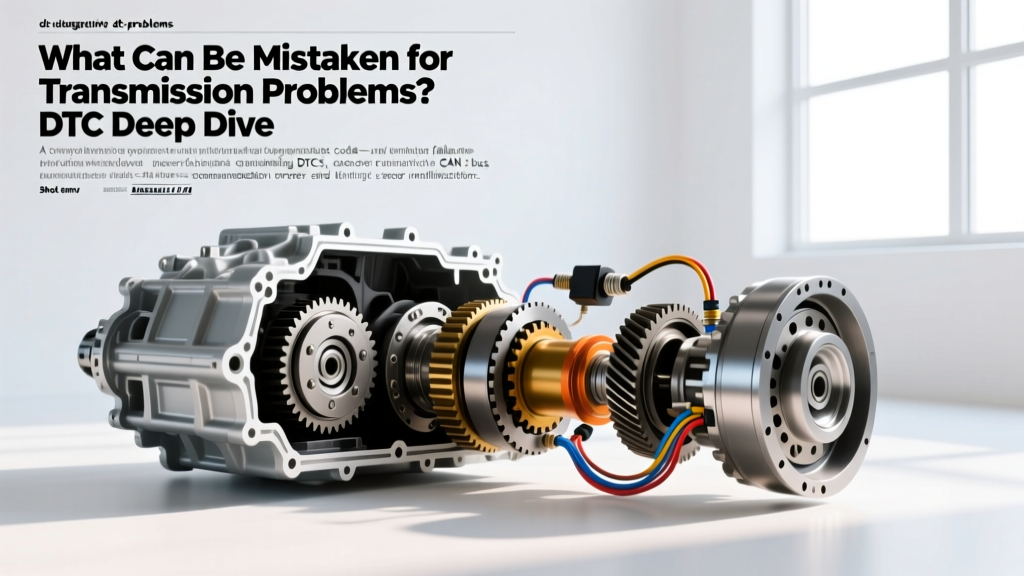
By 2026, the vast majority of 2012–2018 Ford Focus vehicles equipped with the Getrag 6DCT250 (Ford DPS6) dry dual-clutch transmission have well surpassed the 100,000-mile mark. While Ford’s extended warranty programs for the Transmission Control Module (TCM) and clutch assemblies have largely expired, understanding how to fix Ford Focus transmission problems is now a critical skill for DIYers and independent shop owners. The DPS6 is essentially two manual transmissions housed in one case, operated by electromechanical actuators. Because it uses dry friction clutches rather than a torque converter, high-mileage wear patterns mimic those of a traditional manual clutch, compounded by severe electronic and seal vulnerabilities.
This preventive maintenance and diagnostic guide focuses exclusively on preserving, diagnosing, and repairing the DPS6 PowerShift transmission in high-mileage applications, ensuring you can extract maximum remaining life from the drivetrain.
Diagnosing the DPS6: Shudder, Slip, and TCM Failures
Before turning a wrench, you must accurately identify the failure mode. High-mileage Focus transmissions typically present with three distinct symptom clusters.
1. TCM Failure and Solder Joint Cracking
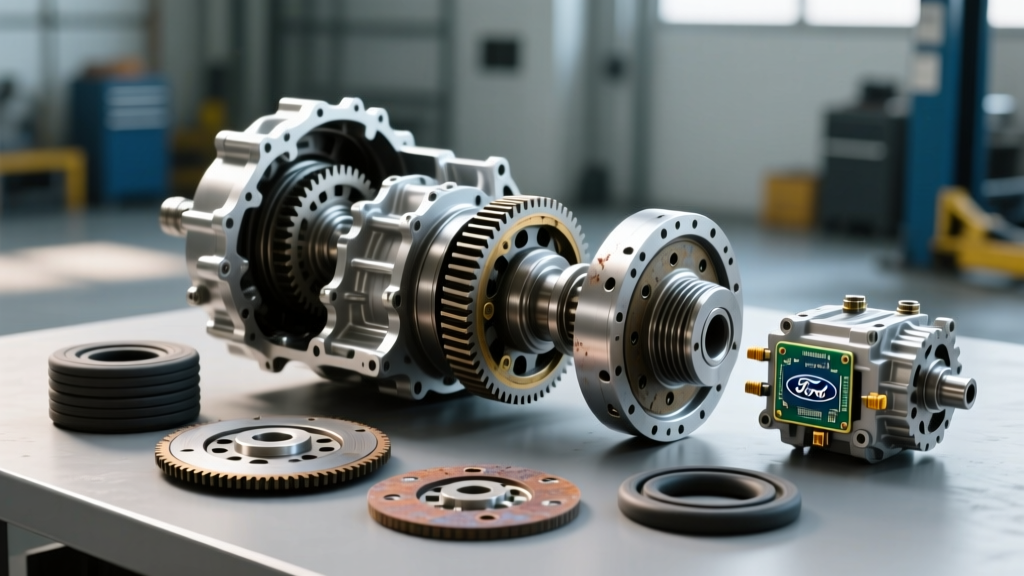
The TCM is mounted directly to the front of the transmission case, subjecting it to intense heat cycles and high-frequency engine vibrations. Over 100,000+ miles, the internal solder joints on the TCM circuit board crack, leading to intermittent or total loss of communication with the clutch actuators. This triggers the wrench light and Diagnostic Trouble Codes (DTCs) such as P090C (Clutch Position Sensor B Circuit Low) and P090D (Clutch Position Sensor B Circuit High). If a scan tool cannot communicate with the TCM via the High-Speed CAN bus, the module is internally faulted.
2. Input Shaft Seal Weep and Clutch Contamination
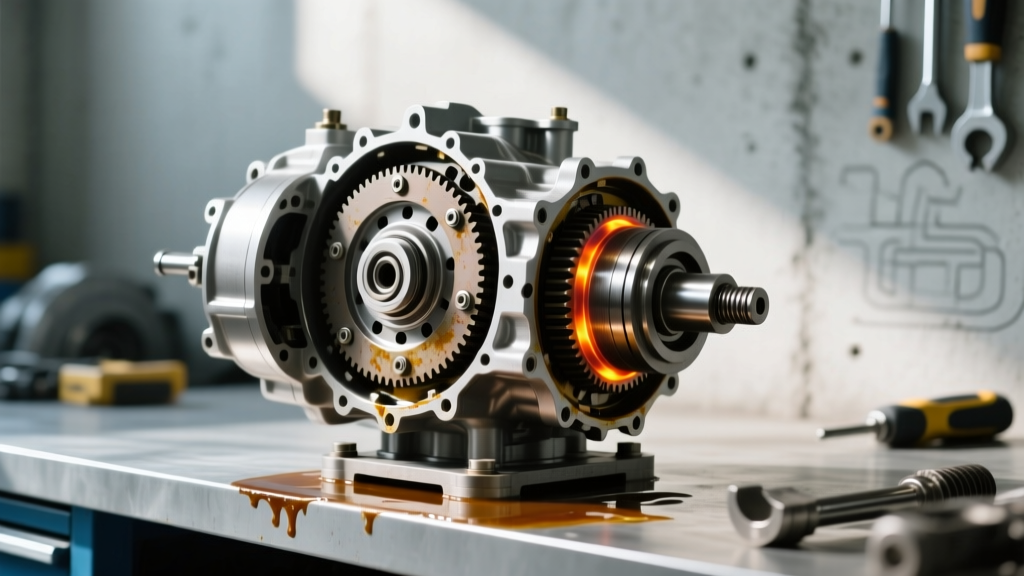
The Getrag 6DCT250 utilizes two input shafts—one for odd gears (1, 3, 5) and one for even gears (2, 4, 6, R). The seals on these shafts are notorious for weeping gear oil onto the dry friction clutches. Once oil contaminates the dry clutch pack, the friction coefficient plummets. The driver will experience violent shudder (judder) upon takeoff, slipping during hill climbs, and DTC P287A (Clutch B Adaptive Learning at Limit). Replacing the clutches without addressing the input shaft seals is a guaranteed failure point.
3. Shift Drum Actuator Motor Wear
Unlike hydraulic systems, the DPS6 uses electric motors to rotate shift drums that engage the gear forks. High-mileage units suffer from carbon brush wear and internal gear stripping inside these actuators, resulting in delayed shifts, gear hunting, or a complete refusal to engage Drive or Reverse.
Step-by-Step: How to Fix Ford Focus Transmission Problems
Addressing these high-mileage issues requires specific tools, exact torque specifications, and mandatory software adaptations.
Step 1: TCM Replacement and Programming
If the TCM is verified dead or throwing internal circuit codes, replacement is required. The updated OEM part number is typically AE8Z-7Z490-A (verify with your local Ford dealer using your VIN, as revisions occur).
- Removal: Disconnect the battery. Unplug the three main harness connectors. Remove the four TCM mounting bolts (Torque spec for reinstallation: 10 Nm / 89 lb-in).
- Installation & Programming: A new TCM is shipped blank. You must use Ford IDS (Integrated Diagnostic System) or a capable third-party tool like FORScan to perform a 'Programmable Module Installation' (PMI) to flash the As-Built data from Ford's server to the new module.
- Adaptation: You must perform a 'Clutch Touchpoint Adaptation' to teach the new TCM the exact millimeter where the throw-out bearings contact the clutch diaphragm springs.
Step 2: Clutch Pack and Seal Replacement
If the clutch pack is contaminated or worn past its service limit (typically measurable via the clutch adaptation stroke data in FORScan), a physical replacement is necessary.
- Transmission Removal: Support the engine and drop the subframe. Remove the bellhousing bolts (48 Nm / 35 lb-ft for reinstallation).
- Flywheel & Clutch Removal: Remove the 6 flywheel bolts (115 Nm / 85 lb-ft). Remove the pressure plate bolts (25 Nm / 18 lb-ft).
- Crucial Preventive Step: Replace both input shaft seals (Part # AE8Z-7052-A) and the clutch release bearings. Clean the bellhousing thoroughly with brake cleaner to remove all oil residue.
- Alignment: You must use the Ford-specific dry clutch alignment tool (Tool 307-528 or equivalent aftermarket). Unlike a wet clutch or standard manual, the DPS6 dual input shafts require perfect concentric alignment, or the transmission will not bolt flush to the engine block, cracking the aluminum case.
Step 3: Fluid Service and Gear Train Lubrication
A common misconception is that the DPS6 fluid lubricates the clutches. It does not. The clutches are entirely dry. The fluid solely lubricates the gear train, bearings, and shift forks. Using the wrong fluid destroys the synchronizers.
- Fluid Type: Motorcraft Dual Clutch Transmission Fluid (Part # Xt-11-QDC).
- Capacity: Exactly 1.9 Liters (2.0 Quarts).
- Service Interval: Every 60,000 miles for high-mileage longevity.
High-Mileage Preventive Maintenance Schedule
To prevent catastrophic failure in a Focus that has already surpassed 100,000 miles, adhere strictly to this maintenance matrix:
| Mileage Interval | Service Action | Required Parts / Fluids | Preventive Benefit |
|---|---|---|---|
| Every 30,000 mi | TCM Data Logging | OBD2 Scanner (FORScan) | Monitors clutch adaptation stroke; predicts clutch wear before slip occurs. |
| Every 60,000 mi | Gear Train Fluid Drain & Fill | 1.9L Motorcraft Xt-11-QDC | Removes metallic shift-fork debris; preserves synchronizer rings. |
| Every 100,000 mi | TCM Connector Inspection | Dielectric Grease, Contact Cleaner | Prevents moisture ingress and CAN-bus communication faults. |
| As Needed (Symptom) | Clutch Touchpoint Re-learn | FORScan / Ford IDS | Resets actuator baselines, eliminating low-speed shudder and hesitation. |
Repair vs. Replace: Cost Analysis for 2026
When facing a severe DPS6 failure, owners must weigh the costs of targeted repairs against used or remanufactured replacements. Prices below reflect 2026 average independent shop and DIY market rates.
| Repair Strategy | Estimated Parts Cost | Estimated Labor / Tool Cost | Longevity Expectation |
|---|---|---|---|
| TCM Replacement & Flash | $450 - $650 | $150 (Shop) / $50 (DIY w/ OBDLink) | 100,000+ miles (if solder joints hold) |
| Clutch Pack & Seal Kit | $600 - $850 | $900 (Shop) / $200 (DIY w/ Alignment Tool) | 80,000 - 120,000 miles |
| Used Junkyard DPS6 | $300 - $500 | $800 (Shop R&R) | Highly Variable (Gambling on seals/TCM) |
| Manual Transmission Swap | $1,200 - $1,800 (Pedal, harness, MTX-75) | $1,500+ (Custom fabrication/wiring) | Lifetime (Eliminates DPS6 entirely) |
Expert Pro-Tip: Never attempt to 'flush' a DPS6 transmission with a pressurized machine. The DPS6 has no internal hydraulic pump or torque converter to flush. It is a splash-lubricated manual gearset. Simply remove the bottom drain plug, let it drain for 15 minutes, and refill via the side level-check plug until fluid weeps out.
Sourcing Reliable Parts and Technical Data
Fixing high-mileage Focus transmission problems requires adherence to factory engineering data and an understanding of the vehicle's historical flaws. The National Highway Traffic Safety Administration (NHTSA) database remains an invaluable resource for tracking technical service bulletins (TSBs) and recall campaigns related to the DPS6 loss-of-drive complaints. Furthermore, leveraging community-driven diagnostic platforms like FORScan allows independent mechanics to access dealer-level TCM adaptation routines without the prohibitive cost of a Ford IDS license. Finally, always cross-reference your VIN with Ford Owner Support to ensure no open safety recalls remain on the transmission control hardware before beginning your repair.