Decoding Your Symptoms Before Calling a Shop
When your vehicle exhibits erratic shifting, harsh engagements, or triggers a flashing check engine light, the immediate instinct is to start calling local transmission shops. However, not all transmission failures are created equal, and not all shops possess the diagnostic capabilities to handle modern, highly integrated drivetrains. Before you even begin the search for a specialist, you must translate your physical symptoms and OBD2 fault codes into a diagnostic profile. This profile will dictate whether you need a generalist repair shop, a high-end European specialist, or a dedicated heavy-duty rebuild facility.
For example, a slipping 3-4 shift on a GM 4L60E accompanied by a P1870 code usually points to a worn TCC apply valve bore or a failing 3-4 clutch pack. This is a mechanical, hard-part failure that a traditional in-house rebuilder can easily address with a Sonnax Sure Cure valve body kit and upgraded clutches. Conversely, if you are driving a BMW or Audi with a ZF 8HP transmission and experience harsh downshifts coupled with a P07BF (Input Speed Sensor) code, you are likely facing a Mechatronic unit failure. This requires a shop equipped with ZF TraXon diagnostic software and the expertise to handle sensitive electro-hydraulic components without contaminating the valve body.
The Core Dilemma: Remanufactured Transmission vs Rebuild
Once your diagnostic profile is established, the shop will inevitably present you with the core dilemma: a remanufactured transmission vs rebuild. Understanding the distinction between these two paths is critical, as it directly correlates to the type of shop you are working with and the long-term reliability of your vehicle.
When a Custom In-House Rebuild Makes Sense
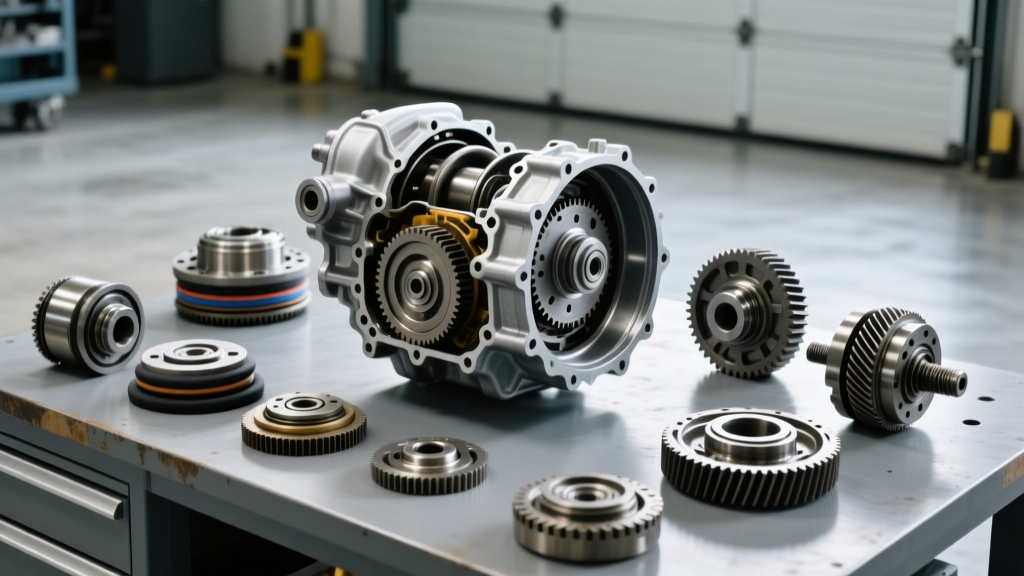
An in-house rebuild involves tearing down your specific transmission, cleaning the case, replacing worn friction materials, seals, and damaged hard parts, and reassembling it on the bench. This route is ideal when:
- You require performance upgrades: If you tow heavy loads with a GM 6L80 or a Ford 10R80, a local rebuilder can install upgraded 3-5-R wave plates, heavy-duty torque converters, and TransGo shift kits that a standard remanufactured unit will not include.
- The failure is isolated to friction wear: Burnt clutches and degraded bands are standard wear items. A skilled rebuilder can replace these while retaining your original, proven valve body and case.
- Core availability is low: For older or rare transmissions, a remanufactured core might simply not exist, making a custom rebuild your only viable option.
When a Remanufactured Swap is the Better Diagnostic Outcome
A remanufactured transmission is built on an assembly line to strict OEM tolerances, often incorporating factory-updated parts that supersede original, flawed designs. This route is highly recommended when:
- Case porosity or severe hard-part damage is present: If a planetary gearset has grenaded and scored the aluminum case, a local rebuild is compromised. A reman unit guarantees a pristine, machined case.
- Complex electronics have failed: On the GM 6L80, the TEHCM (Transmission Electro-Hydraulic Control Module) is prone to internal pressure switch failures. Because the TEHCM requires specialized J2534 programming and security gateway unlocking to marry to your vehicle's VIN, installing a pre-programmed remanufactured unit often saves days of diagnostic headaches and immobilizer lockouts.
Symptom-to-Solution Matrix: What Your Car is Telling You
Use the following diagnostic matrix to understand how your specific symptoms should guide your decision between a remanufactured transmission vs rebuild, and what kind of shop you need to find.
| Transmission Model | Primary Symptom & Code | Root Cause Diagnosis | Reman vs Rebuild Verdict | Est. Cost Range |
|---|---|---|---|---|
| GM 6L80 / 6L90 | Shudder in 4th/5th, P0741 | TEHCM pressure switch failure or TCC regulator bore wear | Reman Swap (TEHCM requires complex OEM reprogramming) | $3,200 - $4,500 |
| GM 4L60E | 3-4 Clutch Burnout, P0756 | Weak 3-4 clutch pack, worn auxiliary valve body bore | Custom Rebuild (Upgrade to Z-Corvette servo and ream bore) | $2,100 - $2,800 |
| ZF 8HP45 / 8HP70 | Fluid leak at bridge seal, P0715 | Mechatronic plastic sleeve degradation and internal O-ring failure | Reman Mechatronic Unit / Local Seal Rebuild | $1,800 - $2,600 |
| Ford 10R80 | Erratic 2-3 shifts, P0733 | Valve body separator plate wear and solenoid fatigue | Reman Valve Body / Local Rebuild with upgraded separator plate | $2,500 - $3,400 |
Vetting the Rebuilder: Diagnostic Interrogation
Finding a transmission rebuilder is not just about reading online reviews; it is about testing their diagnostic rigor. According to industry standards highlighted by the Automatic Transmission Rebuilders Association (ATRA), a reputable shop will never quote a teardown price before performing a systematic external diagnosis. When you call a shop, ask these specific, technical questions to gauge their expertise:
1. What scan tools do you use for bi-directional testing?
Generic OBD2 scanners only read generic powertrain codes. A true specialist will use OEM-level bi-directional tools like GM GDS2, Ford IDS, or ZF TraXon. For instance, diagnosing a ZF 8HP requires checking the transmission fluid level at a precise temperature window of 30°C to 50°C (86°F to 122°F) while monitoring the live data stream. If a shop guesses the fluid level by just pulling the fill plug, walk away.
2. Do you perform line pressure and stall tests before dropping the pan?
Physical symptoms like delayed forward engagement often point to low mainline pressure. A competent rebuilder will hook up a mechanical pressure gauge to the transmission test port to verify if the pump is generating the required 130-190 PSI (depending on the gear and application) before assuming the clutches are burnt. This separates the guessers from the diagnosticians.
3. How do you handle torque converter and fluid protocols?
Ask about their fluid and torque specifications. For a ZF 8HP rebuild, the shop must know that the dry fill capacity ranges from 8.5 to 10.5 liters depending on the torque converter, and that they must use specific ZF LifeguardFluid 8. Furthermore, the ZF plastic transmission pan bolts have a strict torque spec of 10 Nm (7 lb-ft); over-torquing them will crack the integrated filter housing. A shop that knows these details off the top of their head is a shop you can trust.
Red Flags in the Diagnostic Process
As you navigate the remanufactured transmission vs rebuild decision, be highly skeptical of shops that exhibit the following red flags during the diagnostic phase:
The 'Blanket Teardown' Pitch: If your vehicle has a Chrysler 45RFE or 68RFE transmission with a P0750 (LR Solenoid Circuit) code, the issue is often isolated to the external solenoid block or a wiring harness chafe. If the shop immediately recommends pulling the transmission and doing a full $3,000 rebuild without testing the solenoid resistance at the external connector, they are prioritizing profit over accurate diagnosis.
Furthermore, beware of shops that cannot explain the core charge and warranty differences between a reman unit and an in-house rebuild. As noted in technical bulletins from Transmission Digest, a reputable rebuilder will clearly outline that a remanufactured unit typically carries a nationwide 3-year/100,000-mile warranty backed by the assembly plant, whereas an in-house rebuild might only carry a local 1-year/12,000-mile warranty tied to that specific shop's physical location.
Finalizing Your Decision
Ultimately, finding the right transmission rebuilder requires you to be an informed consumer who understands the mechanical and electronic nuances of your specific drivetrain. By decoding your symptoms, understanding the practical differences between a remanufactured transmission vs rebuild, and rigorously vetting the shop's diagnostic protocols, you can avoid catastrophic misdiagnoses. Whether your 6L80 needs a custom heavy-duty rebuild or your ZF 8HP requires a precision remanufactured Mechatronic swap, aligning your vehicle's specific failure mode with the right technical expertise is the only way to ensure your repair stands the test of time.
For further reading on specific valve body wear patterns and diagnostic repair strategies, the Sonnax Technical Resources library remains an invaluable, authoritative database for both DIY enthusiasts and professional transmission builders.