When drivers and technicians search for what causes an automatic transmission to slip, the diagnostic trail almost always leads to one primary culprit: severe thermal degradation. While low fluid levels and worn clutch packs are mechanical realities, the catalyst for those failures is frequently excessive heat. As of 2026, with modern transmissions featuring up to 10 speeds and tightly packed planetary gearsets, thermal management is more critical than ever. A transmission operating just 20 degrees above its engineered threshold can experience rapid fluid oxidation, leading to hydraulic pressure drops and catastrophic clutch slip.
The Thermodynamics of Slip: Why Heat Destroys Transmissions
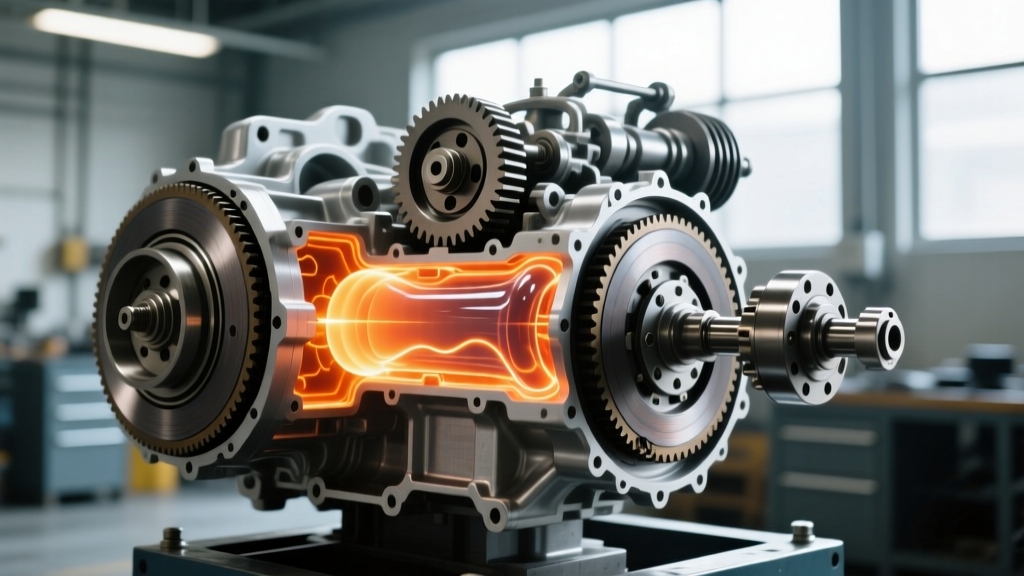
Automatic Transmission Fluid (ATF) serves three distinct purposes: lubrication, hydraulic actuation, and cooling. When transmission temperatures exceed 220°F (104°C), the viscosity index improvers in the ATF begin to break down. By the time the fluid hits 250°F (121°C), oxidation accelerates, forming a sticky varnish on valve body spools and clutch pistons. This varnish prevents clutch packs from applying with full hydraulic force. The resulting micro-slip generates immense friction, pushing localized temperatures inside the clutch drum past 400°F (204°C), glazing the friction material and causing the noticeable slipping sensation felt by the driver.
Step 1: Verify the Overheating Condition via OBD2 Telemetry
Before turning a single wrench, you must confirm the thermal data. Modern vehicles do not always trigger a Check Engine Light for overheating until the damage is done, often logging a pending P0218 (Transmission Fluid Over Temperature) code only after prolonged abuse.
- Connect a bi-directional OBD2 scan tool capable of reading manufacturer-specific PIDs.
- Monitor the Transmission Fluid Temperature (TFT) and compare it to the Engine Coolant Temperature (ECT).
- Under normal highway cruising, TFT should hover between 160°F and 190°F (71°C - 88°C).
- If your TFT reads 40°F to 60°F higher than your ECT at steady state, your cooling circuit is compromised.
Expert Tip: Pay close attention to the delta between TFT and ECT during heavy load events, such as towing or climbing grades. A spike in TFT that fails to normalize within 3 minutes of returning to steady-state cruising indicates inadequate cooler flow.
Step 2: Isolate the Cooling Circuit (Radiator and Auxiliary)
The transmission cooler is the frontline defense against thermal runaway. Depending on the application, cooling is handled by a heat exchanger integrated into the radiator's coolant tank, an external air-to-fluid auxiliary cooler, or a combination of both.
Flow Testing the Cooler Circuit
Do not assume a cooler is functional just because fluid is present. Internal radiator coolers frequently suffer from cross-contamination (the infamous 'strawberry milkshake' failure) or internal tube clogging due to degraded clutch material.
- Disconnect the transmission cooler return line at the transmission case.
- Route the line into a calibrated 1-gallon measuring jug.
- Start the engine and let it idle in Park. Caution: Do not run the engine for more than 15-20 seconds to avoid pump cavitation.
- A healthy cooling circuit (e.g., on a GM 6L80 or Ford 6R80) should yield approximately 0.5 to 1.0 quarts of fluid in 15 seconds at idle. A flow rate below this threshold confirms a restriction in the cooler, lines, or thermal bypass valve.
Step 3: Fluid Forensics and Clutch Pack Evaluation
Pull the transmission dipstick or drop the inspection pan to evaluate the fluid's physical state. The smell, color, and particulate content of the ATF will tell you exactly which internal components are slipping and burning.
| ATF Condition | Diagnostic Meaning | Required Action |
|---|---|---|
| Bright Red, Sweet/Petroleum Odor | Normal. Fluid is within spec. Slip is likely mechanical or electronic. | Check line pressure and solenoid commands. |
| Dark Brown, Burnt Toast Odor | Severe overheating. Clutch friction material is glazing or burned off. | Cooler flush required. Transmission rebuild likely needed. |
| Black with Metallic Flakes | Catastrophic hard part failure (planetary gears, thrust bearings). | Full teardown and replacement of torque converter. |
| Cloudy/Pink Emulsion | Coolant intrusion via failed radiator heat exchanger. | Replace radiator, flush lines, replace transmission. |
Step 4: Diagnose Torque Converter Clutch (TCC) Micro-Slip
The Torque Converter Clutch (TCC) locks the engine directly to the transmission input shaft to eliminate parasitic drag and reduce heat. When the TCC fails to fully apply, the resulting slip occurs inside the torque converter, rapidly boiling the fluid.
In the GM 6L80 and 6L90 transmissions, a failing Variable Force Solenoid (VFS) or degraded ATF viscosity prevents the TCC piston from fully seating. Log the TCC Slip Speed PID while driving at 65 MPH in top gear. Normal slip should be 0 to 15 RPMs. If you observe slip exceeding 50-100 RPMs at steady cruise, the TCC friction lining is glazed from overheating, or the apply circuit is leaking pressure.
For Ford 6R80 applications (common in 2011-2014 F-150s), inspect the Thermal Bypass Valve located in the cooler lines. This valve is designed to bypass the cooler during cold starts. However, they frequently stick in the closed position due to debris, preventing fluid from ever reaching the cooler. Replacing the thermal bypass valve (Motorcraft Part # AL3Z-7G109-A, approx. $45) is a mandatory, low-cost fix before condemning a slipping 6R80.
'In our shop, 80% of the ZF 8HP transmissions we see for slipping complaints aren't suffering from worn clutches initially. They are suffering from a cracked mechatronic sealing sleeve that causes internal pressure leaks. The pump works overtime, generates massive heat, and eventually burns out the B-clutch pack.' — Lead Diagnostic Technician, European Drivetrain Specialists
Component Replacement, Costs, and Torque Specifications
Addressing transmission overheating requires precision. Using the wrong fluid or failing to adhere to torque specs will result in immediate repeat failures. Below is a guide to common replacement components and their associated costs as of 2026.
- Auxiliary Transmission Cooler: Hayden Rapid-Cool 516 (Universal fit for most light trucks). Cost: $85 - $120. Mount in front of the A/C condenser for maximum airflow.
- GM 6L80 TCC Apply Solenoid: AC Delco Part # 24230298. Cost: $65 - $95. Requires pan removal and valve body access.
- ATF Fluid (Dexron VI): ACDelco 10-9395 (1 Quart). Cost: $8 - $12 per quart. The 6L80 requires approx. 6-7 quarts for a pan-drop service.
- ZF 8HP Mechatronic Sealing Sleeve: ZF Part # 68001602AA (or OEM equivalent). Cost: $40 - $60. Crucial for resolving internal pressure leaks and overheating.
Preventative Maintenance Torque Specs
When reinstalling components after a thermal diagnosis, strict adherence to torque specifications is non-negotiable to prevent leaks and case warping:
- GM 4L60E / 6L80 Transmission Pan Bolts: 11 Nm (97 lb-in). Do not overtighten; the aluminum case threads strip easily.
- Transmission Cooler Line Fittings (Radiators): Typically 22 Nm (16 lb-ft) for standard 5/8"-18 UNF inverted flare fittings.
- ZF 8HP Mechatronic to Case Bolts: 8 Nm (71 lb-in) + 45 degrees.
By systematically isolating the cooling circuit, verifying telemetry data, and addressing known model-specific thermal flaws like the Ford 6R80 bypass valve or ZF 8HP mechatronic sleeve, you can accurately diagnose the root cause of the slip. For further reading on hydraulic circuit diagnostics, consult the Sonnax Technical Resources library, and refer to OBD-Codes P0218 Documentation for specific manufacturer code definitions. Upgrading to a high-capacity auxiliary transmission cooler remains the most cost-effective insurance policy against future heat-related slip.