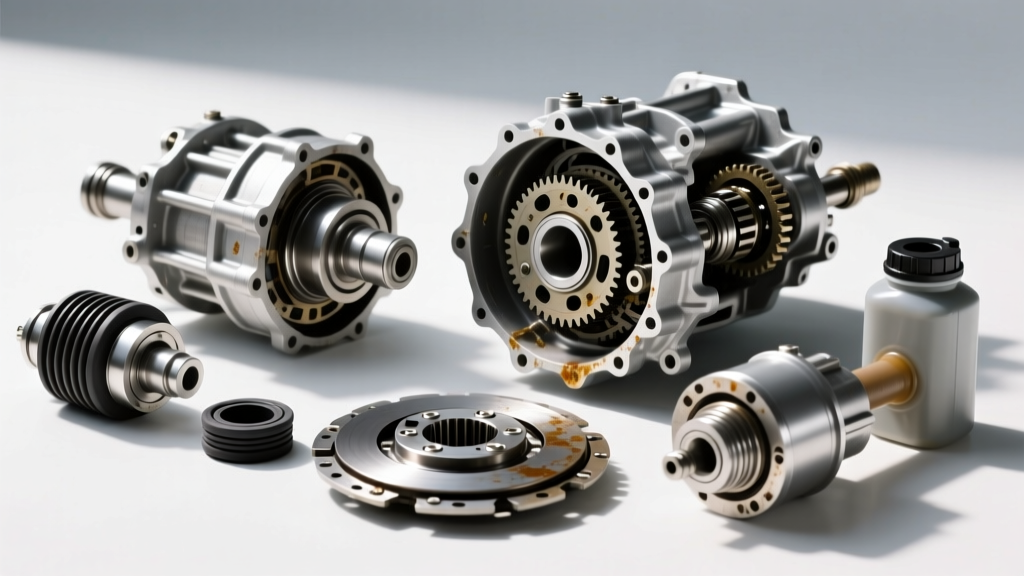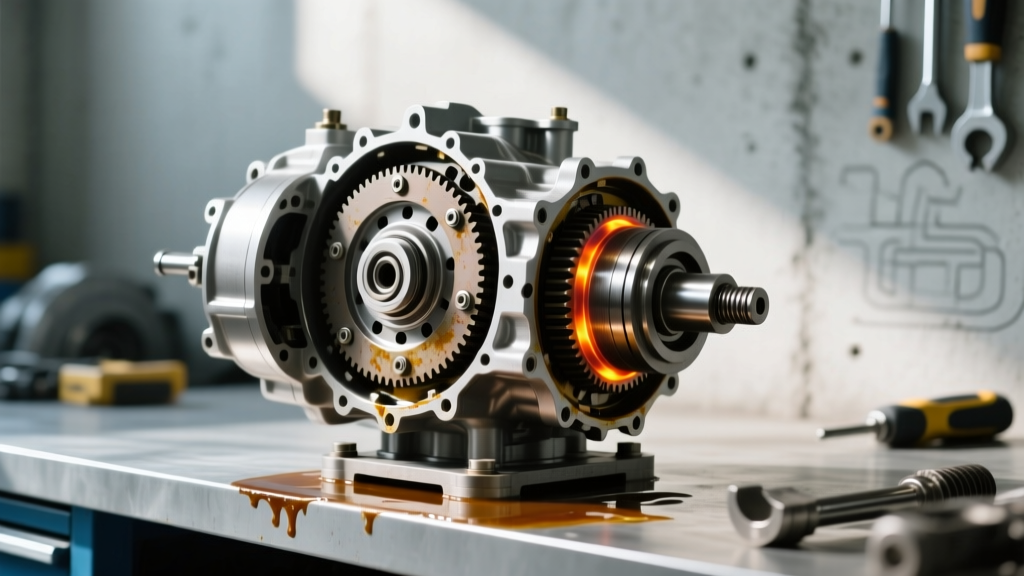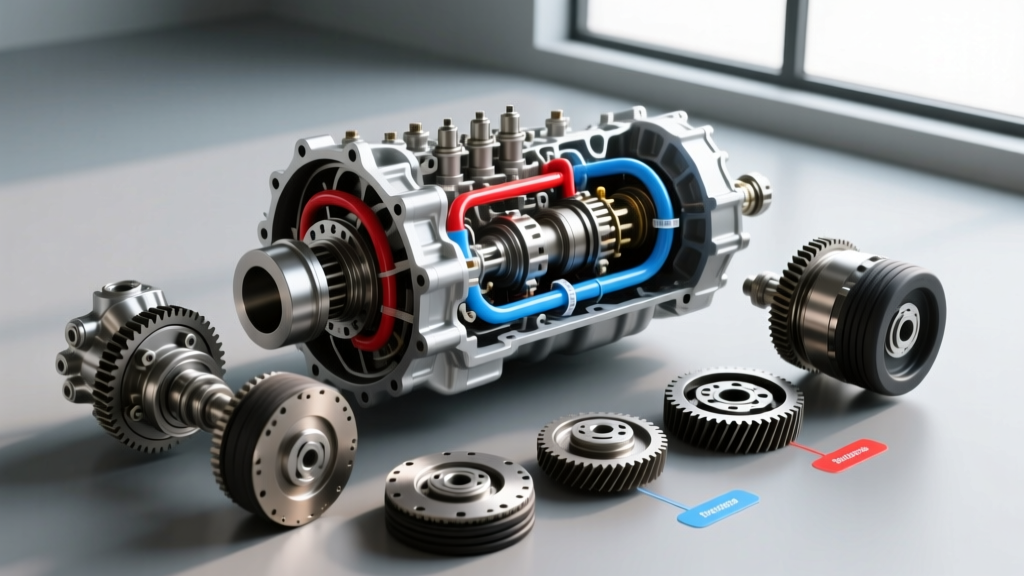
Driving onto a dealership lot with a failing drivetrain is a stressful experience. If your vehicle is emitting a harsh metallic grinding noise from the transmission tunnel, you are likely asking the ultimate question: will a dealer take a car with transmission problems like this, or will you be turned away? The short answer is yes, dealerships will accept your vehicle as a trade-in. However, the financial reality of how they appraise a grinding transmission in the 2026 market is far more complex than simply deducting the cost of a rebuild.
When a used car manager hears a transmission grind, they do not see a simple repair; they see an auction liability. In this comprehensive cost analysis, we will break down exactly how dealerships calculate trade-in penalties for grinding transmissions, the specific mechanical failures causing the noise in popular automatic and manual gearboxes, and whether it makes financial sense to fix the issue before handing over the keys.
The Wholesale Auction Penalty: How Dealers Appraise a Grind
To understand the dealer's offer, you must understand their endgame. According to industry guidelines from Kelley Blue Book, vehicles with major mechanical defects are rarely retailed on the dealer's front line. Instead, they are sent to wholesale auctions (like Manheim or ADESA).
When a dealer appraises a car with a transmission grinding noise, they apply a 'Wholesale Deduction Matrix.' This deduction is not merely the repair cost. It includes:
- The Base Repair Cost: Parts, fluids, and machine shop labor.
- Auction Risk Premium: A buffer for hidden damage (e.g., a grinding planetary gearset sending metal shavings through the torque converter and radiator).
- Wholesale Profit Margin: The auction buyer needs to make a 20-30% margin on the eventual repair and resale.
As noted by Edmunds, trading in a car with severe mechanical issues often results in a deduction that is 1.5x to 2x the actual independent repair cost. If a local shop quotes $3,200 to rebuild your transmission, expect the dealer to deduct $5,000 to $6,500 from your vehicle's clean wholesale book value.
Diagnosing the Grind: What the Appraiser Hears vs. What is Broken
A grinding noise is a catastrophic mechanical indicator. It means hard parts are failing, and friction materials have long since been compromised. Here is what is actually happening inside some of the most common transmissions on the road today when that metallic growl begins.
GM 6L80 / 6L90 (Found in Silverado, Sierra, Camaro, Corvette)
If your GM vehicle is grinding during acceleration or gear changes, the culprit is frequently the reaction carrier or sun shell. The 6L80 is notorious for stripping the splines on the reaction sun gear. When this happens, the planetary gearset loses synchronization, resulting in a violent metallic grind. Furthermore, the ferrous debris circulates through the valve body, destroying the solenoids and the torque converter clutch (TCC) lining. A simple teardown is no longer sufficient; a full hot-flush and complete master rebuild kit (e.g., Transtar Industries Part #104006) is mandatory.
ZF 8HP70 / 8HP90 (Found in Ram 1500, BMW, Jaguar, Dodge Charger)
The ZF 8-speed is an engineering marvel, but it is not immune to acoustic failures. A grinding or heavy whining noise in a ZF 8HP usually points to mechatronic sleeve wear or internal bearing failure on the input shaft. Because the ZF relies on precise hydraulic pressure to actuate its dog-clutch shifting elements, bearing play causes gear misalignment. Replacing the ZF 8HP mechatronic unit requires specialized software to code the new valve body to the TCM, adding significant labor costs to the repair.
Manual Transmissions (e.g., Tremec T56 Magnum, TR-6060)
In manual applications, grinding during the shift event (rather than while cruising) indicates brass synchronizer ring failure or worn blocker struts. If the transmission grinds while the vehicle is stationary and the clutch is depressed, the issue is a failed input shaft bearing or a dragging clutch assembly (often a failed dual-mass flywheel or hydraulic release bearing).
2026 Cost Analysis Matrix: Repair vs. Trade-In Deduction
Should you fix the grinding noise before trading it in? The math depends heavily on the vehicle class and the specific transmission model. Below is a 2026 market analysis comparing independent repair costs against typical dealer trade-in deductions.
| Vehicle Class & Trans | Probable Grind Cause | Independent Repair Cost (2026) | Dealer Trade-In Deduction | Financial Verdict |
|---|---|---|---|---|
| Half-Ton Truck (GM 6L80E) | Stripped Reaction Sun Gear | $3,800 - $4,500 | $6,000 - $7,500 | Fix Before Trade |
| Luxury Sedan (ZF 8HP) | Input Shaft Bearing / Mechatronic | $4,500 - $6,200 | $7,000 - $9,000 | Fix Before Trade |
| Compact Crossover (Jatco CVT8) | Chain Slip & Pulley Scoring | $3,500 - $4,200 | $4,000 - $5,000 | Trade As-Is |
| Sports Coupe (Tremec Manual) | Synchro Rings / Input Bearing | $2,200 - $2,800 | $3,500 - $4,500 | Fix Before Trade |
Note: Independent repair costs assume the use of high-quality remanufactured units or master rebuild kits, including fluid and torque converter replacement, at an average 2026 labor rate of $145/hour.
Pre-Appraisal Diagnostic Protocol: Confirming the Damage
Before you drive onto the dealer lot and accept a lowball offer, verify the extent of the damage yourself or through a trusted independent shop. Dealerships will assume the worst-case scenario; you need hard data to negotiate.
- Perform a Pan Drop Inspection: Safely raise the vehicle and remove the transmission pan. For a GM 6L80, the pan bolts are torqued to 10 Nm (89 lb-in). Use a criss-cross pattern to avoid warping the stamped steel or aluminum pan.
- Analyze the Debris:
- Glitter/Fine Metal: Normal wear or torque converter clutch degradation. A flush and solenoid service might suffice.
- Brass Flakes: Synchronizer or bushing wear (common in ZF and manual units).
- Chunked Metal/Gear Teeth: Catastrophic planetary or hard-part failure. The transmission must be removed and torn down.
- Check Fluid Capacity and Condition: A low fluid level can cause cavitation, which sounds like a grind but is actually pump starvation. For example, a dry ZF 8HP requires nearly 9.5 liters of specific ZF LifeguardFluid 8. Using generic ATF will destroy the friction modifiers in the ZF clutches within 500 miles.
Alternative Liquidation Strategies
If the dealer's offer is insultingly low due to the transmission grind, you have alternative exit strategies to maximize your return.
Sell to a Mega-Buyer (e.g., CarMax, Carvana)
Companies like CarMax utilize algorithmic pricing that sometimes fails to fully penalize mechanical issues if the exterior and interior condition are pristine. While their appraisers do test drive the vehicle, their wholesale deductions can occasionally be $1,000 to $2,000 less aggressive than a traditional franchise dealer who is trying to protect their used car inventory acquisition budget.
Private Party 'As-Is' Sale
Selling a grinding car privately is difficult but yields the highest return. Enthusiast forums (for vehicles like the Mustang, Camaro, or WRX) are excellent places to list a car with a blown transmission. Buyers in these communities often have access to cheap used swaps or prefer to build the transmission themselves and will pay closer to the 'clean' book value minus the cost of a barebones used core.
Scrap the Core
If the vehicle is older and the body is tired, parting it out or selling the drivetrain as a 'core' to a transmission rebuilder is a viable option. A bare, uncracked casing of a high-demand transmission like the Ford 10R80 or Allison 1000 can still fetch $400 to $800 from a rebuilder who needs cores to meet OEM exchange requirements, completely bypassing the dealership appraisal game.
Final Verdict: Should You Trade It In Grinding?
Dealers will absolutely take a car with transmission problems, but they will price it as a wholesale liability. If your vehicle is a late-model truck or luxury car with a high-cost replacement (like the ZF 8HP or GM 6L80), the dealer's deduction will vastly exceed the cost of an independent rebuild. In those cases, invest the $4,000 to fix the grinding noise, restore the drivetrain's integrity, and trade it in as a 'clean' retail-ready vehicle. However, if you are driving an older economy car with a notoriously unreliable CVT, take the dealer's deduction, walk away, and let them deal with the auction headaches.