The Hidden Economics of Modern CVT Rebuilding
As we navigate the 2026 automotive repair landscape, Continuously Variable Transmissions (CVTs) represent a massive share of the drivetrain repair market. When sourcing a high-quality cvt transmission rebuild kit, many independent shop owners and DIY mechanics focus strictly on the upfront price of friction clutches, seals, and O-rings. However, the true cost of a CVT rebuild extends far beyond the cardboard box of parts. Unlike traditional planetary automatics like the 4L60E or ZF 8HP, CVTs rely on extreme, continuous hydraulic clamping pressures to prevent catastrophic belt or chain slip. A minor calibration error in the valve body that goes unnoticed during a standard road test can destroy a newly installed push belt in under fifty miles. This reality has made transmission dynamometer (dyno) testing an essential, albeit expensive, final step in the rebuild process. In this cost analysis, we break down the financial realities of CVT rebuild kits, the hidden costs of comebacks, and the precise ROI of integrating dyno testing into your workflow.
Deconstructing the CVT Transmission Rebuild Kit Cost
Before analyzing the testing phase, we must establish the baseline parts cost. A standard cvt transmission rebuild kit from an industry leader like Precision International or MasterPro typically ranges between $450 and $700, depending on the application. However, shop owners must recognize what these kits do not include. The 'master kit' label is somewhat deceptive in the CVT world.
What is Actually in the Box?
- Friction & Steel Clutches: For the forward and reverse brake assemblies (e.g., Jatco JF011E).
- Seal & O-Ring Kit: High-temperature Viton and Acrylate seals designed to withstand CVTF operating temperatures of up to 230°F.
- Gaskets & Filters: Pan gaskets, O-rings for the filter neck, and axle seals.
The 'Hidden' Hard Parts Expense
To complete a proper rebuild, you must source the variator components separately. For a Nissan/Infiniti Jatco JF011E (RE0F10A), the Bosch push belt costs an additional $350 to $500. If the stepper motor or valve body solenoids are degraded, add another $250. For a Subaru Lineartronic TR690, the LuK chain and pulley set can easily exceed $800 if scored. Therefore, the true 'kit and hard parts' cost for a standard CVT rebuild sits closer to $1,100 - $1,800 before fluid and labor.
Why CVTs Demand Dynamometer Testing
In a traditional automatic transmission, clutch apply timing is largely binary; a clutch pack is either engaged or released. In a CVT, the primary and secondary pulleys must maintain a precise clamping pressure ratio relative to engine torque. If the secondary pulley clamping pressure drops even 15% below specification under load, the push belt will slip, gouging the pulleys and generating metallic debris that ruins the entire unit.
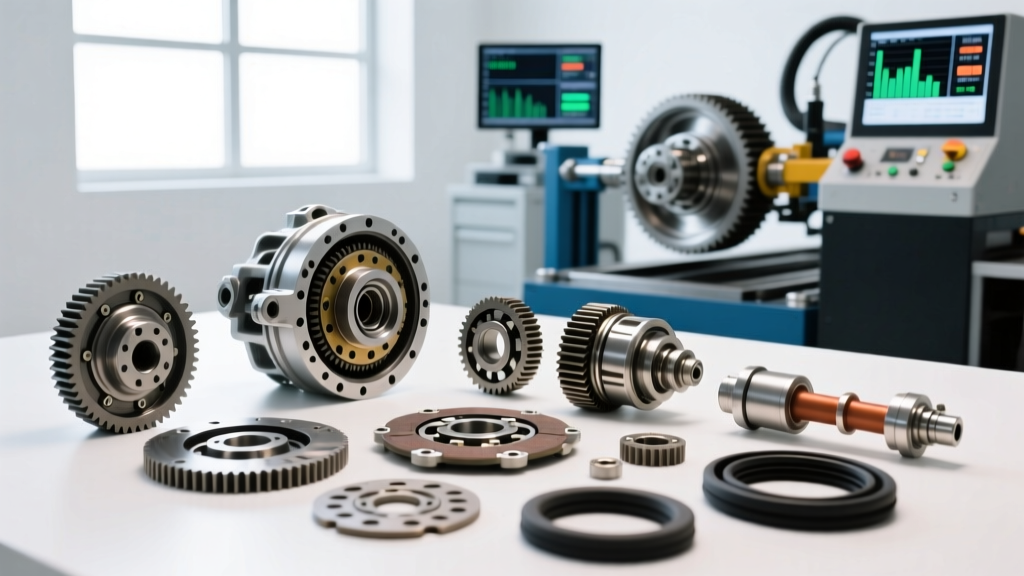
Road testing a freshly rebuilt CVT is inherently risky. A road test cannot safely replicate the extreme torque loads required to verify maximum clamping pressure without risking vehicle safety or requiring a heavily loaded trailer. According to engineering guidelines from Sonnax, CVT valve bodies are highly susceptible to pressure regulator valve wear and solenoid fatigue. A dyno allows the rebuilder to safely load the output shaft via an eddy-current absorber while monitoring internal hydraulic circuits via external pressure transducers.
Cost Analysis: Dyno Testing vs. The 'Comeback' Penalty
Let us look at the hard financial data comparing three different quality-control methodologies: the traditional road test, in-house dyno testing, and outsourced dyno testing.
| Testing Method | Direct Cost | Time Investment | Comeback Risk | Financial Exposure |
|---|---|---|---|---|
| Standard Road Test | $0 (Fuel/Time) | 45 - 60 Minutes | High (12-18%) | $1,200+ (Warranty R&R) |
| In-House Dyno Test | $85 (Amortized) | 90 Minutes | Very Low (<2%) | $0 (Prevented Failure) |
| Outsourced Dyno Center | $250 - $350 | 24 - 48 Hours | Very Low (<2%) | $0 (Prevented Failure) |
Note: In-house dyno costs assume amortization of a $45,000 SuperFlow SF-9000 series dynamometer over 500 units at a 10% maintenance overhead.
The True Cost of a CVT Comeback
If a rebuilt Jatco JF016E fails during a road test or shortly after customer delivery, the financial penalty is severe. Removing and replacing (R&R) a transverse CVT typically requires 5.5 to 7.5 hours of book time. At a standard 2026 shop rate of $165/hour, the warranty labor alone costs the shop $900 to $1,230. Furthermore, the CVT fluid (such as Nissan NS-3 or Subaru High Torque CVTF) must be drained and discarded, adding $120 to $150 in lost materials. If the belt slipped during the failed road test, the $1,800 in internal hard parts is now scrap metal. The total exposure of skipping a dyno test easily exceeds $2,500 per incident.
Critical CVT Dyno Test Parameters and Specifications
For shops investing in dynamometer testing, simply spinning the input shaft is insufficient. A proper CVT dyno protocol requires verifying specific hydraulic and mechanical parameters under simulated load. Below are the critical test phases and specifications for the ubiquitous Jatco JF011E platform:
Expert Insight: Always install auxiliary pressure gauges or electronic transducers on the primary and secondary pulley test ports before mounting the transmission to the dyno bed. Relying solely on the transmission's internal pressure sensors via OBD-II scanning is inadequate for catching micro-leaks in the valve body separator plates.
1. Line Pressure and Clutch Apply Verification
With the output shaft locked (stall test simulation), command the transmission into Drive and Reverse. Forward clutch apply pressure should be immediate and firm. Base line pressure at idle should hover between 55-65 psi, spiking to 115-135 psi at stall RPM. Any flare or delay indicates a compromised forward clutch piston seal or a worn pressure regulator valve in the valve body.
2. Pulley Clamping Pressure Sweep
This is the most critical phase for CVT longevity. As the dyno applies load to the output shaft and the input RPM increases, the transmission control module (TCM) must command higher secondary pulley pressure to prevent belt slip. Under heavy simulated load, secondary clamping pressure must exceed 280-320 psi. If the pressure transducer reads below 250 psi under load, the belt will slip in the real world. This usually points to a failing secondary pressure control solenoid or a leak in the case-to-valve-body gasket.
3. Ratio Control and Stepper Motor Calibration
The dyno allows the operator to sweep the transmission through its entire ratio range (typically 2.63:1 down to 0.37:1). The operator monitors the input-to-output speed ratio. A smooth, linear transition confirms the stepper motor (or ratio control solenoids in newer models) is accurately moving the control valve without binding. Any 'stair-stepping' or hesitation in the ratio graph indicates mechanical binding in the pulley shaft or a faulty stepper motor.
4. Torque Converter Clutch (TCC) Slip Test
CVTs are highly sensitive to TCC shudder. On the dyno, the operator can apply a simulated highway cruise load and command TCC apply. Acceptable TCC slip should be tightly controlled, typically between 10-30 RPM depending on the specific calibration. Slip exceeding 50 RPM under load will result in customer complaints of vibration and eventual torque converter failure.
Outsourcing vs. In-House: The Shop Owner's Dilemma
For high-volume transmission rebuild centers processing 50+ CVTs a month, purchasing a dedicated transmission dynamometer is a mandatory capital expenditure. The ability to test, diagnose, and certify a unit in 90 minutes drastically reduces warranty exposure and increases throughput.
However, for general repair shops or low-volume specialists rebuilding 3 to 5 CVTs a month, a $50,000 dyno investment is difficult to justify. The most cost-effective strategy in 2026 is partnering with a regional, dedicated dyno-testing facility. Many specialized rebuilders offer 'bench testing' services where you ship them your assembled CVT. They bolt it to their dyno, run the comprehensive pressure and ratio sweep protocol, provide a printed certification of the hydraulic graphs, and ship it back. While this adds $250 to $350 and 48 hours to your turnaround time, it completely insulates your shop from catastrophic internal failures and preserves your reputation.
Final Verdict on CVT Rebuild Economics
Buying a premium cvt transmission rebuild kit is only the first step in a successful repair. The extreme hydraulic demands of modern push-belt and chain-driven CVTs leave zero margin for error in the valve body or solenoid circuits. When you factor in the devastating financial penalty of a warranty comeback—easily wiping out the profit of your last ten jobs—the cost of dyno testing shifts from an 'optional luxury' to an absolute necessity. Whether you absorb the capital cost of an in-house dynamometer or outsource to a regional testing center, verifying pulley clamping pressures and ratio sweeps under load is the only way to guarantee your CVT rebuild will survive the road.