The Hidden Threat to AWD Center Differentials: Pressure and Water Ingestion
Full-time all-wheel-drive (AWD) and four-wheel-drive (4WD) systems rely on a center differential to manage torque split between the front and rear axles. Whether your vehicle utilizes a Torsen gear-driven center diff (like the Toyota Land Cruiser 200 Series), a viscous coupler (Subaru Symmetrical AWD), or a gerotor-driven clutch pack (Jeep NV247 Quadra-Trac II), the center differential is typically housed inside the transfer case. While modern drivetrains are sealed against dust and debris, they are highly vulnerable to a hidden enemy: rapid temperature fluctuations and water ingestion.
When you drive an AWD SUV or truck, the center differential generates significant heat due to gear meshing, clutch pack friction, and fluid shear. This heat expands the air inside the transfer case housing, forcing it out through the factory breather tube. If you then drive through a cold water crossing, snowbank, or deep puddle, the housing rapidly cools. This creates a powerful vacuum effect. If the factory breather is submerged or its one-way check valve fails, the transfer case literally sucks in water and mud. The result is emulsified fluid, destroyed bearings, and catastrophic center differential failure.
Symptom Diagnosis: Is Your Center Differential Compromised?
Diagnosing center differential issues requires isolating the noise and feeling from the front and rear axles. Because the center diff sits directly behind the transmission, its failure symptoms often mimic transmission bearing wear or driveshaft imbalance. Here are the primary diagnostic indicators of water ingestion and center diff wear:
- High-Pitch Whine Under Load: A failing Torsen center differential or NV247 gerotor pump will emit a distinct, high-frequency whine that increases with vehicle speed and changes pitch during deceleration. This is caused by pitting on the element bearings or gear teeth due to the loss of extreme pressure (EP) additives in water-contaminated fluid.
- Low-Speed Driveline Binding: If your AWD system binds, hops, or chatters during tight, low-speed parking lot turns, the center differential is failing to differentiate. In viscous couplers, water contamination causes the silicone fluid to break down and solidify. In clutch-based systems like the NV247, water ruins the friction material, causing the clutches to drag or slip erratically.
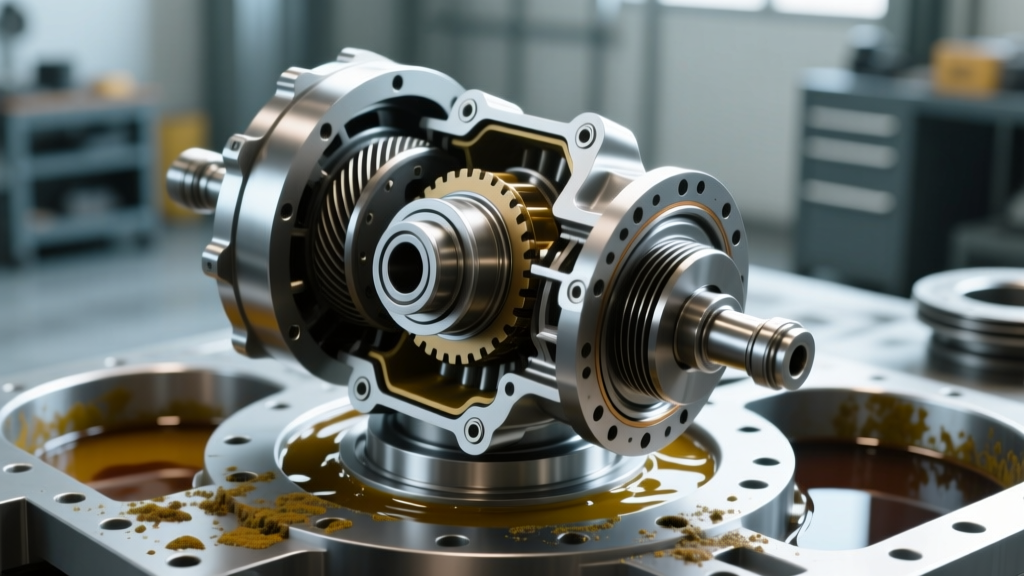
- Milky or 'Chocolate Milk' Fluid: The definitive test. Pull the transfer case fill plug. If the fluid resembles a coffee latte, water has breached the housing. Standard 75W-85 GL-5 gear oil or ATF+4 cannot tolerate water suspension; it must be flushed immediately, and the breather system must be upgraded.
Diagnostic Pro-Tip: To isolate center diff whine from axle whine, drive the vehicle on a smooth, wet surface or use a chassis ear. If the noise correlates strictly to driveshaft RPM rather than wheel speed, and persists when the front/rear diffs are unloaded, the center differential or transfer case bearings are your primary suspects.
The Preventative Fix: Upgrading with an ARB Differential Breather Kit
Once you have diagnosed water ingestion, or if you want to prevent it entirely, replacing the factory one-way check valves with an extended breather system is mandatory for off-road and heavy-duty AWD use. The ARB differential breather kit (Part # 1701102 for the 4-port system) is the industry standard for drivetrain preservation.
Unlike cheap plastic tubing extensions, the ARB differential breather kit utilizes a centralized, high-flow manifold with integrated filters. This allows you to route the breathers for the transfer case (center diff), front differential, rear differential, and even the transmission to a single, easily accessible location high in the engine bay or on the firewall. The kit features color-coded push-in fittings, high-quality polyurethane tubing that resists engine bay heat and UV degradation, and a splash-proof filter head that prevents water ingestion even if the manifold is momentarily submerged.
Cost-Benefit Analysis: Breather Upgrade vs. Center Diff Rebuild
Fleet managers and off-road enthusiasts understand that drivetrain maintenance is about risk mitigation. The cost of an ARB differential breather kit is a fraction of the labor and parts required to rebuild a water-logged center differential.
| Service / Repair Item | Estimated Cost (2026) | Downtime / Labor |
|---|---|---|
| ARB Differential Breather Kit (4-Port) | $65 - $85 | 1.5 Hours (DIY or Shop) |
| Center Diff Fluid Flush (Preventative) | $40 - $90 (Fluids) | 0.5 Hours |
| NV247 Transfer Case / Center Diff Rebuild | $1,800 - $2,500 | 6 - 8 Hours |
| Toyota HF2A Torsen Center Diff Replacement | $3,200 - $4,500+ | 8 - 12 Hours |
Step-by-Step Center Diff Fluid Service & Breather Installation
Let's look at the exact procedure for servicing the center differential and installing the breather kit on a common full-time AWD/4WD platform: the Toyota Land Cruiser / Lexus LX570 equipped with the HF2A transfer case and Torsen center differential.
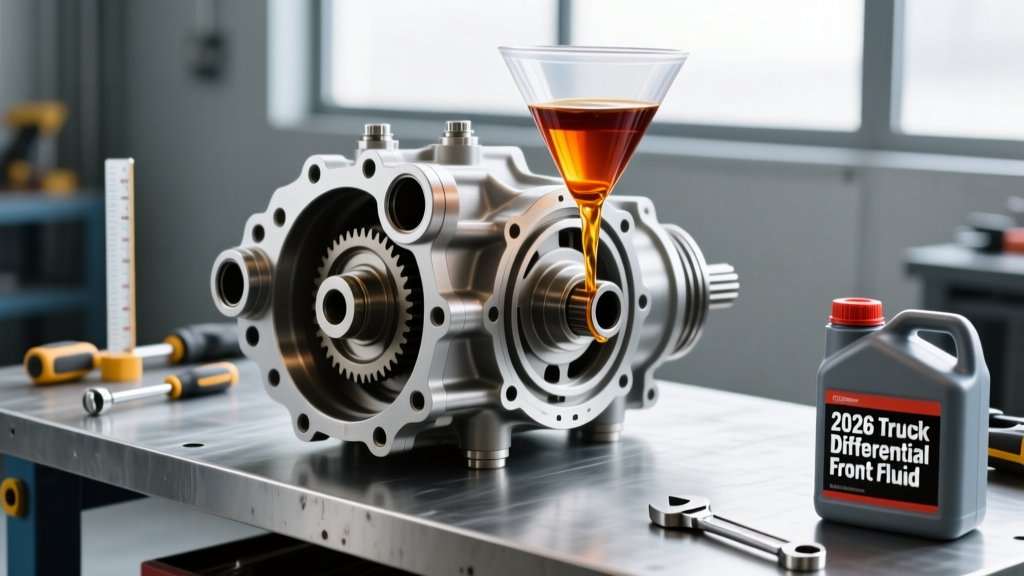
1. Draining and Inspecting the Center Diff Fluid
The HF2A transfer case requires Toyota Genuine Transfer Gear Oil LF (75W-85 GL-5) or an equivalent high-quality synthetic 75W-85 GL-5. The total capacity is approximately 1.4 Liters.
- Prep: Warm up the drivetrain by driving for 15 minutes. Warm fluid flows faster and suspends metallic particles better.
- Access: Remove the skid plates. Locate the 24mm hex fill plug first. Always remove the fill plug before the drain plug to ensure you aren't stranded with an empty transfer case if the fill plug is seized.
- Drain: Remove the 24mm hex drain plug. Inspect the magnetic plug for debris. Fine metallic paste is normal; chunky shavings indicate bearing or Torsen gear failure.
- Torque Specs: Upon reinstallation, torque both the drain and fill plugs to 49 Nm (36 ft-lbs). Always use new aluminum crush washers to prevent leaks and galvanic corrosion.
2. Routing the ARB Differential Breather Kit
The factory HF2A breather is a small, easily clogged check valve located on the upper rear of the transfer case housing. To install the ARB differential breather kit:
- Remove Factory Valve: Use pliers to carefully extract the factory check valve from the transfer case housing. Clean the bore with brake cleaner to ensure no debris falls into the center diff.
- Install ARB Fitting: Thread the appropriate ARB push-in brass fitting into the housing. Use a high-quality PTFE thread sealant (avoid standard Teflon tape, which can shred and block internal oil galleries).
- Run Tubing: Connect the color-coded polyurethane tubing. Route the tubing away from the exhaust system, utilizing existing factory wire looms and zip-ties to secure it above the frame rails.
- Mount the Manifold: Mount the 4-port ARB manifold high on the firewall or inner fender well, well above the maximum water fording depth of your vehicle. Connect the transfer case, front axle, rear axle, and transmission lines to the manifold.
- Cap and Filter: Install the splash-proof filter head on top of the manifold. This filter allows the drivetrain to breathe freely while blocking water, mud, and dust.
Long-Term AWD Drivetrain Maintenance Strategy
Installing an ARB differential breather kit is not a 'set and forget' modification. The filter element on the manifold should be inspected every 15,000 miles or after any deep water crossing. If the filter becomes clogged with dust or mud, the drivetrain will revert to creating a vacuum, potentially pulling fluid past the output shaft seals.
Furthermore, center differential fluid should be changed every 30,000 miles under normal driving conditions, and immediately after any suspected water ingestion event. For vehicles equipped with clutch-based center differentials (like the NV245 and NV247 transfer cases), using the exact OEM-specified fluid (such as Mopar ATF+4) is non-negotiable. Friction modifiers in the ATF are specifically calibrated to the clutch pack material; using standard gear oil or incorrect ATF will cause immediate shudder and center diff destruction.
By combining rigorous fluid analysis with the physical protection of an extended breather system, you ensure that your AWD center differential continues to seamlessly distribute torque, keeping your vehicle mobile in the most demanding environments.