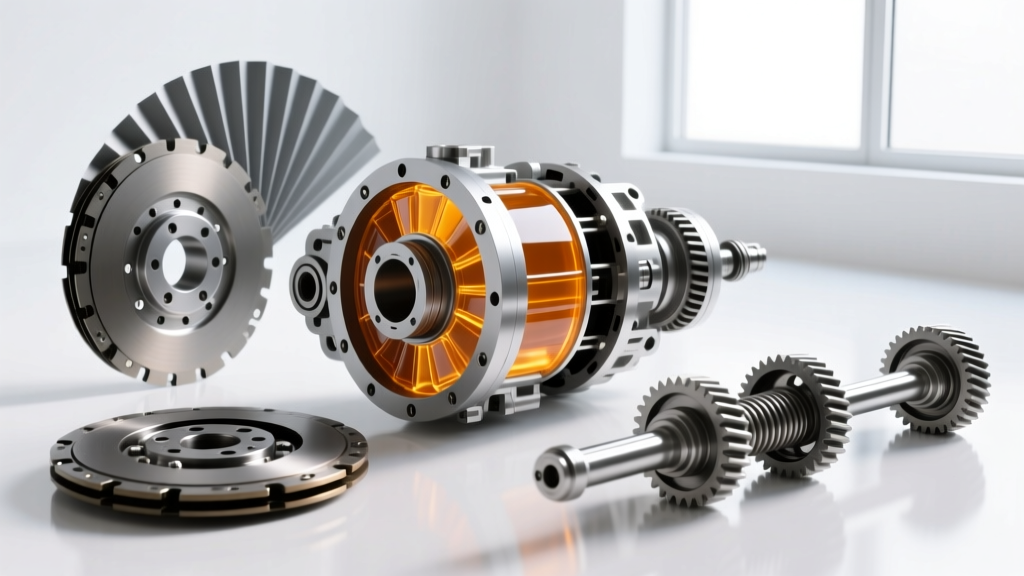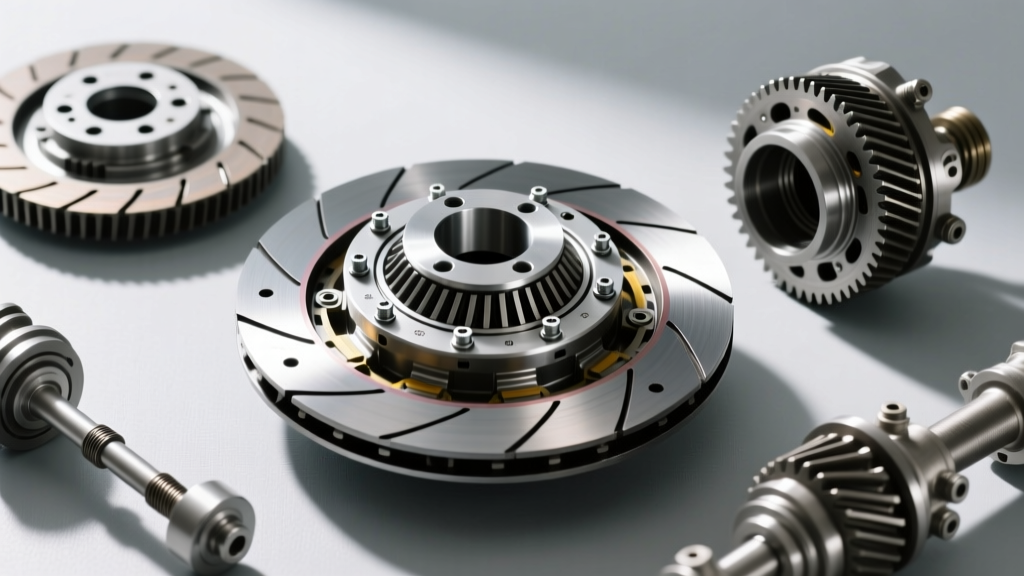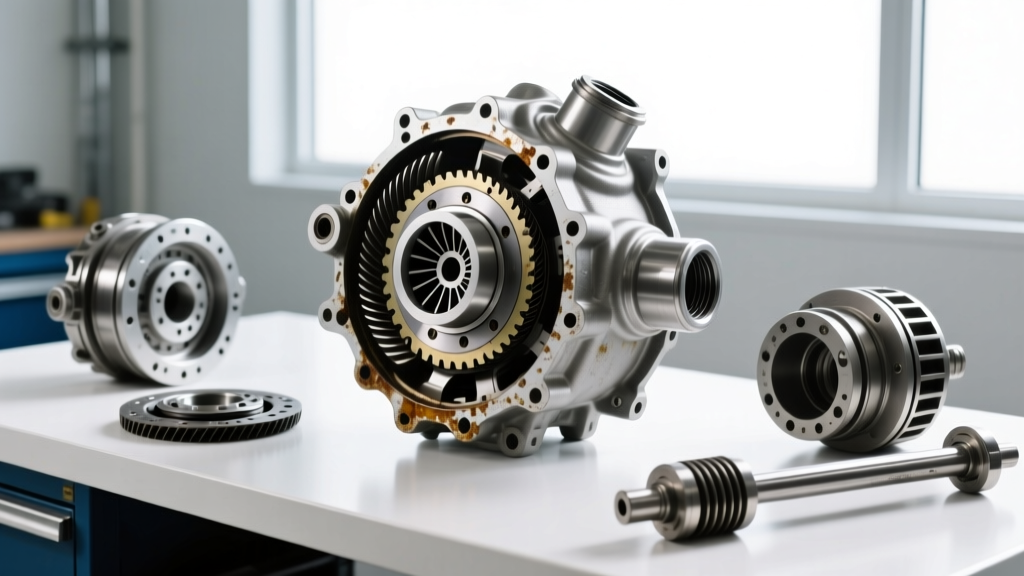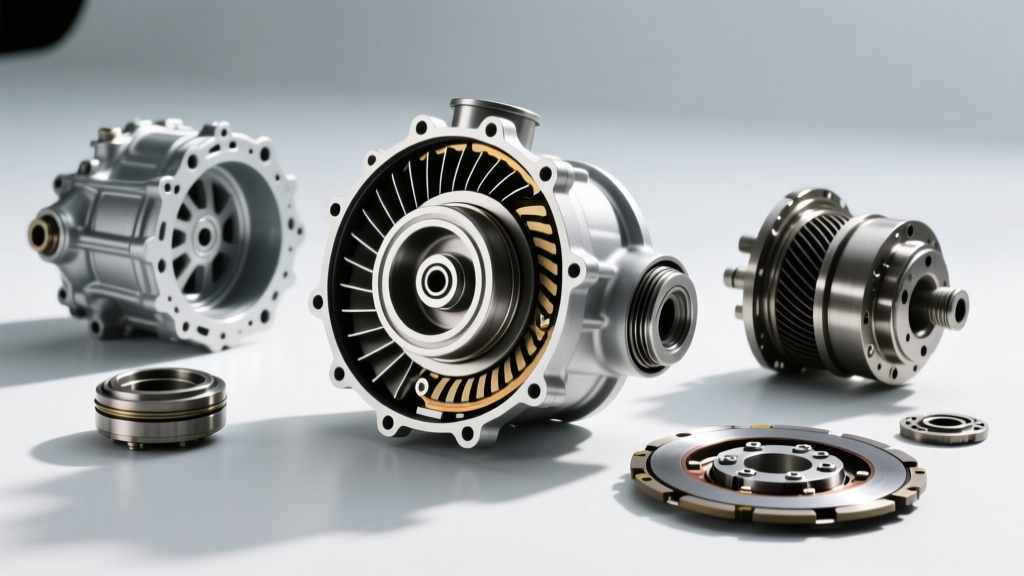
The 'Recall' Reality: Why Acadia Owners Are Searching
If you own a mid-size SUV from General Motors, you may have found yourself searching for the 2017 GMC Acadia torque converter recall. While the National Highway Traffic Safety Administration (NHTSA) has not issued a formal, mandatory safety recall specifically for the torque converter in this model year, there is a massive wave of Technical Service Bulletins (TSBs) and consumer complaints regarding severe transmission shudder. For the beginner, understanding why your SUV vibrates violently at highway speeds requires a deep dive into how torque converters actually work, specifically within the context of GM's 8-speed automatic transmissions.
In this beginner-friendly explainer, we will break down the fluid dynamics of the torque converter, examine the Torque Converter Clutch (TCC), and explain exactly why the 2017 Acadia's 8L45 transmission is prone to shudder. We will also provide real-world diagnostic data, fluid specifications, and replacement costs to help you navigate this widespread issue in 2026.
The Anatomy of a Torque Converter: A Beginner's Guide
To understand the failure, you first need to understand the component. A torque converter is essentially a fluid coupling that sits between your engine's crankshaft and the transmission's input shaft. It replaces the mechanical clutch found in manual transmissions, allowing your engine to keep running while the vehicle is completely stopped.
Imagine two electric fans facing each other. If you turn one fan on (the engine), the wind it generates will eventually cause the blades of the second fan (the transmission) to spin. A torque converter uses automatic transmission fluid (ATF) instead of air to transfer this rotational energy.
The Impeller and the Turbine
Inside the heavy metal donut of the torque converter, there are two primary bladed components:
- The Impeller (Pump): This is welded directly to the torque converter's outer housing, which is bolted to the engine's flexplate. As the engine spins, the impeller spins, using centrifugal force to fling ATF outward and into the turbine.
- The Turbine: This is connected to the transmission's input shaft. The fluid thrown by the impeller strikes the turbine's blades, causing it to spin and ultimately drive the wheels of your Acadia.
The Stator: The Torque Multiplier
If the impeller and turbine were the only components, your SUV would suffer from massive energy loss and sluggish acceleration. Enter the stator. Sitting between the impeller and turbine, the stator is mounted on a one-way clutch. Its job is to catch the fluid returning from the turbine and redirect it back into the impeller in the direction of rotation. This redirection creates a torque multiplication effect (often up to 2.0:1 or 2.5:1), giving your 2017 Acadia the low-end grunt needed to move a 4,500-pound vehicle off the line.
The Torque Converter Clutch (TCC) and the GM 8L45 Transmission
While fluid coupling is great for stop-and-go traffic, it is inherently inefficient at highway speeds due to 'slippage' between the impeller and turbine. Slippage generates heat and destroys fuel economy. To solve this, modern torque converters utilize a Torque Converter Clutch (TCC).
The TCC is a friction-lined disc housed inside the torque converter. When the vehicle reaches cruising speed, the transmission's computer commands the TCC to apply, physically locking the engine and the transmission together. This eliminates slippage, creating a 1:1 mechanical connection just like a manual clutch.
Why the 2017 Acadia Shudders: The Micro-Slip Problem
The 2017 GMC Acadia equipped with the 3.6L V6 engine utilizes the GM 8L45 8-speed automatic transmission. To meet strict Corporate Average Fuel Economy (CAFE) standards, GM programmed the 8L45 to apply the TCC very early—sometimes as early as 1st or 2nd gear, and almost always locked by 4th gear at low RPMs.
To prevent the engine's natural vibrations from transferring through the locked drivetrain (which would cause a terrible droning noise), the TCC is designed to operate in a state of 'micro-slip'. According to Sonnax Technical Resources, this controlled slip requires the transmission fluid to maintain exact frictional properties. When the factory ATF degrades due to heat and shearing, or when the TCC friction lining begins to wear prematurely, the micro-slip turns into a macro-slip. This results in the infamous 'rumble strip' shudder, typically felt between 40 and 55 mph in 5th, 6th, or 7th gear.
Recall vs. TSB: Consumers often search for a 'recall' when experiencing this shudder. However, GM addressed this primarily through Technical Service Bulletins (such as TSB 18-NA-355 and subsequent updates), which outline diagnostic steps and fluid flush procedures rather than a mandatory, free-of-charge safety recall.
Data Breakdown: Fluid Coupling vs. TCC Lockup
Understanding the operational phases of the torque converter helps pinpoint when and why failures occur in the 8L45 transmission.
| Operational Phase | Component Active | Driving Scenario | Common 8L45 Failure Symptom |
|---|---|---|---|
| Fluid Coupling | Impeller & Turbine | Idling, stoplights, initial launch | Debris in pan (needle bearing failure) |
| Torque Multiplication | Stator (One-Way Clutch) | Hard acceleration, towing, hill climbs | Sluggish low-speed acceleration (stator rollback) |
| TCC Lockup (Micro-Slip) | TCC Friction Disc | Cruising at 40-60 mph (Early lockup) | Severe 'rumble strip' shudder (Fluid/TCC failure) |
| Full Mechanical Lock | TCC Applied Plate | Highway cruising, heavy throttle | Harsh shifts, RPM flares (Solenoid/Valve body wear) |
Real-World Fixes: TSBs, Fluid Specs, and Replacement Costs
If your 2017 Acadia is exhibiting torque converter shudder, you have a specific mechanical pathway to follow. Ignoring the shudder will eventually lead to the TCC friction material disintegrating entirely, contaminating the transmission's valve body and solenoids with clutch debris.
The Fluid Flush Fix (TSB Protocol)
For early-stage shudder, GM's official TSB protocol involves a complete transmission fluid exchange. The 8L45 requires a highly specialized fluid: ACDelco Dexron ULV (Ultra Low Viscosity). Using standard Dexron VI will cause immediate shift quality degradation and potential damage.
- Fluid Specification: ACDelco Dexron ULV (Part # 19355656 for 1-quart bottles).
- System Capacity: Approximately 9.5 to 10.5 quarts (9.0 to 9.9 Liters) for a complete dry fill.
- Service Procedure: A simple pan drop only removes about 4.5 quarts. A heated, pressurized machine flush is required to replace the degraded fluid trapped inside the torque converter and cooler lines.
- Estimated Cost: $250 to $400 at an independent transmission shop; up to $550 at a dealership.
Torque Converter Replacement Specs
If the shudder persists after two consecutive fluid flushes, or if a diagnostic scan reveals TCC slip codes (such as P0741 or P0742), the torque converter's friction lining is permanently damaged. The unit must be replaced. Below are the critical specifications for the 2017 Acadia 3.6L V6 (8L45 Transmission):
- OEM Part Number: GM 8L45 Torque Converter Assembly (Verify with VIN, typically ACDelco Part # 24281533 or similar GM OEM variant).
- Replacement Cost: $2,200 to $3,100 (Includes parts, labor, new flexplate seal, and fluid).
- Torque Converter to Flexplate Bolts: 15 Nm (11 lb-ft) + 45 degrees of rotation. (Always use new OEM stretch bolts).
- Transmission Pan Torque Specs: 10 Nm (89 lb-in) for the 8L45 stamped steel or cast aluminum pan bolts. Do not overtighten, as the gasket will crush and leak.
Final Thoughts for Acadia Owners
The search for a 2017 GMC Acadia torque converter recall stems from a very real, very frustrating mechanical vulnerability inherent to early 8-speed transmission tuning. By prioritizing fuel economy through aggressive, early TCC lockup, GM placed immense thermal and frictional stress on the torque converter clutch. As an owner, your best defense in 2026 is proactive maintenance. If you feel the onset of highway shudder, do not wait for a catastrophic failure. Consult your local transmission specialist for a Dexron ULV fluid exchange, and keep your repair expectations grounded in the real-world data and specifications outlined above. For further reading on ATF viscosity standards and friction modifiers, refer to SAE International technical papers on modern automatic transmission fluid dynamics.