The GM 6L80/6L90 TEHCM: When Pressure and Speed Sensors Collide
When your OBD-II scanner pulls a P0842, P0843, or P0872 code on a GM vehicle equipped with the 6L80 or 6L90 six-speed automatic transmission, you are likely staring down a faulty transmission fluid pressure sensor. However, unlike older transmission designs where a pressure switch could be unscrewed from the valve body and replaced for twenty dollars, modern integrated electronics have fundamentally changed the repair landscape. For DIYers and professional technicians alike, diagnosing this issue inevitably leads to a broader conversation about the Transmission Electro-Hydraulic Control Module (TEHCM) and the bundled transmission speed sensor cost.
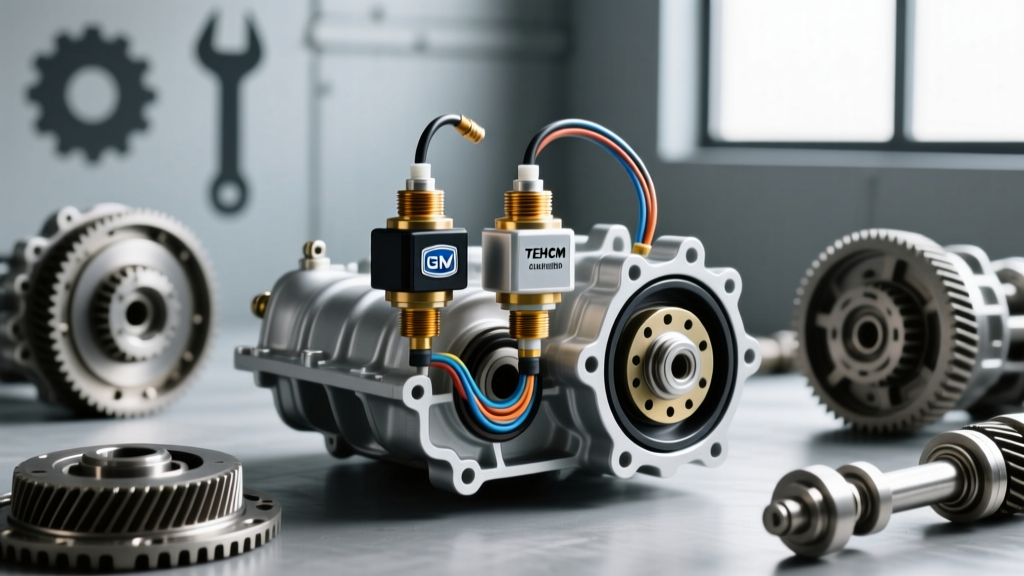
In the GM 6L80 ecosystem, the input speed sensor (ISS), output speed sensor (OSS), and the transmission fluid pressure switches are not standalone, serviceable components. They are permanently molded into the TEHCM plastic housing and wired via a fragile internal flex circuit. Consequently, you cannot simply replace the faulty pressure sensor; you must replace the entire TEHCM assembly. This architectural reality means that the transmission speed sensor cost is intrinsically tied to the pressure sensor repair, as both are housed within the same non-serviceable module.
Pinpointing a Faulty Transmission Fluid Pressure Sensor
Before condemning the TEHCM and ordering a replacement, it is critical to verify that the sensor itself has failed, rather than the external wiring harness. A common issue on GM trucks and SUVs (such as the Silverado, Sierra, and Tahoe) is ATF capillary wicking, where transmission fluid travels up the wiring harness and into the external 20-way X1 connector, causing short circuits that mimic a bad sensor.
20-Way Connector Pinout Testing
To accurately diagnose the circuit, disconnect the 20-way X1 connector located on the side of the transmission pan. Using a digital multimeter (DMM), check the following pins for continuity and resistance against the factory specifications:
- Pin 10 (ISS Signal): Verify the input speed sensor circuit. A reading of infinite resistance (OL) indicates an open circuit inside the TEHCM.
- Pin 11 (OSS Signal): Verify the output speed sensor circuit. Like the ISS, this is a magnetic pickup sensor; resistance should typically fall between 800 and 1,200 ohms at room temperature.
- Pin 14 & 15 (Pressure Switch/Sensor Circuits): The transmission fluid pressure sensor operates on a 5-volt reference. Back-probe the connector with the key on, engine off (KOEO). You should read exactly 5.0V on the reference wire and a clean ground on the return. If the signal wire shows 0V or 5V constantly regardless of engine state and line pressure, the internal flex circuit or the sensor diaphragm has failed.
For deeper diagnostic flowcharts on pressure switch circuits, technicians frequently consult OBD-Codes P0842 Reference to differentiate between a mechanical pressure loss and an electrical sensor failure. If the external harness is dry and free of corrosion, and the pinout tests fail, the TEHCM must be replaced.
2026 Transmission Speed Sensor Cost & TEHCM Assembly Pricing
Many DIYers begin their repair journey searching for the standalone transmission speed sensor cost, hoping to fix an ISS/OSS code (like P0716 or P0717) cheaply. On legacy transmissions like the 4L60E, the speed sensor cost is indeed under $40. But on the 6L80, because the speed and pressure sensors are bundled into the TEHCM, the parts cost is significantly higher. Below is the 2026 pricing breakdown for GM 6L80/6L90 TEHCM replacement.
| Component / Service | OEM / Dealer (2026 Est.) | Aftermarket / Remanufactured |
|---|---|---|
| TEHCM Assembly (Includes ISS, OSS, Pressure Sensors, TCM) | $650 - $950 | $350 - $550 |
| Transmission Fluid (Dexron VI, 7 Quarts) | $75 - $100 | $50 - $70 |
| External 20-Way Pigtail (If wicking occurred) | $45 - $65 | $25 - $40 |
| Labor (Pan Drop, R&R, Fluid Fill) | $350 - $450 | $350 - $450 |
| SPS Programming & Flashing | $150 - $200 | $150 - $200 |
| Total Estimated Repair Cost | $1,270 - $1,765 | $925 - $1,310 |
As shown in the table, the true transmission speed sensor cost on this platform is essentially the cost of the entire TEHCM. Opting for a remanufactured unit from a reputable supplier can save hundreds of dollars, but ensure the supplier includes a core charge return policy and guarantees that the internal flex circuits have been upgraded to prevent recurring pressure sensor failures. You can explore advanced valve body and TEHCM diagnostic strategies via Sonnax Transmission Tech Resources.
Model-Specific Repair Guide: TEHCM R&R Procedure
Replacing the TEHCM requires dropping the transmission pan and working directly over the valve body. Cleanliness is paramount; even a single grain of debris introduced to the valve body during this procedure can destroy the clutch packs within a hundred miles.
Step-by-Step Extraction
- Fluid Drain & Pan Removal: Safely raise the vehicle on a lift. Place a catch pan capable of holding at least 8 quarts. Remove the 18 perimeter bolts securing the transmission pan. Allow the Dexron VI fluid to drain completely.
- Filter Removal: The 6L80 filter is a push-in style friction fit. Carefully pry it downward using a flathead screwdriver wrapped in a shop towel to avoid scoring the aluminum valve body bore.
- Electrical Disconnect: Unplug the internal wiring harness connectors from the TEHCM. Release the locking tabs gently; the plastic becomes brittle after years of heat cycling.
- TEHCM Unbolting: Remove the bolts securing the TEHCM to the valve body. Note that the TEHCM also acts as the fluid separator plate. Lift the module straight up to avoid damaging the check balls located in the valve body beneath it.
Critical Torque Specifications
When installing the new TEHCM, you must adhere strictly to GM's torque specifications to prevent warping the plastic housing or crushing the internal gaskets:
- TEHCM to Valve Body Bolts (M6): 8 Nm (71 lb-in). Do not exceed this, or the plastic TEHCM housing will crack, leading to immediate internal pressure leaks.
- Transmission Pan Bolts (M6): 14 Nm (124 lb-in). Use a criss-cross star pattern to ensure the pan gasket seals evenly.
- Filter Installation: Push the new filter into the bore until it seats fully. It requires approximately 15 lbs of force to click into the internal O-ring.
SPS Programming: The Hidden Cost of Integrated Sensors
The most overlooked aspect of fixing a faulty transmission fluid pressure sensor on a GM 6L80 is the mandatory programming step. The TEHCM contains the Transmission Control Module (TCM). A brand new, out-of-the-box TEHCM is essentially a blank slate. It does not know your vehicle's VIN, tire size, axle ratio, or clutch volume indices.
Using GM's Service Programming System (SPS) or a high-end aftermarket J2534 pass-thru device with an active subscription, the new module must be flashed with the exact calibration files from GM Official Parts & Service. Furthermore, you must perform a 'Clutch Adapt Reset' and a 'Service Fast Learn' procedure. This forces the TCM to relearn the apply times for the clutch packs based on the new pressure sensor data. Skipping this step will result in harsh 2-3 shifts, flaring on the 4-5 upshift, and potentially a return of pressure-related diagnostic trouble codes.
Ultimately, while the bundled transmission speed sensor cost and TEHCM pricing may seem steep compared to legacy vehicles, the integrated design of the 6L80 provides vastly superior shift quality and diagnostic resolution—provided the repair is executed with precision, proper torque specs, and mandatory software calibration.