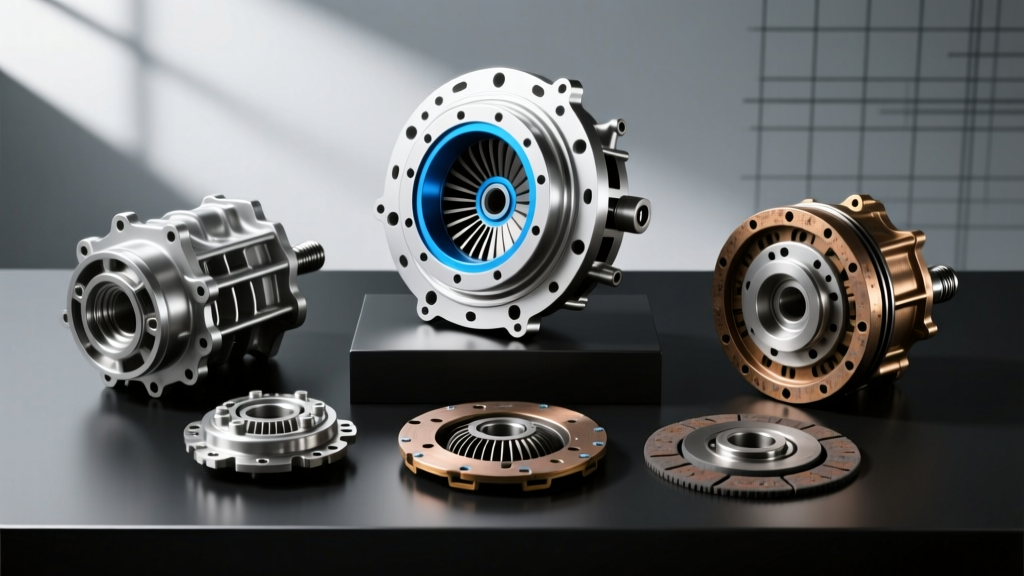
The Stock 68RFE Torque Converter: A Performance Bottleneck
The 68RFE six-speed automatic transmission, paired with the 6.7L Cummins turbo diesel in Ram 2500 and 3500 trucks, is renowned for its robust gearset and dual-filter lubrication system. However, the factory torque converter remains the weakest link in an otherwise capable drivetrain. As of 2026, modern tuning platforms like EZ Lynk and PPEI MM3 routinely push the 6.7L Cummins well beyond 800 rear-wheel horsepower and 1,400 lb-ft of torque. Under these extreme loads, the stock single-disc torque converter clutch (TCC) simply cannot maintain lockup, leading to catastrophic slip and heat generation.
For performance enthusiasts, heavy-duty towers, and sled pullers, recognizing early 68RFE torque converter failure symptoms is critical. Ignoring these warnings will not only destroy the converter but will also contaminate the transmission with metallic debris, ruining the valve body, solenoid pack, and clutch packs. This guide breaks down the exact failure modes of the OEM unit and outlines the best aftermarket upgrade paths to bulletproof your Ram's drivetrain.
Identifying Critical 68RFE Torque Converter Failure Symptoms
The 68RFE Transmission Control Module (TCM) utilizes an Electronic Modulated Converter Clutch (EMCC) strategy. Instead of a harsh, instant lockup, the TCM modulates the TCC apply pressure to slip the clutch slightly during shifts and heavy acceleration for smoother drivability. While great for comfort, this engineered slip becomes destructive when torque output exceeds the friction material's holding capacity.
1. TCC Shudder and Lockup Slip Under Load
The most common and immediate symptom of a failing stock converter is a rhythmic shudder, typically felt between 45 and 65 MPH when the TCM commands full TCC lockup. This shudder occurs because the single-disc paper friction material has glazed or worn down. As the Cummins applies high torque, the clutch slips, grabs, and slips again. If you monitor your scan tool data, you will notice the TCC Slip RPMs fluctuating wildly instead of holding steady at 0-10 RPM during steady-state cruising.
2. Excessive Transmission Fluid Temperatures
Heat is the ultimate enemy of the 68RFE. A healthy, locked-up torque converter will yield transmission fluid temperatures roughly 20°F to 30°F above ambient air temperature (typically 140°F–160°F under normal loads). When the TCC slips due to friction degradation, kinetic energy is converted directly into thermal energy. It is common to see fluid temperatures spike past 220°F on long grades or when towing heavy fifth-wheel trailers. At 250°F, the ATF+4 fluid rapidly oxidizes, losing its shear stability and lubricity, which subsequently burns the 3rd and 4th gear clutch packs.
3. Turbine Hub Spline Wear and Metal Contamination
The stock converter's turbine hub is mated to the 68RFE input shaft via splines. Under high-torque tuning, the sheer rotational force can strip these splines or cause the stator support tube to gall. When this happens, you may experience delayed forward engagement, a distinct 'clunk' when shifting into drive, or a complete loss of forward movement. Dropping the transmission pan will reveal a heavy coating of shiny, brass-colored or steel metallic paste on the sump filter (Mopar 68228950AA), indicating severe internal mechanical wear.
Expert Diagnostic Tip: Before condemning the torque converter for shudder, verify your transmission line pressure. A failing main pressure regulator valve in the 68RFE valve body can cause low line pressure, mimicking TCC slip. Hook up a mechanical pressure gauge to the main line port; you should see 140-170 PSI at idle in Drive, and up to 225+ PSI at wide-open throttle.
Performance Upgrade Matrix: Stock vs. Billet Multi-Disc
Upgrading your torque converter is non-negotiable if you have deleted the emissions system, added larger injectors, or installed a high-flow turbo. Below is a comparison of the primary converter categories available for the 68RFE platform in the current aftermarket landscape.
| Converter Type | TCC Design | Max Torque Capacity | Stall Speed | Avg. Price (2026) |
|---|---|---|---|---|
| OEM Replacement | Single-Disc Paper | 650 lb-ft | 1800-2000 RPM | $450 - $600 |
| Stage 1 Billet | Single-Disc Kevlar/Ceramic | 850 lb-ft | 1600-1800 RPM | $800 - $1,100 |
| Stage 2 Billet Triple | Triple-Disc Sintered Iron | 1,200+ lb-ft | 1700-1900 RPM | $1,400 - $1,900 |
Selecting the Right Aftermarket Torque Converter
Choosing the right unit depends entirely on your truck's power level and primary use case. Industry leaders like RevMax Converters and SunCoast Diesel engineer their units with billet steel covers, which prevents the flexplate-to-converter mounting pad from ballooning under extreme hydraulic pressure.
Stage 1: Heavy-Duty Billet Single-Disc (Up to 600 HP)
For daily drivers that tow heavy loads and run mild tunes (under 600 HP), a billet single-disc converter with Kevlar or ceramic friction material is ideal. These units feature a forged steel stator and a reinforced turbine hub. The ceramic friction material offers a higher coefficient of friction than OEM paper, eliminating shudder and maintaining lockup on 8% highway grades. Furthermore, they often feature a slightly lower stall speed (around 1600 RPM), which keeps the Cummins in its peak torque band while reducing cruising RPMs for better fuel economy.
Stage 2: Billet Triple-Disc (600 - 1,200+ HP)
If you are pushing past 600 HP, towing a 20,000+ lb toy hauler in the mountains, or participating in sled pulling, a triple-disc converter is mandatory. By utilizing three separate friction discs, the surface area for the TCC is tripled. This massive clamping area distributes the torque load, virtually eliminating slip even at 1,000 lb-ft. According to data shared by transmission builders on Cummins Forum, triple-disc setups can drop transmission fluid temperatures by 30°F to 40°F compared to stock units under identical heavy-load conditions, drastically extending the life of the 68RFE's internal clutch packs.
Precision Installation and Torque Specifications
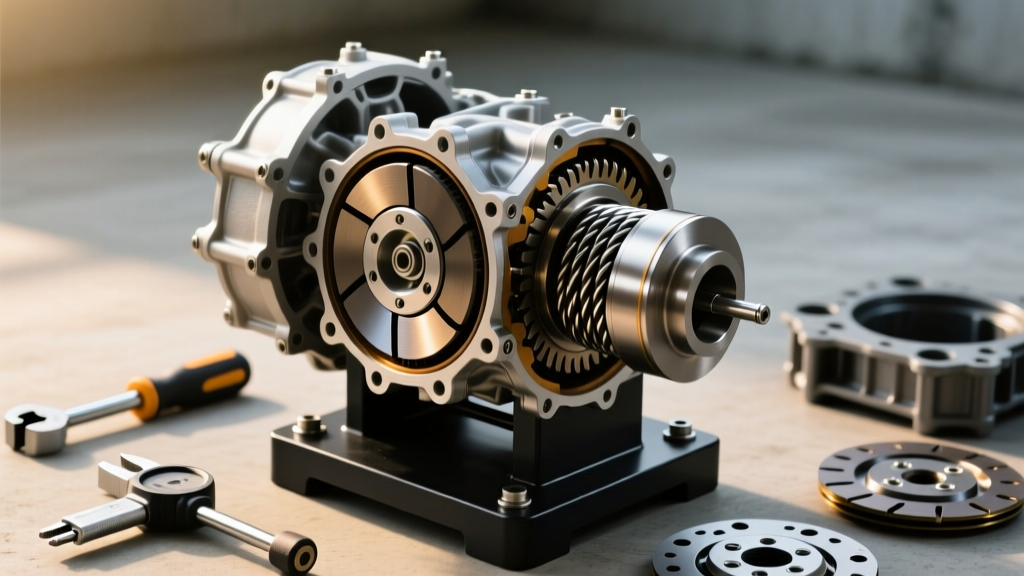
Installing an upgraded 68RFE torque converter requires strict adherence to Mopar torque specifications. Improper installation can lead to flexplate cracking, pump gear destruction, or catastrophic drivetrain separation.
- Flexplate to Crankshaft Bolts: 110 lb-ft (Use new OEM Mopar bolts and apply medium-strength threadlocker).
- Torque Converter to Flexplate Bolts: 35 lb-ft. (Ensure the converter is fully seated into the transmission oil pump before tightening. You must measure the gap between the flexplate and the converter pad; it should be between 3/8' and 7/16'. If it is flush, the converter is not seated and will destroy the oil pump upon startup).
- Bellhousing to Engine Block: 55 lb-ft.
- Cooler Line Fittings: 18-22 lb-ft (Use a crowfoot wrench to avoid rounding the soft aluminum transmission case threads).
- Fluid Capacity & Type: The 68RFE requires Mopar ATF+4 (Part # 68218925AB). A complete dry-fill capacity is roughly 14 quarts, but a standard pan-drop and filter service requires 6 to 8 quarts. Always replace both the sump filter and the cooler return filter.
Real-World Replacement Cost Breakdown
When budgeting for a torque converter upgrade, factor in the ancillary parts required to do the job correctly. As of 2026, shop labor rates for diesel drivetrain work average between $130 and $175 per hour.
- Billet Triple-Disc Converter: $1,400 - $1,900
- OEM Filter & Fluid Kit: $120 - $160
- Upgraded Deep Pan (Optional but recommended for cooling): $150 - $250
- Professional R&R Labor (8-10 Hours): $1,040 - $1,750
While the total investment for a premium triple-disc upgrade and professional installation can approach $3,500, it is a fraction of the cost of replacing a destroyed 68RFE transmission, which currently exceeds $6,500 for a built, upgraded unit. By addressing 68RFE torque converter failure symptoms early and selecting the correct multi-disc billet upgrade, you ensure your 6.7L Cummins can reliably transfer its massive torque output to the ground for hundreds of thousands of miles.