The 4L60E Sensor Ecosystem in 2026
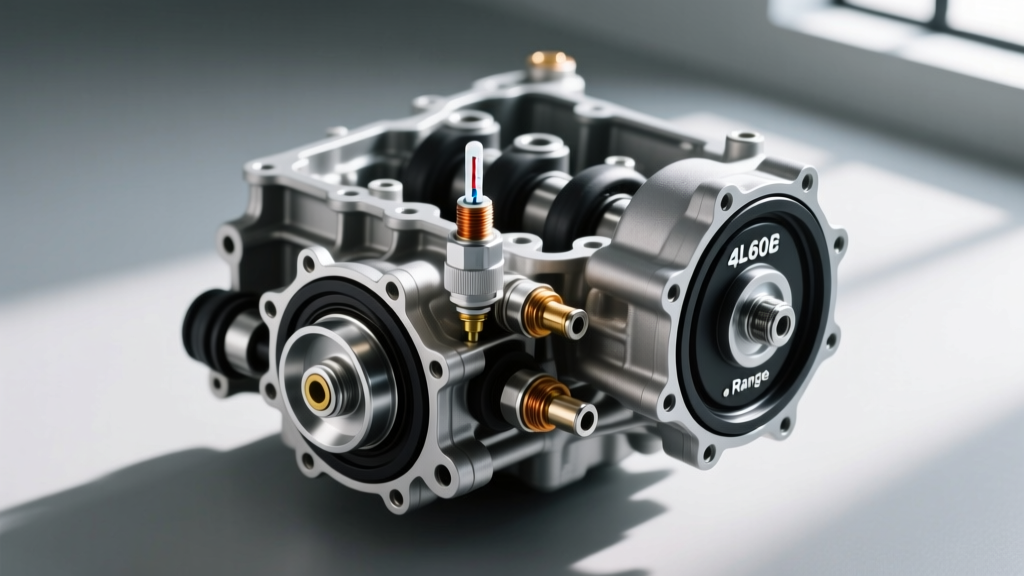
Even as the automotive industry shifts toward electrification and 10-speed automatics, the legendary GM 4L60E remains a cornerstone of the replacement market, budget off-road builds, and classic restomod swaps in 2026. Its electronic control architecture relies heavily on precise sensor inputs to command shift solenoids and manage line pressure. Two of the most frequently serviced components in this ecosystem are the Transmission Range Sensor (TRS) and the internal thermistors. While they serve entirely different functions, diagnosing transmission range sensor problems often overlaps with internal wiring inspections, bringing the 4L60E transmission temp sensor into the same repair workflow.
This model-specific repair guide provides master-level diagnostics, exact torque specifications, and alignment procedures to resolve PRNDL switch failures, neutral safety lockouts, and fluid temperature circuit faults.
Diagnosing Transmission Range Sensor Problems
The Transmission Range Sensor—commonly referred to as the PRNDL switch or neutral safety switch—is mounted externally on the driver’s side of the 4L60E case, directly over the manual shift shaft. It informs the Transmission Control Module (TCM) and Powertrain Control Module (PCM) of the gear selector's physical position. This data dictates shift scheduling, torque converter clutch (TCC) lockup, and starter engagement.
Common OBD-II Codes and Symptoms
When the TRS fails or falls out of mechanical alignment, the PCM detects a mismatch between the expected voltage signal and the actual gear state. According to OBD-Codes.com P0705 diagnostics, the most frequent trouble codes include:
- P0705: Transmission Range Sensor Circuit Malfunction (PRNDL Input)
- P0706: Transmission Range Sensor Circuit Range/Performance
- P0708: Transmission Range Sensor Circuit High Input
Real-World Symptoms: Drivers typically experience a no-crank condition in Park or Neutral, erratic shift mapping (e.g., the transmission starting in 2nd gear for limp mode), or a completely dark PRNDL indicator on the instrument cluster. In severe cases, reverse lights may illuminate while driving forward due to internal switch contact cross-talk.
Mechanical Linkage vs. Internal Switch Failure
Before condemning the sensor, verify the mechanical shift linkage. A stretched shift cable or worn detent spring inside the transmission pan can prevent the manual valve and external shift shaft from fully engaging the Park or Neutral detents. If the shift shaft is not rotating fully into the detent, the TRS will output a 'between-gears' voltage, triggering a P0706 code even if the sensor itself is perfectly functional.
Step-by-Step Range Sensor Replacement & Alignment
Replacing the TRS on a 4L60E requires precision. The sensor is not plug-and-play; it must be mechanically aligned to the transmission's internal manual valve position. Improper alignment will result in immediate shift mapping errors and potential starter lockout.
Tools, Part Numbers, and Torque Specs
Always avoid cheap aftermarket knock-offs for the TRS, as their internal contact wipers wear rapidly under high underhood temperatures. Stick to OEM or premium Tier-1 suppliers.
| Component | Part Number | Estimated Cost (2026) | Torque Specification |
|---|---|---|---|
| ACDelco TRS (OEM) | 213-4644 / GM 19329068 | $45 - $65 | 89 in-lbs (10 Nm) |
| TRS Mounting Bolts | M6 x 1.0 (Reuse with Loctite) | N/A | 89 in-lbs (10 Nm) |
| Shift Shaft Nut | M8 x 1.25 | N/A | 18 ft-lbs (24 Nm) |
The Alignment Procedure
- Vehicle Prep: Chock the wheels and set the parking brake. Place the interior gear selector in NEUTRAL.
- Removal: Remove the shift linkage cable from the external lever. Remove the M8 shift shaft nut and the manual lever. Unplug the TRS electrical connector and remove the two M6 mounting bolts.
- Alignment Pin Method: The new ACDelco TRS will ship with a plastic alignment pin (or you can use GM special tool J-41364). Insert the pin into the alignment holes on the sensor body to lock the internal wiper in the Neutral position.
- Installation: Slide the aligned TRS over the shift shaft. Hand-start the two M6 bolts. Do not fully tighten yet.
- Finalizing: Remove the alignment pin. Tighten the TRS mounting bolts to exactly 89 in-lbs. Over-torquing can crack the composite housing or bind the internal wiper. Reinstall the manual lever and torque the shaft nut to 18 ft-lbs.
Expert Tip: If you lose the alignment pin, you can align the sensor manually by looking through the alignment hole on the sensor body. Rotate the inner switch until the internal tang perfectly centers within the cast boss of the transmission case.
Synergistic Repairs: The 4L60E Transmission Temp Sensor
While the TRS is an external component, diagnosing its wiring harness often requires tracing circuits back to the main case connector and the internal valve body harness. Chafing on the internal wiring harness is a notorious 4L60E failure point that can simultaneously knock out shift solenoids and temperature readings. If you are dropping the transmission pan to inspect the internal pass-through connector or replace a damaged internal harness, it is the mandatory time to evaluate the 4L60E transmission temp sensor.
Testing the TFT Thermistor
The Transmission Fluid Temperature (TFT) sensor is a Negative Temperature Coefficient (NTC) thermistor located directly on the valve body. As fluid temperature rises, the sensor's electrical resistance drops. The PCM uses this data to delay TCC lockup during cold starts and trigger limp-mode cooling protocols if the fluid exceeds 260°F (126°C). Codes P0711 through P0713 indicate TFT circuit faults.
Using a digital multimeter (DMM), measure the resistance across the two TFT pins on the internal harness connector. Compare your readings against the master diagnostic chart below, as recommended by Transmission Digest technical bulletins:
| Fluid Temperature (°F / °C) | Expected Resistance (Ohms) | Voltage Signal to PCM (Approx) |
|---|---|---|
| 32°F / 0°C | 9,500 - 10,500 Ω | 4.10V - 4.30V |
| 68°F / 20°C | 3,100 - 3,400 Ω | 2.80V - 3.00V |
| 140°F / 60°C | 1,100 - 1,300 Ω | 1.50V - 1.70V |
| 194°F / 90°C | 450 - 550 Ω | 0.90V - 1.10V |
| 260°F / 126°C | 180 - 220 Ω | 0.40V - 0.55V |
If your DMM reads 'OL' (Open Loop) or near 0 Ω (Short), the thermistor is dead. Fortunately, on most 4L60E valve bodies, the TFT sensor can be unplugged and replaced without removing the entire valve body from the case, saving hours of labor. Simply unclip the retaining tab, pull the sensor, and apply a light coat of ACDelco dielectric grease to the new O-ring before seating the replacement.
Fluid Specifications and Reassembly
Any time the pan is dropped to access the internal TFT sensor or inspect the valve body harness, you must replace the fluid and filter. As of 2026, GM's official specification for all 4L60E applications is Dexron VI. Do not use older Dexron III formulations, as they lack the shear stability required for modern friction materials and TCC slip control.
- Filter Part Number: ACDelco TF289 (Deep pan) or TF288 (Shallow pan)
- Pan Gasket Torque: 11 Nm (97 in-lbs) in a crisscross pattern
- Refill Capacity: 5.0 to 6.0 quarts (for a standard pan drop and filter change)
Cost Breakdown: DIY vs. Professional Repair
Understanding the financial scope of these repairs helps you decide whether to tackle the job in your driveway or hand it to a transmission specialist.
| Repair Scenario | DIY Cost (Parts Only) | Independent Shop Cost | Dealership Cost |
|---|---|---|---|
| External TRS Replacement | $55 | $180 - $240 | $290 - $350 |
| Internal TFT Sensor & Harness | $85 (Sensor + Fluid) | $350 - $450 | $500+ |
Final Expert Verdict
Transmission range sensor problems on the 4L60E are overwhelmingly caused by misalignment during previous repairs or corrosion in the external weather-pack connector. By adhering strictly to the 89 in-lbs torque spec and utilizing the alignment pin method, you guarantee accurate PRNDL signaling. Furthermore, leveraging the same diagnostic session to verify the 4L60E transmission temp sensor ensures your TCM has the exact thermal data it needs to protect the clutches and optimize shift timing for years to come.