The Evolution of AWD: Defining the 1x vs 2x Drivetrain Paradigm
As we navigate the automotive landscape of 2026, the engineering debate surrounding all-wheel drive (AWD) system operation has largely coalesced around a specific architectural topology: the 1x vs 2x drivetrain paradigm. While traditionalists may associate this terminology with bicycle gearing, in modern automotive powertrain engineering, '1x vs 2x' denotes the number of primary torque-generating sources (prime movers) and how that torque is distributed across the axles.
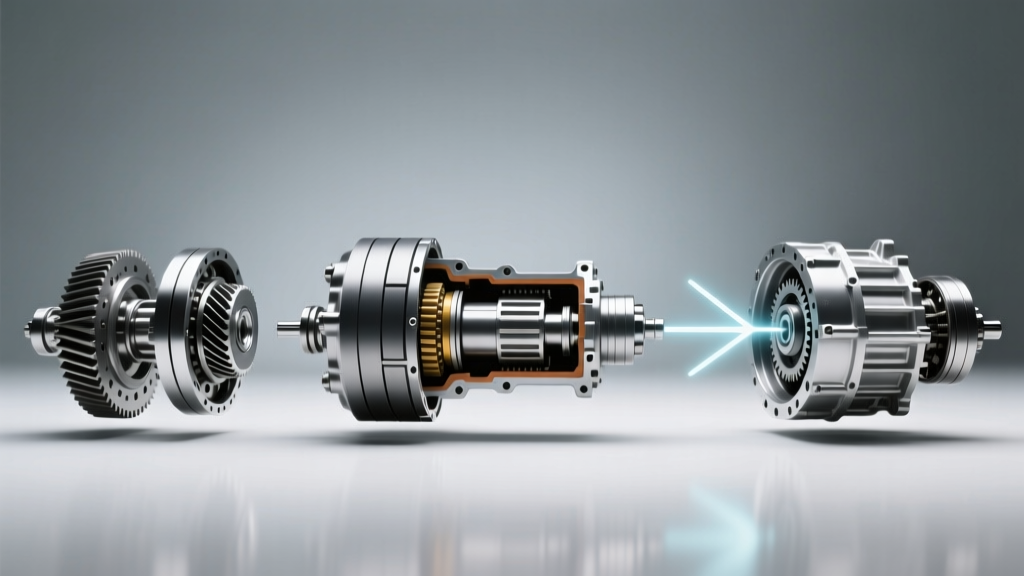
A 1x drivetrain AWD system relies on a single power source (an internal combustion engine or a single electric motor) paired with a mechanical Power Transfer Unit (PTU) and a rear drive module (RDM) to distribute torque. Conversely, a 2x drivetrain AWD system utilizes dual independent power sources—most commonly seen in dual-motor electric vehicles (EVs) or complex Plug-in Hybrid Electric Vehicles (PHEVs)—eliminating the mechanical linkage between the front and rear axles entirely.
Understanding the operational dynamics, latency profiles, and maintenance realities of these two architectures is critical for transmission specialists, drivetrain engineers, and advanced DIY mechanics. In this technical deep-dive, we will dissect the hardware, software, and fluid dynamics that govern modern AWD operation.
1x Drivetrain AWD: Mechanical Distribution and Electro-Hydraulic Clutches
The 1x AWD architecture remains the backbone of millions of internal combustion engine (ICE) and hybrid vehicles on the road. Whether based on a transverse front-wheel-drive platform (using a PTU and driveshaft) or a longitudinal layout (using an integrated transfer case), the fundamental operation relies on mechanical coupling.
Transverse Platforms: The PTU and RDM Ecosystem
In transverse applications (e.g., Ford Explorer, Toyota RAV4, Volvo XC90), the 1x system utilizes a Power Transfer Unit (PTU) bolted directly to the transaxle. The PTU contains a hypoid gearset that redirects torque 90 degrees to a carbon-fiber or steel two-piece driveshaft, terminating at the Rear Drive Module (RDM).
Modern RDMs, such as the BorgWarner Gen 6 and Gen 7 AWD systems, have largely abandoned traditional electro-hydraulic pumps in favor of electromechanical actuation. A brushless DC (BLDC) motor actuates a ball-ramp mechanism, which applies clamping force to a multi-plate wet clutch pack.
- Torque Capacity: Up to 3,500 Nm at the rear wheels.
- Actuation Latency: 80ms to 120ms from CAN bus request to full clutch lock-up.
- Fluid Specification: RDMs typically require specialized low-viscosity synthetic fluids (e.g., 75W-85 GL-5) with specific friction modifiers to prevent clutch shudder during micro-slip operations. Capacity is usually between 0.55L and 0.70L.
Longitudinal Platforms: Torque-on-Demand (TOD) Transfer Cases
For longitudinal 1x drivetrains, the ZF 8HP transmission family remains the gold standard. In vehicles like the BMW xDrive or Stellanti's Quadra-Trac II, the transfer case is integrated directly into the rear of the transmission housing. These Torque-on-Demand (TOD) units utilize heavy-duty Morse chains and electro-hydraulically actuated clutch packs to send up to 100% of available torque to the front axle when rear slip is detected. The hydraulic pressure required to fully clamp these packs often exceeds 25 bar, necessitating a dedicated transmission fluid circuit and rigorous thermal management.
2x Drivetrain AWD: The Dual-Motor Electronic Revolution
The 2x drivetrain architecture represents the cutting edge of AWD operation in the 2026 EV and PHEV market. By placing an independent electric motor (eAxle) on both the front and rear axles, engineers eliminate the PTU, the driveshaft, and the RDM. This yields massive packaging, weight, and efficiency benefits.
eAxle Operation and Torque Vectoring
In a 2x dual-motor setup (e.g., Tesla Model Y, Hyundai Ioniq 5, Rivian R1T), AWD operation is governed entirely by software and inverter logic. The Vehicle Control Unit (VCU) monitors wheel speed, steering angle, and yaw rate sensors operating on FlexRay or high-speed CAN-FD networks.
When slip is detected, the 2x system does not need to wait for a mechanical clutch to engage. The inverter simply alters the magnetic field frequency and current delivery to the stator of the slipping motor, or applies regenerative braking torque to transfer load to the axle with grip.
- Torque Capacity: Varies by motor, but modern 800V silicon carbide (SiC) eAxles (like the Bosch Gen 5) can deliver upwards of 4,000 Nm of wheel torque per axle.
- Actuation Latency: Less than 10ms. Torque inversion and redistribution occur at the speed of electrical switching.
- True Torque Vectoring: By utilizing twin motors on a single axle (or manipulating dual-motor yaw), 2x systems can apply positive torque to the outside wheel and negative (regenerative) torque to the inside wheel during cornering, eliminating the need for heavy mechanical limited-slip differentials (LSDs).
The PHEV 'Through-the-Road' 2x Hybrid
It is worth noting that 2x drivetrains also exist in PHEVs, such as the Jeep Wrangler 4xe or Volvo Recharge models. These 'through-the-road' AWD systems use an ICE driving one axle and an e-motor driving the other. Operationally, the VCU must constantly synchronize the rotational speed of the mechanical drivetrain with the electronic eAxle to prevent driveline binding and ensure seamless torque hand-offs during traction loss events.
Operational Dynamics: CAN Bus Latency and Sensor Fusion
Regardless of whether a vehicle utilizes a 1x or 2x drivetrain, modern AWD operation relies heavily on sensor fusion. According to research published by SAE International, contemporary traction control modules sample wheel speed sensors at rates exceeding 500 Hz.
'The limiting factor in modern AWD slip mitigation is rarely the computational power of the ECU, but rather the physical actuation limits of the mechanical clutch packs in 1x systems, or the thermal derating thresholds of the inverters in 2x systems.' — SAE Technical Paper Series, Drivetrain Dynamics.
In a 1x system, if the ECU detects a 15% slip ratio on the front axle, it commands the RDM clutch pack to engage. The 100ms physical delay means the vehicle will experience a momentary loss of longitudinal acceleration. In a 2x system, the VCU instantly reduces front motor torque and commands a proportional current spike to the rear motor, resulting in imperceptible traction recovery.
Comparative Analysis: 1x vs 2x Drivetrain Specifications
The following table outlines the critical engineering differences between traditional 1x mechanical AWD and modern 2x dual-motor AWD systems.
| Specification | 1x Drivetrain (Mechanical PTU/RDM) | 2x Drivetrain (Dual-Motor EV) |
|---|---|---|
| Prime Movers | 1 (ICE or Single E-Motor) | 2 (Independent Front/Rear eAxles) |
| Physical Linkage | PTU, Driveshaft, U-Joints, RDM | None (High-Voltage Cabling Only) |
| Torque Response Time | 80ms - 150ms | < 10ms |
| Weight Penalty (AWD Hardware) | ~65 kg - 90 kg | ~40 kg - 55 kg (excluding battery) |
| Drivetrain Parasitic Loss | 4% - 7% (Gear mesh, bearing drag) | 1% - 2% (Inverter switching, stator drag) |
| Front Axle Disconnect | Complex mechanical dog-clutch in PTU | Software-controlled freewheel / active stator short |
Maintenance Realities and Common Failure Modes
As automotive technicians know, the theoretical elegance of a drivetrain often clashes with real-world maintenance realities. The service requirements for 1x and 2x systems are vastly different.
1x Drivetrain: The PTU Thermal Bottleneck
The most notorious failure point in 1x transverse AWD systems is the Power Transfer Unit. In vehicles like the Ford Edge or Explorer (3.5L EcoBoost), the PTU is mounted in close proximity to the catalytic converter and exhaust manifold. The fluid capacity is notoriously low—often just 0.38 liters (12.8 oz) of 75W-140 synthetic gear oil.
Under heavy load or towing, PTU operating temperatures can easily exceed 230°F (110°C). This causes the gear oil to coke and lose its shear stability, leading to catastrophic hypoid gear wear and bearing failure. Pro-Tip: If you are maintaining a 1x PTU system, install an aftermarket PTU fluid extraction pump and change the fluid every 30,000 miles using a high-thermal-stability ester-based 75W-140. Torque the PTU drain and fill plugs to exactly 18 Nm (13 lb-ft) to avoid stripping the soft aluminum casing.
2x Drivetrain: Thermal Throttling and Coolant Degradation
While 2x dual-motor systems eliminate gear oil changes for the driveshaft and PTU, they introduce complex thermal management challenges. The eAxles utilize oil-cooled stators and integrated inverters. The dielectric cooling fluid (e.g., Castrol ON or specialized EV thermal fluids) degrades over time due to copper ion leaching and high-voltage arcing micro-events.
Failure to flush the eAxle cooling circuit every 60,000 miles can result in reduced dielectric strength, leading to inverter short-circuits and severe thermal throttling during sustained high-speed AWD operation. Furthermore, the reduction gearboxes in eAxles require precise fluid levels; overfilling by even 200ml can cause churning losses and excessive foaming, leading to premature bearing cavitation.
Conclusion: Which Architecture Prevails?
The 1x vs 2x drivetrain debate ultimately hinges on the vehicle's intended purpose and packaging constraints. The 1x mechanical AWD system remains highly relevant for heavy-duty towing, off-road crawling (where mechanical lockers are preferred), and cost-effective ICE platforms. ZF's latest integrated transfer cases continue to push the boundaries of mechanical efficiency and durability.
However, for performance, latency, and everyday traction management, the 2x dual-motor architecture is undisputed. The ability to manipulate torque at the millisecond level without the parasitic loss of a spinning driveshaft represents the definitive future of all-wheel drive operation. As 800V architectures and silicon carbide inverters become ubiquitous, the 2x drivetrain will only become more dominant, relegating the mechanical PTU to legacy and heavy-duty applications.