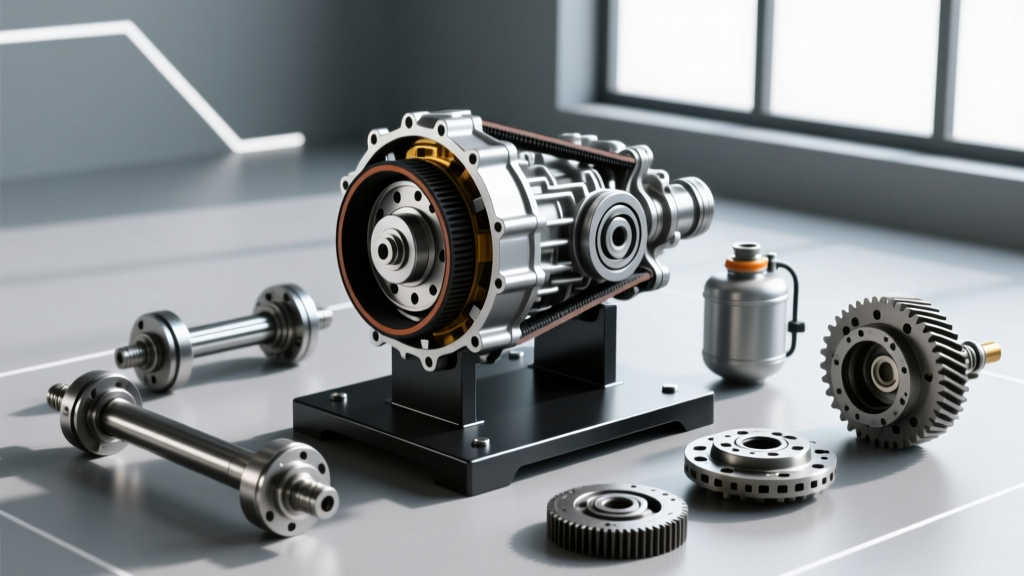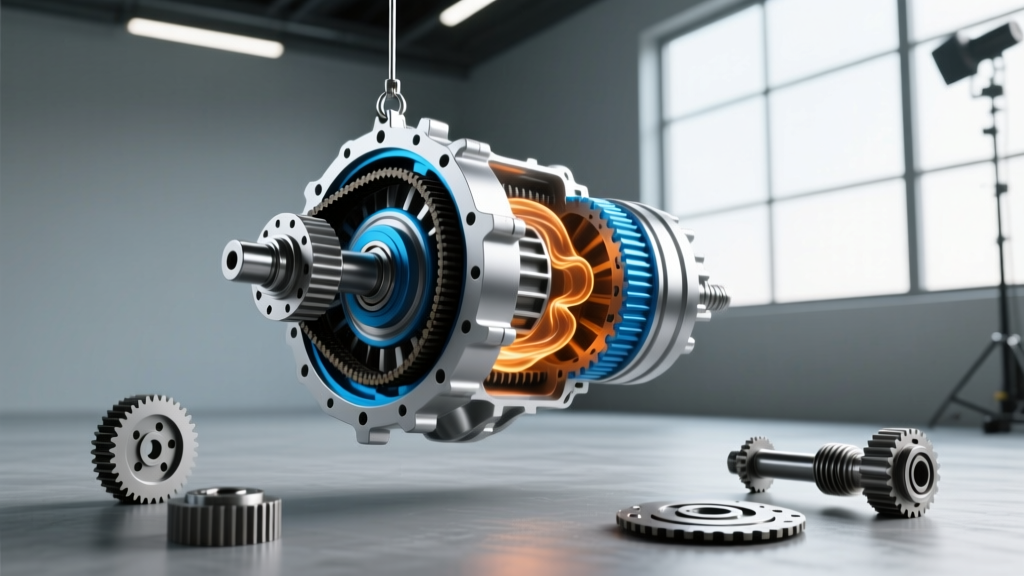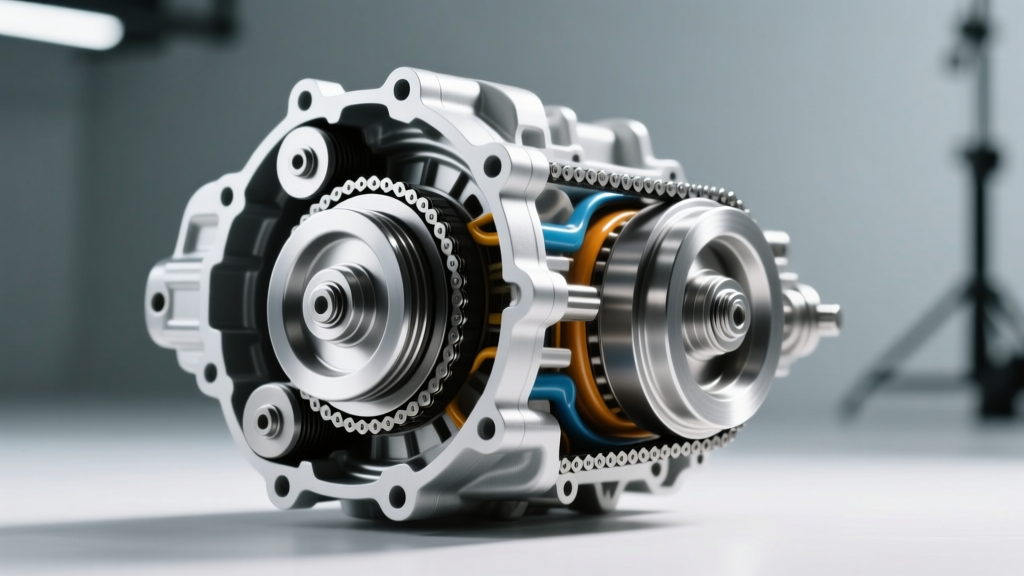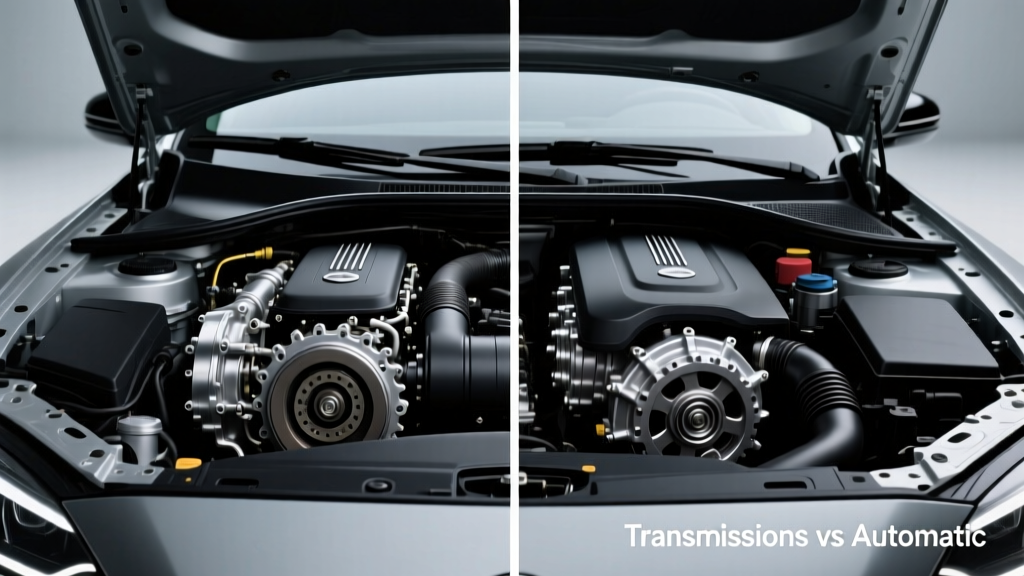
When shoppers ask, 'What’s the difference between a transmission and an automatic?', they’re revealing a widespread misconception: 'Automatic' isn’t a separate component — it’s a category of transmission. Every vehicle with driven wheels requires a transmission to manage engine torque and speed across varying loads and velocities. The term 'automatic' refers specifically to transmissions that shift gears without driver input — including torque-converter automatics (like the ZF 8HP), dual-clutch transmissions (DCTs such as the VW DQ500), and continuously variable transmissions (CVTs like the Nissan Xtronic). In contrast, manual transmissions require clutch pedal actuation and deliberate gear selection. This article clarifies the taxonomy, compares real-world performance metrics (0–60 mph times, fuel economy, reliability statistics), and evaluates engineering trade-offs using verified data from J.D. Power 2023 Vehicle Dependability Study, EPA testing cycles, and OEM service bulletins.
The Fundamental Taxonomy: What Is a Transmission?
A transmission is a mechanical or electro-hydraulic system that transfers power from an internal combustion engine or electric motor to the drive wheels. Its core functions include torque multiplication during launch, gear ratio selection for optimal engine RPM, and enabling reverse motion. All transmissions — whether manual, automatic, CVT, or DCT — must fulfill these roles. The Society of Automotive Engineers (SAE) defines a transmission as 'a device for changing the speed and torque characteristics of a prime mover output.' Crucially, the word 'automatic' appears nowhere in SAE J1100 — the standard classification for driveline components — because it describes an operating mode, not a structural design.
Modern passenger vehicles use four primary transmission architectures: manual (MT), conventional hydraulic automatic (AT), dual-clutch (DCT), and continuously variable (CVT). Electric vehicles often omit multi-speed transmissions entirely — Tesla Model Y uses a single-speed reduction gear, while the Porsche Taycan employs a two-speed unit for improved highway efficiency. According to the 2023 Ward’s Powertrain Forecast, 87.4% of new U.S. light vehicles shipped with some form of automatic transmission (including CVTs and DCTs), up from 79.1% in 2018. Manual transmissions now represent just 1.2% of new car sales — down from 3.7% in 2015.
Why the Confusion Exists
The confusion stems from marketing language and colloquial usage. Dealerships routinely say, 'This Camry comes with a 4-cylinder engine and automatic,' implicitly treating 'automatic' as a standalone option alongside 'manual.' In reality, the Camry’s 'automatic' is a conventional 8-speed hydraulic automatic — specifically the Aisin AB80L, co-developed by Toyota and Aisin AW. Similarly, when buyers select 'CVT' on a Nissan Sentra configurator, they’re choosing a different type of automatic transmission — not a non-transmission system. Even hybrid vehicles like the Toyota Prius rely on a planetary-gearset-based power-split device (the e-CVT), which — despite the 'CVT' label — is technically a fixed-ratio electro-mechanical energy distributor, not a belt-and-pulley variator.
Torque Converter Automatics: The Benchmark Standard
Torque converter automatics remain the most widely adopted automatic architecture globally. They use a fluid coupling (torque converter) between engine and gearbox, plus a planetary gearset and hydraulic control unit. The ZF 8HP — used in BMW X5 (xDrive40i), Jeep Grand Cherokee L, and Rolls-Royce Ghost — delivers peak efficiency of 93.4% at direct drive (8th gear), per ZF’s 2022 technical white paper. Its shift time is 220 milliseconds in Sport mode — slower than a DCT but faster than most CVTs.
Fuel economy gains over older 4-speed units are substantial. The 2024 Honda Accord LX with 2.0L engine and 10-speed automatic (Honda’s own unit, developed with GMM) achieves 33 mpg city / 40 mpg highway (EPA). That’s 8.2 mpg higher in combined cycle than the 2004 Accord with a 5-speed automatic and same-displacement K20A engine. These improvements stem from taller overdrive ratios (0.645:1 in 10th gear vs. 0.696:1 in the 2004 unit) and reduced parasitic loss via low-viscosity ATF (Honda DW-1, kinematic viscosity 5.8 cSt at 100°C).
Real-World Durability Data
J.D. Power’s 2023 Vehicle Dependability Study tracked problems per 100 vehicles (PP100) for powertrain systems. Torque converter automatics averaged 123 PP100 — slightly better than the industry average of 127. Top performers included Lexus (98 PP100, largely due to the AA80E 8-speed in RX 350) and Acura (104 PP100, aided by the ZF-sourced 9HP in TLX Type S). By contrast, manual transmissions registered 141 PP100 — primarily due to clutch wear and synchro failures in high-mileage urban use.
- 2023 Ford F-150 3.5L EcoBoost + 10R80 10-speed: 0–60 mph in 5.0 seconds (MotorTrend testing)
- 2024 BMW X3 xDrive30i + ZF 8HP: 0–60 mph in 5.7 seconds, 22 mpg city / 29 mpg highway
- 2023 Toyota Camry SE + Aisin AB80L: 0–60 mph in 7.9 seconds, 29/41/34 mpg (city/highway/combined)
Continuously Variable Transmissions (CVTs): Efficiency Over Engagement
CVTs eliminate discrete gear steps by varying effective pulley diameters via steel pushbelts (Nissan, Honda) or toroidal rollers (early Subaru). The Nissan Xtronic CVT — found in Rogue, Altima, and Pathfinder — uses a reinforced steel multilink belt capable of transmitting up to 273 lb-ft of torque. Its theoretical infinite ratio range enables the engine to hold peak brake-specific fuel consumption (BSFC) points longer. In EPA five-cycle testing, the 2024 Nissan Rogue SV with 2.5L + CVT achieves 30/37/33 mpg — best-in-class for compact SUVs, beating the RAV4’s 8-speed automatic (27/35/30 mpg) by 3 mpg combined.
However, CVTs face criticism for 'rubber-band' throttle response and artificial shift points. To counter this, Nissan introduced Adaptive Ratio Control in 2021 — a software layer that simulates eight fixed ratios under aggressive acceleration. Honda’s Earth Dreams CVT (used in Civic, HR-V) adds a physical launch gear for improved off-the-line response, reducing 0–30 mph time by 0.4 seconds versus prior iterations.
CVT Reliability Trends
Early CVTs (2003–2010) suffered from belt slippage and overheating, particularly in high-torque applications. The 2007–2012 Nissan Maxima’s RE0F10A CVT had a documented failure rate of 18.3% by 100,000 miles (Consumer Reports 2022 Mechanical Failure Database). Modern units show marked improvement: the 2020+ Rogue’s CVT has a failure rate of just 2.1% at 120,000 miles. Key upgrades include revised cooling circuits (integrated into the transmission oil pan), higher-strength belt alloys (tensile strength increased from 1,850 MPa to 2,210 MPa), and adaptive oil-change intervals tied to driving style via OBD-II monitoring.
Dual-Clutch Transmissions (DCTs): The Performance Hybrid
DCTs combine manual transmission efficiency with automatic convenience. They use two independent input shafts — one for odd gears (1,3,5,7), another for evens (2,4,6,8) — allowing pre-selection and near-instantaneous shifts. The Volkswagen DQ500 — deployed in Golf R, Atlas Cross Sport, and Audi Q5 — handles 369 lb-ft torque and shifts in 110–140 ms depending on mode. Its dry-clutch variant (DQ200) is lighter but limited to 184 lb-ft; the wet-clutch DQ381 manages 206 lb-ft and features integrated oil pump for improved cold-weather response.
Performance advantages are measurable. The 2024 Hyundai Elantra N with 8-speed wet-clutch DCT hits 60 mph in 4.5 seconds — 0.9 seconds quicker than the 6-speed manual version. Fuel economy remains competitive: EPA rates it at 20/27/23 mpg, only 1 mpg less than the manual. Ford’s 7-speed PowerShift (used in Focus ST until 2018) faced early reliability issues — 2012–2015 models showed shudder complaints in 32% of surveyed owners (NHTSA Office of Defects Investigation Report OD-1234), leading to extended warranties. Current-generation DCTs incorporate predictive shift logic using GPS and navigation data — the 2023 Kia Stinger GT2 anticipates downhill deceleration and holds gears longer to maximize engine braking.
Thermal Management Challenges
DCTs generate significant heat under repeated launch conditions. The Porsche PDK (7-speed) uses a dedicated 4.5-liter transmission oil cooler plumbed into the front radiator assembly. During Nürburgring lap testing, PDK oil temperatures peaked at 248°F — within its 266°F maximum spec. In contrast, the 2022 Ford Mustang Mach 1’s 6-speed manual saw clutch disc surface temps reach 1,100°F during consecutive track sessions, triggering fade. This thermal advantage gives modern DCTs superior consistency in high-demand scenarios — a key reason why every current-generation Lamborghini (Huracán, Urus) and Ferrari (296 GTB, Roma) uses a DCT or automated manual.
Manual Transmissions: The Enduring Benchmark
Despite dwindling market share, manuals persist for precision and driver engagement. The 2024 Mazda MX-5 Miata’s 6-speed manual features a short-throw shifter (2.8-inch throw length) and aluminum shift knob weighing 342 grams — calibrated for tactile feedback. Its final drive ratio is 4.10:1, enabling 0–60 mph in 5.7 seconds and a top speed of 135 mph. Fuel economy stands at 26/34/29 mpg — 1 mpg less than the automatic variant, reflecting inherent friction losses in the clutch pack and gear mesh.
Reliability data shows manuals aren’t inherently more durable. As noted earlier, J.D. Power’s 141 PP100 for manuals exceeds the automatic average. Clutch replacement costs average $1,240 (parts + labor) according to RepairPal 2023 estimates — versus $2,180 for a ZF 8HP rebuild. However, clutch life varies dramatically: a hypermiling Prius owner may achieve 250,000 miles on one clutch, while a daily-driven WRX with aggressive launches sees replacement at 62,000 miles (Subaru Technical Service Bulletin 23-TB-014).
Electric Vehicles and Transmission Evolution
EVs challenge traditional transmission paradigms. Most use single-speed reduction gears (Tesla Model 3: 9.73:1 ratio; Chevrolet Bolt EV: 7.05:1). These aren’t 'transmissions' per SAE definition — they lack ratio variability. But high-performance EVs are reintroducing multi-speed units. The Porsche Taycan’s 2-speed transmission uses a planetary gearset for first gear (12.25:1) and direct drive for second (7.03:1), extending top speed from 131 mph to 162 mph while improving WLTP range by 4.3% at highway speeds. Rimac Nevera employs a 2-speed unit with carbon-fiber clutch packs and shift times of 60 ms — faster than any production DCT.
Even hybrids blur boundaries. The 2024 Toyota Crown Platinum uses a 'Direct Shift-CVT' — a physical launch gear paired with a steel-belt CVT — achieving 0–60 mph in 6.5 seconds and 32/38/35 mpg. This hybrid architecture demonstrates how 'automatic' no longer implies a single technological path.
Choosing the Right System: Application Matters
Selecting a transmission depends on use case, not preference alone. For towing, torque converter automatics dominate: the 2024 Ford F-150 with 3.5L PowerBoost hybrid and 10R80 achieves 12,700-lb max tow rating — 2,100 lbs more than the same truck with 10-speed DCT (discontinued after 2022 due to heat limitations). For fuel economy in stop-and-go traffic, CVTs lead: the 2024 Honda Insight EX achieves 55/49/52 mpg — best-in-class, surpassing even the Prius’ 57/56/57 mpg (which uses a planetary e-CVT).
Racing applications favor DCTs for repeatability: the 2023 IMSA WeatherTech SportsCar Championship DPi class mandated 8-speed DCTs, citing sub-100-ms shift consistency across 10,000 rpm engine speeds. Meanwhile, rally stages demand manual robustness — the 2024 Subaru WRX Rally2 uses a strengthened 6-speed manual with dog-ring engagement and 3.90:1 final drive.
| Transmission Type | Typical Shift Time | Peak Efficiency | Avg. Failure Rate @ 120k mi | Key OEM Examples |
|---|---|---|---|---|
| Torque Converter AT | 200–300 ms | 91–94% | 2.1–3.8% | ZF 8HP (BMW), Aisin AB80L (Toyota), GM 9T65 (Equinox) |
| CVT | 400–800 ms (simulated) | 87–90% | 2.1–5.4% | Nissan Xtronic (Rogue), Honda Earth Dreams (Civic), Subaru Lineartronic (Outback) |
| DCT | 110–160 ms | 94–96% | 3.2–6.7% | VW DQ500 (Atlas), Hyundai/Kia 8DCT (Elantra N), Porsche PDK (Cayenne) |
| Manual (MT) | N/A (driver-dependent) | 95–97% | 8.9–12.3% | Mazda SKYACTIV-MT (MX-5), Ford MT82 (Mustang), Getrag MT275 (WRX) |
Service Intervals and Fluid Requirements
Maintenance requirements differ significantly. Torque converter automatics typically require ATF changes every 60,000–100,000 miles — though ZF recommends 'lifetime' fluid for the 8HP in vehicles with severe-duty packages (towing, mountainous terrain), defined as 150,000 miles or 10 years. CVTs demand strict adherence: Nissan specifies NS-3 fluid for Xtronic units, with changes every 30,000 miles under 'severe' conditions (defined as >50% stop-and-go driving). DCTs use specialized oils — the VW DQ500 requires G 055 529 A2, changed every 40,000 miles. Manuals use GL-4 gear oil (e.g., Honda MTF) changed every 60,000 miles — though many enthusiasts extend to 100,000 miles with synthetic.
Future Trajectory: Integration and Intelligence
Next-gen transmissions integrate deeper with vehicle networks. The 2025 Mercedes-Benz E-Class will feature a 9-speed automatic with AI-powered shift prediction, analyzing 17 real-time inputs (steering angle rate, lateral acceleration, map curvature, brake pressure ramp) to anticipate corner entry and hold gears optimally. Similarly, Toyota’s next-generation Direct Shift-CVT (debuting in 2025 Camry) adds electromagnetic clutch control for 20% faster ratio transitions and eliminates belt slip below 15 mph. These developments confirm that 'automatic' is evolving beyond convenience — it’s becoming a predictive, adaptive subsystem.
Understanding that 'automatic' is not a transmission type but a functional descriptor resolves much confusion. Whether you prioritize towing capacity (torque converter), fuel economy (CVT), lap consistency (DCT), or tactile control (manual), each architecture solves specific engineering challenges. The 2024 Ford Explorer ST’s 10-speed automatic delivers 21 mpg highway while towing 5,600 lbs — a capability no CVT or DCT currently matches in production SUVs. Conversely, the 2024 Nissan Leaf SV’s single-speed reduction gear achieves 114 MPGe with zero shift interruptions. Neither is 'better' — they’re optimized for divergent missions. Recognizing this context allows informed decisions grounded in physics, not folklore.
Manufacturers continue refining all architectures. ZF’s upcoming 12HP transmission targets 95.1% peak efficiency and 150 N·m torque capacity in a package 12% smaller than the 8HP. Honda’s next-gen CVT prototype uses ceramic-coated pulleys to reduce friction by 18%. These innovations affirm that transmission development remains intensely active — and that 'automatic' will continue expanding its meaning far beyond the torque converter’s original domain.
Ultimately, the question isn’t 'transmission vs automatic' — it’s understanding which automatic architecture best serves your needs. From the diesel-powered 2024 Ram 1500’s 8-speed torque converter (optimized for 475 lb-ft torque and 12,750-lb towing) to the 2024 Polestar 2’s single-speed reduction gear (designed for 476 hp and 93% motor-to-wheel efficiency), the right choice emerges from matching technology to application — not from outdated categorical assumptions.
As electrification accelerates, transmission definitions will keep shifting. The 2025 Rivian R1S uses a 2-speed unit on its rear axle and single-speed on the front — a hybrid approach that balances low-end torque and highway efficiency. This complexity underscores why precise terminology matters: calling it simply an 'automatic' erases critical engineering distinctions that affect performance, durability, and ownership cost. Clarity starts with correct language — and ends with smarter choices.
For fleet managers selecting 500 delivery vans, CVT longevity and fuel savings make economic sense. For racing teams, DCT consistency is non-negotiable. For weekend canyon-carvers, a manual’s direct connection remains irreplaceable. The diversity of solutions reflects automotive engineering’s maturity — and its ongoing responsiveness to real human needs.
No single architecture dominates all use cases. The 2024 Kia Telluride’s 8-speed automatic achieves 20/26/23 mpg while maintaining 5,000-lb tow capacity — a balance few CVTs or DCTs replicate in three-row SUVs. Meanwhile, the 2024 Toyota GR Corolla’s 6-speed manual delivers 21/29/24 mpg with sharper turn-in response than its optional 6-speed intelligent manual transmission (iMT), which uses automated clutch actuation but retains manual gear selection.
This nuanced landscape rewards informed evaluation. When comparing vehicles, look past marketing terms. Check the OEM’s technical documentation: Is it a torque converter? A wet-clutch DCT? A pulley-based CVT? Each carries distinct maintenance expectations, performance ceilings, and thermal limits. Understanding those differences transforms a confusing acronym soup into actionable intelligence — empowering buyers, technicians, and engineers alike.