Key Takeaways
- 3.73 gears are good for drivers who need a balance between towing capability, off-the-line acceleration, and acceptable highway fuel economy.
- Trucks with 3.73:1 rear axle ratios typically tow 1,000–2,000 lbs more than identical models with 3.31:1 gears.
- The 3.73 ratio keeps engine RPM near 2,100 at 70 mph, placing most V8 and turbo-six engines in their peak torque band.
- Expect a fuel economy penalty of approximately 1–2 mpg combined versus numerically lower ratios like 3.31:1 or 3.55:1.
- A professional gear swap costs between $1,500 and $2,500 including parts and labor for a solid rear axle.
This guide is written for truck owners, performance car enthusiasts, and anyone evaluating rear axle ratios for towing, daily driving, or track use. If you have asked yourself what are 3.73 gears good for, the answer comes down to one principle: mechanical leverage. A 3.73:1 rear axle ratio means the driveshaft rotates 3.73 times for every single rotation of the rear wheels. This multiplication of torque gives your engine more pulling force at the wheels, which directly improves acceleration, towing performance, and low-speed control.
3.73 gears are good for light-to-medium towing (trailers between 5,000 and 10,000 lbs), sporty acceleration in performance vehicles like the Ford Mustang GT, and drivers who split time between highway commuting and weekend hauling. They occupy a middle ground between economy-focused ratios (3.31:1) and heavy-duty ratios (4.10:1), making them the most versatile single choice for multi-purpose vehicles.
How 3.73 Gear Ratios Work
The Math Behind the Ratio
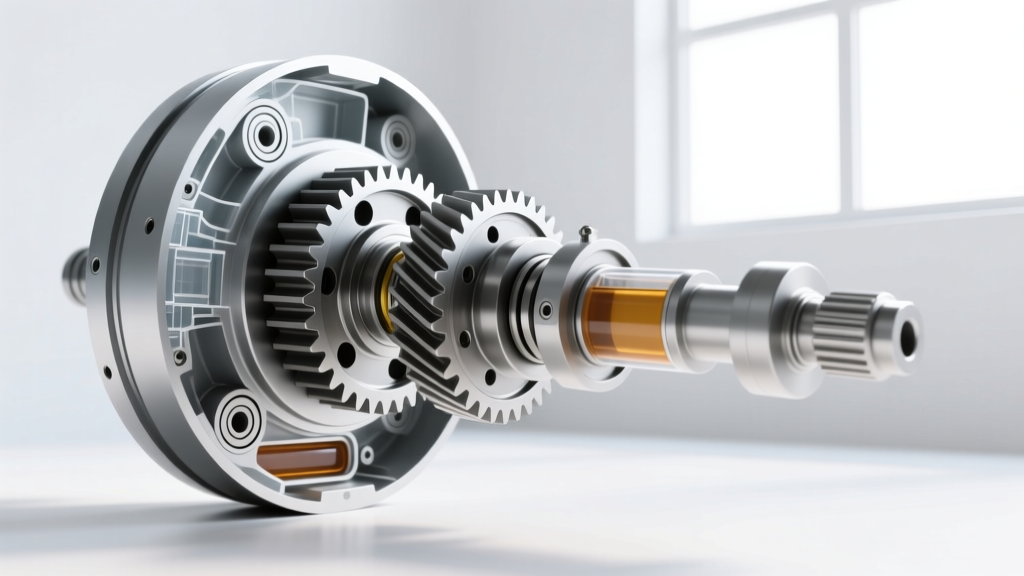
A rear axle gear ratio expresses how many turns the driveshaft makes per one full revolution of the axle shafts and wheels. With a 3.73:1 ratio, the ring gear has 3.73 times as many teeth as the pinion gear. If the pinion has 11 teeth, the ring gear has 41 teeth (41 ÷ 11 = 3.727, rounded to 3.73).
Higher numerical ratios multiply engine torque more aggressively. A 3.73:1 setup delivers approximately 12 percent more torque to the wheels than a 3.31:1 ratio in the same vehicle, assuming identical engine output and tire diameter. That extra force is what makes 3.73 gears effective for towing and acceleration.
Engine RPM at Highway Speed
At 70 mph with 275/65R18 tires (approximately 32.1 inches in diameter), a vehicle with 3.73 gears and a 1:1 top-gear transmission ratio spins the engine at roughly 2,100 RPM. That RPM sits inside the peak torque range of most modern V8 and turbocharged V6 engines, which is why 3.73 ratios feel responsive during highway passing maneuvers without excessive downshifting.
Best Use Cases for 3.73 Gears
Light to Medium Towing
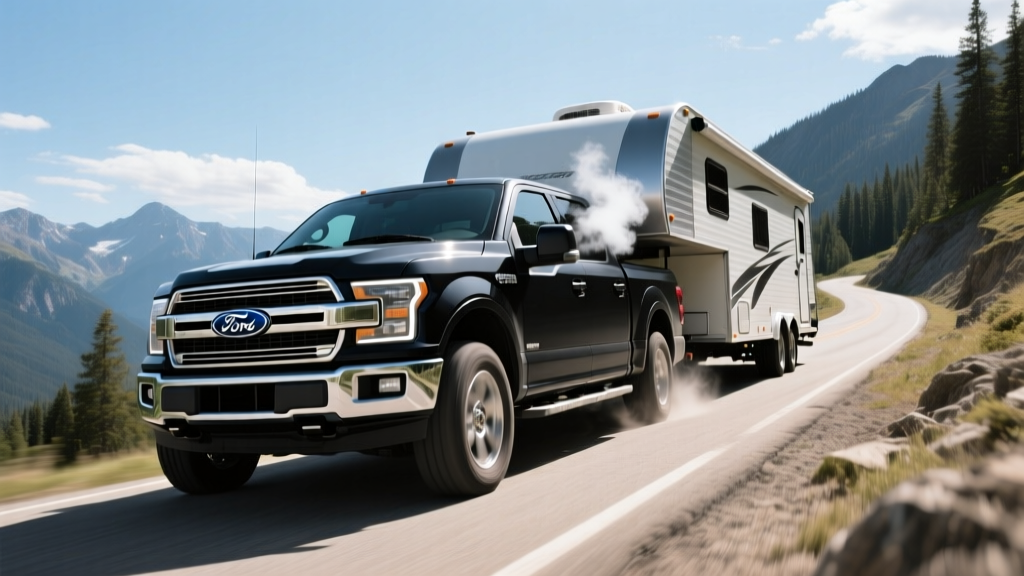
3.73 gears are good for towing travel trailers, boat trailers, and utility trailers in the 5,000 to 10,000 lb range. A Ford F-150 equipped with the 3.73:1 Electronic Locking Rear Axle and the 3.5-liter EcoBoost V6 achieves a maximum tow rating of 12,700 lbs in certain configurations, according to Ford's official F-150 specifications. Switching the same truck to a 3.31:1 ratio drops the maximum rating by up to 2,000 lbs in comparable trims.
The lower gearing reduces strain on the transmission during long uphill grades and allows the torque converter to stay locked more often, which keeps transmission fluid temperatures lower — typically 15 to 25 degrees Fahrenheit cooler under sustained load.
Performance Driving and Acceleration
In performance applications, 3.73 gears shorten the effective final drive, which improves 0–60 mph times. A Chevrolet Camaro SS or Ford Mustang GT equipped with 3.73:1 rear gears typically runs 0.2 to 0.4 seconds quicker to 60 mph than the same car with 3.15:1 or 3.31:1 gears. The trade-off is a lower top speed in each gear and slightly more frequent shifts during highway driving.
Daily Driving With Weekend Utility
For drivers who commute Monday through Friday and tow a camper or haul a trailer on weekends, 3.73 gears offer the best single-ratio compromise. You gain enough low-end torque for confident merging and hill climbing without the severe fuel economy penalty that 4.10:1 gears impose on unloaded highway driving.
3.73 vs Other Common Gear Ratios
The following comparison table helps you evaluate where 3.73 gears sit relative to other popular axle ratios available in trucks and performance cars as of 2026.
| Ratio | Best For | RPM at 70 mph* | Towing Advantage | Fuel Economy Impact |
|---|---|---|---|---|
| 3.15:1 | Highway fuel economy, light loads | ~1,770 | Lowest | Best |
| 3.31:1 | Balanced daily driving | ~1,860 | Moderate | Very good |
| 3.55:1 | Mild towing, mixed use | ~2,000 | Good | Good |
| 3.73:1 | Towing, acceleration, versatility | ~2,100 | High | Fair |
| 4.10:1 | Heavy towing, off-road crawling | ~2,310 | Highest | Poorest |
*RPM values based on 32.1-inch tire diameter and 1:1 top-gear transmission ratio. Actual values vary by transmission and tire size.
Vehicles That Benefit Most from 3.73 Gears
The following production vehicles offer or have offered 3.73:1 axle ratios as factory options, and owners report measurable improvements in drivability and capability:
- Ford F-150 (2021–2026): Available with the 3.5L EcoBoost and 5.0L Coyote V8. Maximizes tow ratings and improves highway passing confidence when loaded.
- Chevrolet Silverado 1500 (2019–2026): Offered with the 5.3L and 6.2L V8 engines. Provides strong trailer launch performance and reduced transmission hunting on grades.
- Ford Mustang GT (2018–2026): The Super 8.8 Track Pack includes 3.73:1 Torsen limited-slip gears. Cuts 0–60 mph times by approximately 0.3 seconds versus the standard 3.15:1 ratio.
- Ram 1500 (2019–2026): Available with the 5.7L HEMI V8. Improves low-speed trailer maneuvering and reduces strain on the 8-speed transmission during sustained towing.
- Jeep Wrangler Rubicon (2018–2026): Factory 3.73:1 gears paired with the 2.0L turbo or 3.6L Pentastar V6 deliver strong crawl ratios in 4-Low for technical trail obstacles.
Fuel Economy Impact
Switching from a 3.31:1 to a 3.73:1 ratio typically reduces combined fuel economy by 1 to 2 miles per gallon in a half-ton pickup, based on U.S. Environmental Protection Agency fuel economy data. For a truck averaging 19 mpg combined, that represents roughly a 5 to 10 percent increase in fuel cost over 15,000 miles of annual driving — approximately $130 to $260 per year at $3.50 per gallon.
However, when towing, 3.73 gears can actually improve efficiency compared to lower numerical ratios. The engine operates closer to its brake-specific fuel consumption sweet spot, and the transmission downshifts less frequently, reducing parasitic losses from torque converter slip. Several truck owners report 0.5 to 1.0 mpg better fuel economy while towing with 3.73 gears versus 3.31 gears on the same route.
Decision Framework: Should You Choose 3.73 Gears?
Use this checklist to determine whether 3.73 gears match your driving profile:
3.73 Gear Suitability Checklist
- ☐ You tow trailers between 5,000 and 10,000 lbs at least four times per year
- ☐ You want stronger off-the-line acceleration without sacrificing highway manners
- ☐ Your vehicle has a multi-speed automatic transmission (8, 9, or 10 speeds)
- ☐ You frequently drive in mountainous terrain with or without a load
- ☐ You carry heavy payloads (1,500+ lbs) in the bed regularly
- ☐ You prioritize drivetrain response over maximum highway fuel economy
- ☐ You run stock or near-stock tire sizes (within 1 inch of factory diameter)
Scoring: If you checked 4 or more boxes, 3.73 gears are a strong fit for your vehicle. If you checked 2 or fewer, consider 3.55:1 for a more economy-oriented setup or 4.10:1 if your towing exceeds 12,000 lbs regularly.
When to Look Elsewhere
Avoid 3.73 gears if your primary goal is maximizing highway fuel economy on a commuter truck that rarely tows. Similarly, if you have installed oversized tires (35 inches or larger), you may need a 4.10:1 or 4.56:1 ratio to restore factory-equivalent effective gearing.
Frequently Asked Questions
What are 3.73 gears good for towing?
3.73 gears are good for towing mid-range loads between 5,000 and 10,000 lbs. They provide enough torque multiplication to launch a trailer from a stop on an incline and maintain speed on 6 percent grades without constant downshifting. Trucks with 3.73 gears typically gain 1,000 to 2,000 lbs of rated tow capacity over identical models with 3.31:1 ratios.
Is 3.73 a good gear ratio for daily driving?
Yes, 3.73 is a good daily driving ratio for most drivers who occasionally tow or haul. The RPM increase at highway speed is modest — about 240 RPM higher than 3.31:1 at 70 mph — and modern multi-speed transmissions mask much of the difference through wider overdrive ratios.
What is the difference between 3.73 and 4.10 gears?
The 4.10:1 ratio provides approximately 10 percent more torque multiplication than 3.73:1, which benefits heavy towing above 12,000 lbs and low-speed off-road crawling. However, 4.10 gears raise highway RPM to roughly 2,310 at 70 mph, which increases fuel consumption by an additional 1 to 2 mpg versus 3.73 gears in unloaded driving.
How much does it cost to swap to 3.73 gears?
A professional ring-and-pinion gear swap costs between $1,500 and $2,500 for a solid rear axle, including a master install kit with bearings, seals, and shims. Independent-drive-vehicle (front axle) swaps on four-wheel-drive trucks add $800 to $1,400 for matching front gears.
Do 3.73 gears affect speedometer accuracy?
No. Gear ratio changes alone do not affect speedometer calibration because the speedometer reads from the transmission output shaft or ABS wheel speed sensors, which measure wheel rotation, not driveshaft speed. Only tire diameter changes require speedometer recalibration.
Conclusion
3.73 gears are good for drivers who refuse to choose between capability and comfort. They deliver meaningful towing advantages, sharper acceleration, and confident highway passing — all while keeping fuel economy within a reasonable range for daily use. If your driving routine includes regular trailer work, payload hauling, or performance driving, the 3.73:1 ratio is the most balanced upgrade you can make to your drivetrain.
Next step: Check your vehicle's axle code on the door jamb sticker or in the owner's manual to confirm your current ratio. Then use the decision framework above to determine whether a 3.73 swap — or a factory-order vehicle with 3.73 gears — fits your requirements and budget.