Key Takeaways
- The 3.09 rear axle ratio offers a compromise between the 2.62 highway ratio and the 3.91 performance ratio.
- Most factory 3.09 Dodge Charger differentials are open, requiring an aftermarket Limited Slip Differential (LSD) for optimal traction.
- Helical LSDs like the Eaton Truetrac provide seamless torque biasing without requiring special friction modifiers.
The 3.09 differential in the Dodge Charger refers to a specific rear axle gear ratio that balances daily drivability with moderate acceleration. Factory 3.09 axles in standard V6 and V8 Dodge Charger models typically feature an open differential, though Limited Slip Differential (LSD) variants appear in specific towing or fleet packages. This guide is written for Dodge Charger owners, muscle car enthusiasts, and prospective buyers who need to decode their drivetrain specifications, identify their differential type, and evaluate aftermarket LSD upgrades for superior traction. Upgrading from an open 3.09 unit to a helical or clutch-type LSD drastically reduces one-wheel spin during hard launches.
Understanding the Dodge Charger 3.09 Differential Ratio
The rear axle ratio dictates how engine torque is multiplied before reaching the rear wheels. Selecting the correct ratio is critical for matching your Dodge Charger to its intended use case.
What the 3.09 Rear Axle Ratio Means
A 3.09:1 ratio means the driveshaft rotates 3.09 times for every single rotation of the rear wheels. This setup provides quicker off-the-line acceleration than the standard 2.62:1 highway ratio. However, it sacrifices some top-end fuel efficiency due to higher engine revolutions per minute at cruising speeds. Most Dodge Charger models equipped with the 3.6-liter Pentastar V6 or the 5.7-liter HEMI V8 utilize an 8.75-inch ring gear diameter to handle this torque multiplication.
Rear Axle Ratio: The numerical relationship between the ring gear and pinion gear in the differential. A 3.09:1 ratio means the driveshaft rotates 3.09 times for every single rotation of the rear wheels, directly dictating torque multiplication and top-speed potential.

Open Differential vs. Limited Slip Differential (LSD)
Traction is just as important as gear multiplication. Understanding the mechanical differences between open and limited-slip units is vital for maximizing your Dodge Charger's performance.
Identifying Your Dodge Charger Differential Type
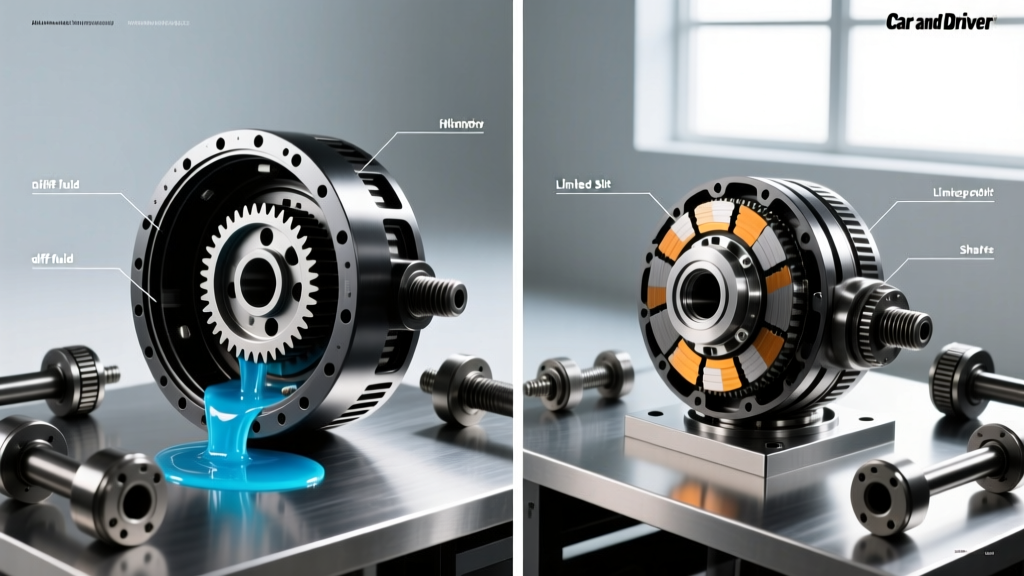
An open differential always sends power to the wheel with the least resistance. If one rear tire loses grip on a wet road, the open differential will spin that specific wheel while the other remains stationary. A Limited Slip Differential mechanically limits this speed difference, transferring torque to the wheel that still has traction. You can identify your factory differential by checking the vehicle build sticker located on the driver-side door jamb for specific axle codes.
Limited Slip Differential: A mechanical drivetrain component that restricts the speed difference between two driven wheels. By automatically transferring torque to the wheel with more traction, it prevents the single-wheel spin common in open differentials during hard acceleration or low-grip conditions.
Performance and Efficiency Trade-offs
Choosing a differential ratio involves balancing acceleration, towing capacity, and fuel economy. The 3.09 ratio sits squarely in the middle of the Dodge Charger's available options.
Dodge Charger Axle Ratio Comparison Matrix
| Axle Ratio | Primary Application | 0-60 MPH Impact | Highway MPG Impact |
|---|---|---|---|
| 2.62:1 | Standard V6 Highway Cruising | Baseline | Optimal (+2 to +3 MPG) |
| 3.09:1 | V6/V8 Towing and Daily Driving | -0.3 to -0.5 Seconds | Moderate (-1 to -2 MPG) |
| 3.91:1 | Scat Pack / Hellcat Performance | -0.8 to -1.0 Seconds | Poor (-3 to -4 MPG) |
Upgrading to an Aftermarket Limited Slip Differential
If your Dodge Charger left the factory with an open 3.09 differential, an aftermarket upgrade is the most effective traction modification you can perform. Modern aftermarket units offer superior durability and torque biasing compared to older clutch-pack designs.
Top LSD Upgrade Options for the 3.09 Housing
The Eaton Truetrac is a helical gear-type Limited Slip Differential that operates smoothly without the need for specialized friction modifiers. It multiplies torque to the gripping wheel up to 3.5 times the slipping wheel's torque, making it ideal for street-driven Dodge Chargers. For dedicated drag racing applications, a full spool or a clutch-type LSD like the Wavetrac provides maximum lockup under heavy 300 lb-ft to 410 lb-ft torque loads. Always consult a certified drivetrain specialist to ensure the new carrier matches your specific 8.75-inch housing spline count.

Frequently Asked Questions
Does the standard Dodge Charger come with a Limited Slip Differential?
No, standard V6 and base V8 Dodge Charger models equipped with the 3.09 rear axle ratio typically feature an open differential. Limited Slip Differentials are usually reserved for Super Track Pack, Scat Pack, or SRT models.
Can I install a 3.91 gear set in my 3.09 Dodge Charger differential?
Yes, you can swap the ring and pinion gears inside your existing 8.75-inch housing. However, jumping from a 3.09:1 to a 3.91:1 ratio will significantly increase highway engine RPM and decrease fuel economy.
How does a 3.09 ratio affect Dodge Charger towing capacity?
The 3.09:1 ratio provides increased torque multiplication at the wheels compared to the 2.62:1 ratio. This allows the Dodge Charger to safely tow heavier loads, often increasing the maximum towing capacity by approximately 1,000 pounds.
Conclusion and Next Steps
The 3.09 differential in your Dodge Charger provides a versatile foundation, but maximizing traction requires addressing the factory open differential limitations. Your next step is to locate the axle build tag on your driver-side door jamb to confirm your exact factory ratio and differential type before ordering an Eaton Truetrac or similar LSD upgrade.