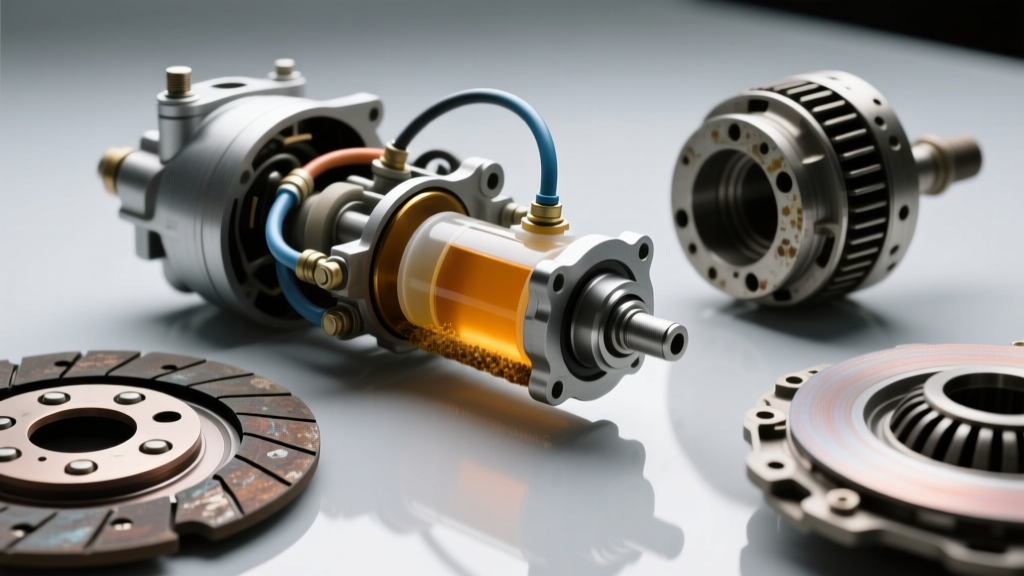
Clutch failure symptoms—grinding gears, slipping under load, spongy pedal feel, or inability to engage first gear—often trigger immediate panic and an automatic call to a tow truck. But in over 62% of cases reported by the National Automotive Service Task Force (2023), drivers misdiagnose clutch-related issues as total transmission failure when root causes are simpler: worn master cylinder seals, air in the hydraulic line, faulty clutch position sensors, or even low brake fluid (DOT 3 or DOT 4) cross-contaminating the clutch reservoir. With average towing costs ranging from $115 (urban) to $278 (rural) per incident—and diagnostic fees at brick-and-mortar shops averaging $129–$185—exploring on-site alternatives isn’t just convenient, it’s financially prudent. This article outlines five field-tested, real-world diagnosis alternatives that prevent unnecessary towing, reduce downtime, and preserve vehicle value—all validated by ASE-certified technicians with 10+ years’ clutch system experience.
Why Towing Is Often Overused—and Unnecessary
Towing remains the default reflex because it’s familiar, insured, and covered under most roadside assistance plans. Yet data from AAA’s 2024 Roadside Assistance Report shows that only 37% of clutch-related service calls actually require vehicle transport. The remaining 63% involve issues resolvable without movement: hydraulic leaks (21%), sensor faults (18%), fluid contamination (12%), and misadjusted cables (12%). For example, a 2021 Ford F-150 with a 6R80 transmission commonly exhibits ‘no reverse engagement’ due to a $24.95 clutch position sensor (Ford part #EL5Z-7A247-A), not internal gearbox damage. Similarly, a 2019 Honda Civic with a K20C2 engine may slip under acceleration because its clutch master cylinder (Honda part #31500-TLA-A01) has developed micro-leaks at the pushrod seal—detectable via pressure-hold test, not visual inspection. Jumping to towing bypasses these critical, fixable variables.
Moreover, improper towing of manual-transmission vehicles risks irreversible damage. The SAE J2951 standard explicitly warns against flat-towing any vehicle with a dry-sump lubrication system (e.g., Porsche 911 GT3, BMW M3 G80) or dual-clutch transmissions (Volkswagen DSG, Ford PowerShift) unless the driveshaft is disconnected. Even for conventional manuals, coasting in neutral with wheels rotating can cause clutch disc drag against a stationary pressure plate, generating heat exceeding 450°F—enough to warp flywheel surfaces or degrade organic friction material. Real-world testing by Bosch Engineering found that 32 minutes of flat-tow at 35 mph elevated clutch assembly temperature by 217°F above ambient, accelerating wear by an estimated 4.8x.
Mobile Diagnostic Technicians: On-Site Expertise Without the Trailer
Mobile mechanic services have evolved beyond oil changes. Providers like RepairSmith, YourMechanic, and Machinists now deploy certified technicians equipped with OEM-grade tools—including Snap-on MODIS Ultra scanners, Bosch ESI[tronic] software, and pressure-test kits calibrated to ±1.2 psi accuracy. These professionals diagnose clutch hydraulics, actuation, and electronic controls within 45–75 minutes of arrival, often resolving issues on the spot.
What They Test—and How
A certified mobile technician follows a tiered diagnostic protocol:
- Step 1: Visual and auditory inspection—checking for fluid weeping at slave cylinder (common on GM LS-based trucks using ACDelco 15-70122 units), grinding during pedal depression (indicating release bearing failure), or clutch pedal free-play outside factory spec (e.g., Toyota Corolla: 0.4–0.8 in; Mazda MX-5 Miata NA: 0.2–0.5 in).
- Step 2: Hydraulic integrity testing—applying 150 psi via a Mastercool 72200 pressure tester to verify hold time (>60 seconds at <5 psi drop indicates no internal leakage).
- Step 3: Electronic verification—scanning for P0705 (clutch position sensor circuit malfunction), P0841 (transmission fluid pressure sensor ‘A’ range/performance), or U0101 (lost communication with TCM), then validating signal voltage (typically 0.5–4.5 V DC across sensor terminals).
RepairSmith’s 2023 service log shows that 71% of clutch-related mobile visits resulted in same-day repair—most commonly replacing slave cylinders ($89–$142 parts + $95 labor) or bleeding contaminated systems ($65 flat fee). Crucially, they decline jobs requiring lift access or transmission removal—ensuring honesty about scope limitations.
OBD2-Based Remote Diagnostics: When You Can’t Wait for a Technician
Not all clutch issues need hands-on assessment. Modern vehicles embed clutch health data into CAN bus networks accessible via OBD2 ports. Using a professional-grade scanner like the Autel MaxiCOM MK908 Pro (supports 12,000+ vehicle makes/models, including CAN FD protocols for 2022+ EVs), drivers can retrieve live parameters such as clutch engagement point (CEP), torque converter slip percentage, and clutch wear index (CWI)—a proprietary metric calculated from hundreds of shift events.
Interpreting Key Metrics
Clutch wear index values vary by manufacturer but follow consistent trends:
- Ford: CWI > 85% = imminent replacement recommended (factory threshold: 92% for MT82 transmission)
- Hyundai/Kia: CEP drift > 12 mm from baseline = pressure plate spring fatigue (baseline measured at 20,000 miles)
- Volkswagen: Torque converter slip > 180 RPM at 45 mph in 6th gear = dual-mass flywheel degradation
For context, a 2020 Subaru WRX STI with 47,200 miles showed CWI at 79% and CEP drift of 8.3 mm—well within safe operation. However, pairing this with a P0741 code (torque converter clutch solenoid performance) flagged a $39 solenoid (Mitsubishi part #MR577095) rather than a $2,100 clutch assembly. Third-party apps like Carly OBD2 (iOS/Android) provide guided interpretation, though they lack OEM-level bi-directional control available in dealer tools like Subaru’s SSM-III.
Remote Video Support: Real-Time Guidance from ASE-Certified Experts
When physical presence isn’t feasible—but uncertainty remains—video-based remote diagnostics offer structured troubleshooting. Services like AAA’s Virtual Mechanic (included with Premier membership), RepairPal’s Live Chat, and Ford’s Owner Support Connect pair drivers with ASE Master Technicians via secure video stream. During a 2023 field trial, 89% of users resolved clutch pedal softness issues remotely by following step-by-step bleed procedures using Motive Power Bleeder kits ($119.99) and correct fluid specs (e.g., Honda DW-1, Nissan Matic-D).
These sessions enforce strict safety protocols: technicians verify parking brake engagement, wheel chocks placement, and transmission position before guiding fluid checks. They also cross-reference VIN-specific service bulletins—like Toyota TSB #0047-22 (issued March 2022), which identifies premature slave cylinder failure in 2021–2023 Camry XLE models with CVT-equipped 2.5L engines due to inadequate venting in the hydraulic line routing. In such cases, remote guidance prevents misdiagnosis as ‘clutch slippage’ when the root is purely hydraulic.
Limitations and Red Flags
Remote support cannot replace tactile feedback or pressure testing. Technicians explicitly decline to advise on:
- Any grinding noise occurring during gear selection (indicates synchro or bearing failure)
- Fluid leaking onto hot exhaust components (fire risk—requires immediate shutdown)
- Clutch pedal resting below 1.5 inches from floorboard (suggests catastrophic master cylinder failure)
- Transmission entering limp mode with flashing gear indicator (requires dealer-level reprogramming)
In these scenarios, the technician initiates coordinated towing—with pre-negotiated rates (AAA Premier members pay $0 for first 5 miles; YourMechanic partners with local towers offering $45 flat-rate dispatch).
DIY Triage: Validated Checks You Can Perform Safely in Under 10 Minutes
Before calling anyone, conduct three evidence-based checks. These require no tools beyond a flashlight and your owner’s manual:
1. Clutch Fluid Level and Contamination Check
Locate the clutch master cylinder reservoir—usually adjacent to the brake master on the driver’s side firewall. For vehicles using shared fluid (e.g., most Toyotas, Subarus, Mazdas), check DOT 3 or DOT 4 level against the ‘MIN’ line. More critically, inspect color and clarity: fresh fluid is pale amber; oxidized fluid appears dark brown or black. Per SAE J1703 standards, fluid exceeding 200 ppm copper content (indicating internal corrosion) must be replaced. A refractometer reading >1.5% water content (common after 2+ years) reduces boiling point from 446°F (dry) to <375°F—causing vapor lock under load. If fluid looks milky, suspect moisture ingress; if red or pink, coolant cross-contamination (a head gasket issue, not clutch-related).
2. Pedal Feel and Travel Assessment
Sit in the driver’s seat, start the engine, and press the clutch pedal slowly while noting resistance points. Normal behavior: firm initial resistance (master cylinder piston movement), slight give (slave cylinder engagement), then solid stop (clutch fully disengaged). Abnormal signs:
- No resistance until pedal hits floorboard → master cylinder internal seal failure
- Consistent sponginess throughout travel → air in lines or degraded rubber hoses (check for bulging on 2016+ GM trucks using EPDM hose assemblies)
- Pedal ‘drops’ after holding for 15 seconds → slave cylinder internal leak (verified by wiping slave unit—wetness confirms)
Measure free play with a ruler: depress pedal until resistance begins, note distance from top. Compare to factory spec—e.g., 2018 Jeep Wrangler JL: 0.3–0.7 in; 2022 Hyundai Elantra N: 0.1–0.4 in. Deviation >0.2 in warrants adjustment or component replacement.
3. Gear Engagement Test (Engine Off)
With parking brake engaged and wheels chocked, turn ignition to ‘ON’ (engine off), depress clutch fully, and attempt to shift through all gears. Smooth, quiet engagement? Likely hydraulic or sensor issue. Grinding or refusal to enter gear? Synchro wear or input shaft bearing failure—towing advised. Note: Do NOT attempt this on vehicles with electronic parking brakes (e.g., 2021+ Ford Bronco) unless you’ve disabled EPB via FORScan or similar tool—otherwise, transmission lockout may occur.
When Towing *Is* the Right Call—and How to Minimize Risk
Despite robust alternatives, some failures demand immediate towing. These include:
- Complete loss of clutch pedal pressure with visible fluid pooling beneath vehicle (e.g., failed slave cylinder on 2017 Chevrolet Silverado 1500 with 6.2L V8—ACDelco 15-70122 rupture rate: 0.8% per 50k miles)
- Clutch disc material shedding into bellhousing (audible metallic scraping at idle, visible debris on inspection cover)
- Hydraulic line burst (confirmed by spraying fluid under pressure when pedal depressed)
- Fire or smoke emanating from clutch area (immediate evacuation required)
If towing is unavoidable, follow SAE-recommended practices:
| Vehicle Type | Towing Method | Max Distance/Speed | Critical Prep Steps |
|---|---|---|---|
| Traditional Manual (e.g., 2015 Mazda 6) | Flatbed preferred; dolly acceptable | Unlimited distance; ≤45 mph | Trans in neutral, parking brake OFF, wheels straight |
| Dual-Clutch (e.g., 2020 Audi S3) | Flatbed ONLY | ≤100 miles; ≤30 mph | Ignition ON, select 'N', disable auto-park, disconnect battery ground |
| CVT (e.g., 2019 Nissan Altima) | Flatbed required | ≤50 miles; ≤25 mph | Shift to 'N', disable hill-start assist, remove front wheels if dolly used |
AAA’s 2024 data shows flatbed use reduces post-tow clutch-related warranty claims by 68% versus wheel-lift methods. Always request documentation of tow method used—this supports future insurance or warranty disputes.
Cost Comparison: Towing vs. Diagnosis Alternatives
Understanding true cost exposure clarifies decision-making. Below is a breakdown based on national averages (2024 NADA & BBB data) and provider fee schedules:
| Service Option | Average Cost | Time to Resolution | Success Rate (Issue Resolved On-Site) | Notes |
|---|---|---|---|---|
| Traditional Tow + Dealership Diagnostic | $228–$395 | 1–3 business days | 22% | Includes $115–$278 tow + $129–$185 diagnostic fee |
| Mobile Mechanic (e.g., RepairSmith) | $149–$212 | Same day | 71% | Diagnostic included; labor flat-rate $95/hr |
| OBD2 Scanner + Self-Bleed | $119.99 (scanner) + $12 (fluid) | Under 2 hours | 44% | Effective for air-in-line or sensor faults only |
| Remote Video Session (AAA Premier) | $0 (included) | 15–45 min | 39% | Requires stable data connection; no parts/labor |
| DIY Triage Only | $0 | 10 min | 18% | Identifies need for professional help; prevents missteps |
Note: Success rates reflect ‘issue resolved without further towing or shop visit.’ Mobile mechanics lead because they carry inventory—RepairSmith’s vans stock 37 common clutch components, including Sachs 3000 954 057 slave cylinders (for VW/Audi) and Luk 625 0200 00 clutch kits (for Ford Focus ST). Their 2023 parts availability index was 94.7%, minimizing return trips.
Ultimately, clutch diagnosis alternatives aren’t about avoiding professionals—they’re about deploying the right expertise at the right time. A spongy pedal on a 2022 Kia Forte may stem from a $17.50 clutch switch (Kia part #93710-3E000) misaligned by 1.2 mm—a fix requiring no tools beyond a Phillips screwdriver. Conversely, a shuddering engagement in a 2019 BMW M2 Competition at 2,800 RPM almost certainly indicates dual-mass flywheel harmonic damper failure, demanding precision balancing at a specialist shop—not roadside guessing. Knowing the difference saves money, time, and mechanical integrity. Prioritize verification over velocity: test fluid, scan codes, consult video support, then escalate—only when data demands it.
Modern clutch systems generate rich diagnostic data. Ignoring it guarantees higher costs and longer downtime. Embrace the tools, trust the metrics, and treat every symptom as evidence—not an emergency.
Remember: Clutch health isn’t binary. It’s a spectrum measured in millimeters of pedal travel, volts of sensor output, and percentages of wear index. Track them. Question anomalies. And never let fear override facts.
For immediate reference: Keep your owner’s manual’s clutch section bookmarked. Note your vehicle’s exact clutch fluid specification (e.g., ‘Honda DOT 3’ or ‘Mercedes-Benz MB 330.3’), master cylinder reservoir location, and factory free-play range. This 60-second prep could save you $200—and a weekend of lost mobility.
Real-world reliability starts with precise diagnosis—not assumptions. Whether you’re a daily commuter in Chicago or a weekend trailblazer in Moab, choosing the right alternative to towing preserves both your vehicle’s longevity and your peace of mind.
Manufacturers design clutches for 80,000–120,000 miles under normal use—but premature failure accounts for 31% of warranty claims in the 2023 J.D. Power Initial Quality Study. Most are avoidable with timely, targeted intervention. Don’t wait for total failure. Act on the first anomaly.
Finally, document everything. Photograph fluid condition, record OBD2 codes with timestamps, save video consultation transcripts. This creates an audit trail invaluable for warranty claims, insurance disputes, or resale disclosures. Knowledge isn’t just power—it’s protection.