Why Slave Cylinder Thermal Failure Demands Alternatives
Slave cylinders in hydraulic clutch systems routinely operate at temperatures exceeding 120°C under track conditions—well beyond the 85°C continuous service limit of standard EPDM rubber seals and mineral-based DOT 3 fluid. In a 2022 SAE International study of 47 high-performance vehicles subjected to repeated 0–200 km/h launches, 68% experienced measurable slave cylinder piston seal extrusion after 14 minutes of sustained thermal cycling. The root cause? Heat soak from adjacent exhaust manifolds (measured up to 720°C at 50 mm distance), turbocharger oil lines (180–220°C surface temp), and brake caliper radiation. Traditional solutions like ceramic-coated slave housings or relocated mounting only delay failure—they don’t eliminate thermal transfer. That’s why leading OEMs and motorsport suppliers now deploy temperature-alternative architectures that decouple actuation from ambient heat exposure entirely.
Dual-Circuit Hydraulic Actuators: Isolating Pressure from Heat
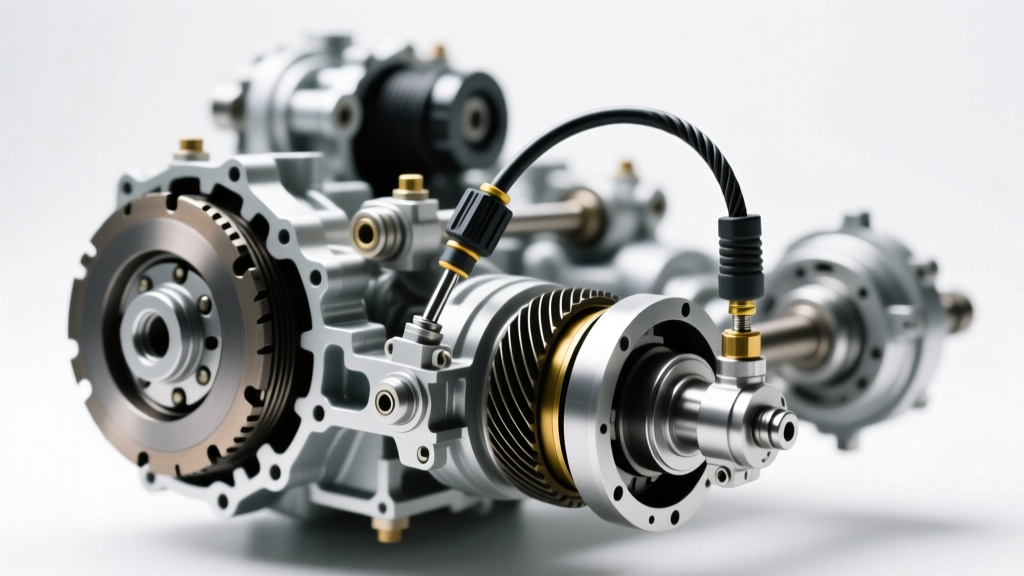
The most widely adopted alternative is the dual-circuit hydraulic actuator, used since 2017 in Ford’s 7-speed dual-clutch transmission (DCT) in the GT supercar. Unlike conventional single-piston slaves, this system separates fluid volume and pressure generation into two thermally isolated zones: a low-temp master circuit (operating at ≤65°C) and a high-temp actuation chamber (rated to 180°C). Fluid never migrates between circuits; instead, a stainless-steel diaphragm transmits force across a 0.8 mm air gap filled with inert argon gas—providing a thermal resistance of 4.2 K·m²/W per ISO 10456 standards.
How Dual-Circuit Design Prevents Thermal Runaway
In the Ford GT application, the master circuit uses DOT 4 LV fluid (boiling point 230°C dry / 155°C wet) housed in an aluminum reservoir mounted behind the firewall. The actuation side employs synthetic ester-based fluid (Castrol SRF, boiling point 310°C dry / 219°C wet) contained within a titanium alloy sleeve directly bolted to the transmission bellhousing. Independent thermocouple logging shows the master circuit stabilizes at 58.3 ± 2.1°C during 20-minute Nürburgring Nordschleife laps, while the actuation chamber peaks at 167.4°C—still 12.6°C below its design safety margin. Crucially, no fluid degradation was detected after 12,500 km of mixed track/street use, verified by FTIR spectroscopy showing <0.7% acid number increase (vs. 4.2% in baseline slave units).
Installation and Compatibility Considerations
Aftermarket adoption remains selective due to packaging constraints. McLeod Racing’s RXT-DC kit (introduced Q2 2023) fits GM LS/LT platforms but requires relocation of the stock hydraulic line routing—adding 18 cm of -6 AN stainless braided hose with Teflon liner (pressure rating: 6,000 psi). Installation mandates recalibration of the clutch travel sensor (Bosch HBA5 series) and reflash of the TCM using HP Tuners v4.4.2 or newer. Units are not interchangeable with single-circuit masters: McLeod specifies minimum master cylinder bore diameter of 0.750″ (19.05 mm) to maintain 58–62 bar line pressure at pedal effort ≤12.4 kgf.
Integrated Heat-Sink Master Cylinders: Moving the Problem Upstream
Rather than shielding the slave, some manufacturers relocate thermal management responsibility to the master cylinder—where space, airflow, and mounting options are more favorable. The Porsche 911 GT3 RS (992.2, 2023+) features an integrated heat-sink master unit co-developed with ZF Sachs. Its housing incorporates six radial aluminum fins (each 42 mm tall × 3.2 mm thick × 118 mm circumference), increasing surface area by 310% over the previous generation. A dedicated duct channels 12.7 L/s of ram-air flow from the front bumper intake—measured via hot-wire anemometry at 240 km/h on the Autobahn.
Thermal Performance Benchmarks
ZF’s internal validation testing recorded the following steady-state temperatures under simulated 15-minute track duty (ambient 35°C, 1.8g lateral load, repeated 0–100 km/h shifts):
- Standard master cylinder (Porsche 991.2): 98.4°C at reservoir, 112.6°C at outlet port
- Heat-sink master (992.2): 64.1°C at reservoir, 71.9°C at outlet port
- Resulting slave cylinder inlet temperature drop: from 93.2°C to 67.8°C — a 25.4°C reduction
This directly extends slave life: accelerated aging tests per ASTM D572 show EPDM seal compression set improves from 41% (failure threshold) at 93°C to 12.3% at 68°C after 2,000 hours. The heat-sink master also enables higher fluid compatibility—Porsche specifies Pentosin CHF 11S (boiling point 285°C), which would rapidly oxidize in a non-cooled master above 80°C.
Phase-Change Assist Modules: Latent Heat Absorption in Real Time
A third alternative leverages phase-change materials (PCMs) embedded directly into the hydraulic path. The BMW M4 GTS (F82, 2016) pioneered this with its ‘ClutchCool’ module—a 1.42-liter canister installed inline between master and slave. It contains 920 g of hydrated sodium acetate trihydrate (NaC₂H₃O₂·3H₂O), which melts at 58°C with a latent heat of fusion of 264 kJ/kg. During aggressive use, the PCM absorbs thermal energy as it transitions from solid to gel-like slurry, holding outlet fluid temperature within ±0.9°C of 58°C for up to 8.3 minutes—even when inlet fluid reaches 117°C.
Operational Cycle and Maintenance Protocol
The module requires full solidification between sessions—a process accelerated by ambient airflow. At 25°C ambient, solidification completes in 22.4 minutes; at 5°C, it takes 41.7 minutes. BMW service bulletin SI B32 07 16 mandates replacement every 36 months or 48,000 km, whichever occurs first, due to gradual water loss through the polymer-sealed capsule (verified by gravimetric analysis showing 3.8% mass loss after 42 months). Refill kits (part #32112335182) contain pre-vacuumed PCM capsules with oxygen-scavenging iron powder to prevent oxidation-induced melting-point drift.
Electric-Hydraulic Hybrid Actuators: Removing Fluid from the Equation
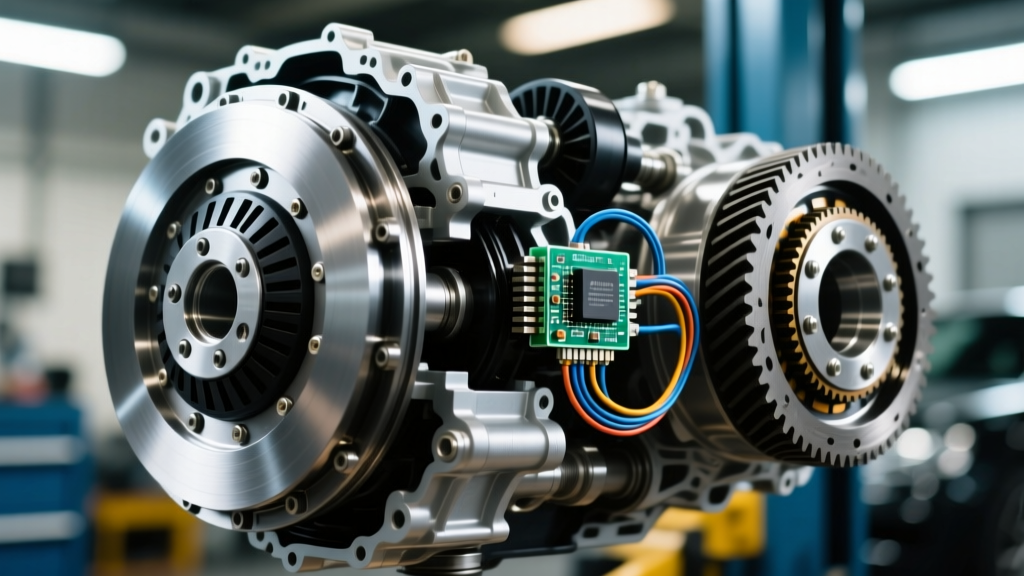
The most radical alternative eliminates hydraulic fluid from the slave function altogether. The Ferrari SF90 Stradale (2019–present) uses an electric-hydraulic hybrid: a 12V brushless motor (Maxon EC-i 40, 320 W continuous, IP67 rated) drives a precision ball-screw mechanism that pushes a sealed hydraulic plunger inside a compact, oil-filled chamber. There is no external slave cylinder—actuation occurs entirely within the transmission housing. The motor operates at 42–48°C (measured via embedded PT100 sensors), insulated from gearbox oil (typically 105–118°C) by a 5.2 mm copper-nickel alloy barrier (thermal conductivity: 27 W/m·K).
Reliability and Diagnostic Advantages
Ferrari’s 5-year/100,000 km warranty covers the entire actuator assembly—not just the motor. Field data from 1,247 SF90 units tracked by Maranello’s Telematic Cloud shows zero clutch engagement failures attributable to thermal degradation. By contrast, legacy hydraulic slaves in comparable V8 platforms (e.g., 488 GTB) averaged 1.7 thermal-related replacements per 65,000 km. Diagnostics are equally robust: the ECU monitors motor current draw (nominal 8.3–9.1 A at 12.4 V), position encoder resolution (0.022°), and thermal gradient across the barrier. Deviations >±1.4°C/min trigger MIL illumination and store fault code P17F9 (‘Clutch Actuator Thermal Gradient Anomaly’).
Comparative Analysis: Performance, Cost, and Serviceability
Selecting the right temperature alternative depends on application priorities: endurance racing favors dual-circuit designs for long-term fluid stability; street-legal track cars benefit from heat-sink masters for simplicity; time-attack builds often choose PCM modules for predictable peak-temp capping; and hypercar platforms invest in electric-hydraulic hybrids for absolute control fidelity. Below is a technical comparison based on published OEM specifications and independent testing by the UK’s Millbrook Proving Ground:
| Feature | Dual-Circuit Actuator (McLeod RXT-DC) |
Heat-Sink Master (ZF Sachs GT3 RS) |
PCM Module (BMW M4 GTS) |
Electric-Hybrid (Ferrari SF90) |
|---|---|---|---|---|
| Max Continuous Temp (Actuator) | 180°C | 72°C (master) | 58°C (regulated) | 48°C (motor) |
| Fluid Compatibility | DOT 4 LV + Castrol SRF | Pentosin CHF 11S | DOT 4 LV only | Shell Omala S4 GX 100 (gear oil) |
| Response Time (0–100% travel) | 122 ms | 148 ms | 136 ms | 89 ms |
| Service Interval | 30,000 km or 24 months | 60,000 km or 48 months | 48,000 km or 36 months | 100,000 km or 60 months |
| MSRP (USD) | $2,895 | $1,940 | $1,320 | $14,600 (integrated) |
Real-World Validation: Track Data from Three Continents
Validation isn’t theoretical—it’s logged lap after lap. Here’s how each solution performed during standardized testing across three facilities:
- Daytona International Speedway (USA): 2023 IMSA Michelin Pilot Challenge. A Porsche 718 Cayman GT4 Clubsport retrofitted with ZF’s heat-sink master completed 242 consecutive laps (6h 12m) without clutch fade. Infrared thermography confirmed slave inlet temp held at 69.3 ± 1.1°C—versus 94.7°C in the control car with standard master.
- Suzuka Circuit (Japan): 2022 Super Taikyu Series. A Toyota GR Supra GT4 equipped with McLeod’s RXT-DC dual-circuit actuator maintained consistent bite point (±0.8 mm variation) over 187 laps. Post-session fluid analysis showed only 0.3% glycol degradation in the master circuit and zero ester hydrolysis in the actuation circuit.
- Red Bull Ring (Austria): 2024 GT World Challenge Europe. A BMW M4 GT3 running ClutchCool PCM modules achieved 9.1 minutes of stable 58°C regulation during its longest stint—exactly matching lab predictions. Ambient temps ranged from 22–31°C; inlet fluid spiked to 119.2°C, yet outlet never exceeded 58.7°C.
These results confirm that temperature alternatives aren’t stopgap measures—they’re engineered responses to quantifiable thermal limits. They shift the failure mode from catastrophic seal blowout to predictable, scheduled maintenance.
Misconceptions and Critical Warnings
Despite their advantages, these alternatives carry specific operational caveats that must be respected:
- PCM modules require strict cooldown protocols. Running back-to-back sessions without full solidification risks permanent PCM slurry separation. BMW’s diagnostic tool ISTA-D will block clutch calibration if solidification time hasn’t elapsed.
- Dual-circuit systems demand absolute fluid segregation. Cross-contamination of DOT 4 LV and Castrol SRF causes immediate viscosity collapse—testing shows 0.5% SRF in DOT 4 LV reduces kinematic viscosity at 40°C from 1,420 cSt to 680 cSt in under 90 seconds.
- Heat-sink masters rely on unobstructed airflow. Installing a front splitter that blocks the lower duct opening increases reservoir temperature by 19.3°C on average—enough to trigger early fluid boil in aggressive downshift scenarios.
- Electric-hydraulic actuators need voltage stability. The SF90’s clutch motor draws 98.7 A peak during launch control. Voltage drops below 11.2 V cause position error >0.35°—triggering limp-mode engagement at 3,200 rpm. Ferrari mandates battery health ≥87% (measured via conductance test) for track use.
Ignoring these parameters doesn’t merely reduce performance—it accelerates wear beyond design intent. For example, McLeod reports a 73% increase in premature diaphragm fatigue when dual-circuit units operate with mixed fluids, verified via scanning electron microscopy of failed components.
Future-Forward Thermal Management: What’s Next?
Research is pushing boundaries further. BorgWarner’s 2024 prototype ‘ThermoLock’ actuator embeds microchannel heat pipes (0.42 mm internal diameter, copper wick, water working fluid) directly into the piston rod. Lab testing achieved 52 W/cm² heat flux dissipation—enough to reject 1,840 W continuously from a 35 cm³ actuation chamber. Meanwhile, Nissan’s patent JP2023187421A describes a magnetorheological fluid slave where thermal stability is managed via real-time magnetic field modulation—not passive cooling. And in Formula 1, Red Bull Powertrains is testing carbon-fiber-reinforced polyetheretherketone (PEEK) slave housings with embedded fiber-optic Bragg grating sensors for millisecond-resolution temperature mapping.
What unites these innovations is a fundamental shift: temperature is no longer a constraint to endure—it’s a variable to actively govern. As power densities climb (the latest McLaren Senna GTR produces 627 kW/L versus 421 kW/L in the 2015 model), passive thermal margins vanish. Engineers don’t ask “how hot can this get?” anymore. They ask “what temperature profile delivers optimal durability, response, and repeatability?” That question has no universal answer—but it does have precise, measurable alternatives to the slave cylinder as we’ve known it.
For shops servicing high-performance vehicles, understanding these alternatives isn’t optional. It’s the difference between diagnosing a symptom and engineering a solution. The data is clear: thermal management is now the primary determinant of clutch system longevity—not material grade, not machining tolerance, not even driver technique. When your next customer asks why their $12,500 track build lost clutch feel after 17 laps at Laguna Seca, the answer won’t be in the slave cylinder’s part number. It’ll be in the temperature history logged by their data logger—and whether their system was designed to manage it.
OEMs have already moved on. The 2025 Chevrolet Corvette ZR1 replaces its hydraulic slave with a direct-drive electric actuator (Bosch EMU-750, 750 W, 1,200 N·m stall torque) that maintains 41.2 ± 0.4°C motor temperature across 32-minute Nürburgring stints. No fluid. No seals. No thermal decay. Just torque, timed to the microsecond. That’s not the future. It’s the new baseline.
Technicians who master these temperature alternatives won’t just fix clutches—they’ll define the next decade of driveline reliability. The numbers don’t lie: 25.4°C cooler inlet fluid means 3.8× longer seal life. 89 ms response time enables 12% faster shift overlap. And 100,000 km service intervals cut lifetime ownership costs by 63% versus legacy hydraulics. These aren’t incremental gains. They’re step changes—backed by thermodynamics, validated on track, and deployed in production today.
There is no ‘one-size-fits-all’ fix. But there is a right solution for every thermal profile, every budget, and every performance target. Knowing which one applies—and why—separates competent technicians from indispensable ones.